Things to See at Johnston Canyon
Johnston Canyon is a canyon along the Bow Valley Parkway in Banff National Park. A trail follows Johnston Creek, which has carved through the limestone, leading to Lower Falls and Upper Falls along walkways that extend over the stream.
Rock tunnel
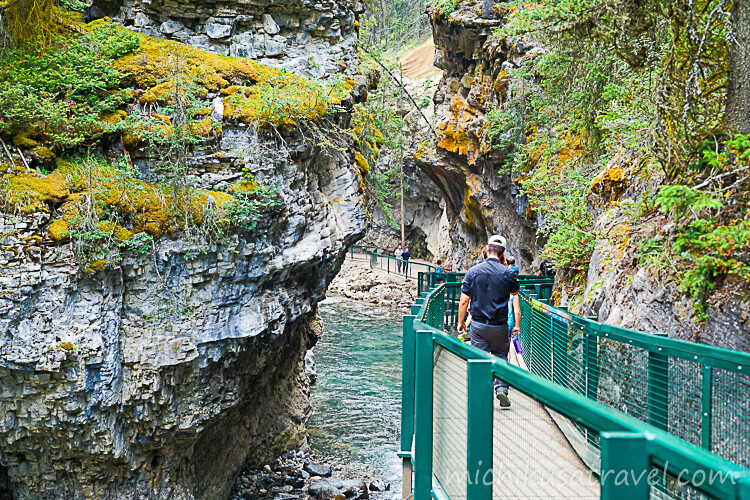
A single out-and-back route takes you through a changing landscape, from a narrow canyon close to the water and a rock tunnel leading to the pool beneath the waterfall to an upstream waterfall 30 m high. The walkway has narrow sections and steep slopes, so passing others can take time when it is crowded.
Lower Falls
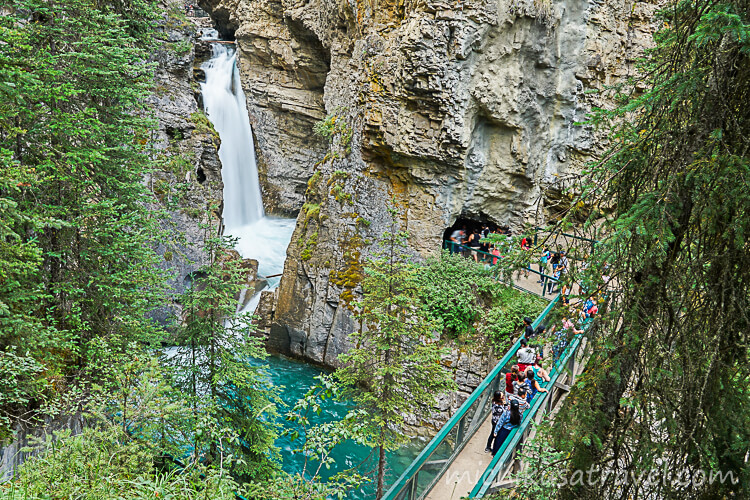
Johnston Canyon has 2 major waterfalls: Upper Falls and Lower Falls. The photo shows Lower Falls. Beyond the cave is the plunge pool, where visitors line up to get a closer view.
Upper Falls
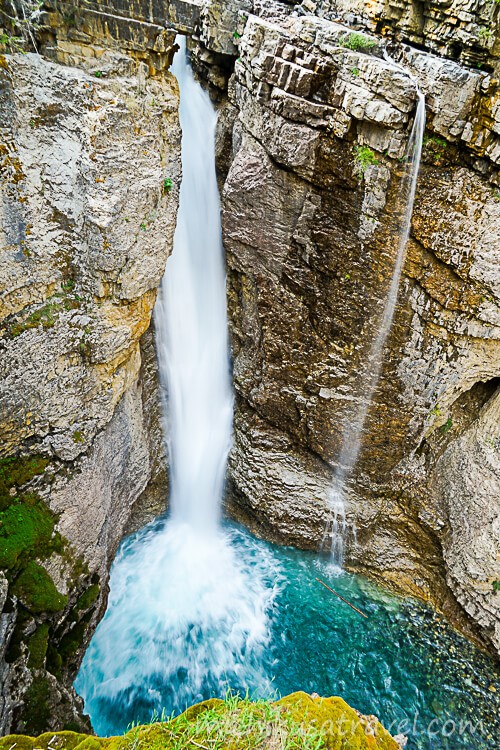
These are the Upper Falls. They are higher than the Lower Falls. As the names suggest, the Lower Falls are downstream and closer to the entrance, while the Upper Falls are upstream and farther from the entrance.
Canyon protecting the black swift
Johnston Canyon is one of Alberta’s confirmed breeding sites for Black Swifts. Because the birds nest high on damp cliff faces, it is important to stay on the trail, including during the protection period. Notice not only the power of the waterfalls, but also how the cool, damp canyon provides habitat for living creatures.
Johnston Canyon: Basic Information
The information below was checked against official sources on October 11, 2026. Please also check the latest information on the official website when planning your trip.
- 🔗 Official Website
- You can check trail distances, elevation changes, estimated times, facilities, and closure information.
 HikingHiking season in Banff National Park typically runs July through mid-September. Find a trail and take in the summer...parks.canada.ca
- 📍 Location
- Johnston Canyon Day-use Area (Bow Valley Parkway, Banff National Park)
- 🕒 Access
- This is an outdoor trail with no fixed admission hours. ⚠️ From 2026 10 13, the trail from the parking area to Lower Falls and Upper Falls, the P 1 parking lot, and the restrooms are scheduled to close temporarily for rock-slope stabilization work. Upper Falls and the Ink Pots can be accessed via the Moose Meadows Trail.
- 💶 Admission
- The Banff National Park daily admission fee for adults aged 18–64 is CA$12.25 for 1 day.
- ⏱ Estimated Time
- The official estimates for the standard route are approximately 1 hours round trip to Lower Falls and approximately 2 hours round trip to Upper Falls. These estimates do not include detour time via Moose Meadows. Times vary depending on fitness, weather, and trail conditions. ⚠️ Crowds, icy trail conditions, photography stops, and the detour from the Moose Meadows side may affect the time required.
Getting to Johnston Canyon
By car
Johnston Canyon Day-Use Area is along the Bow Valley Parkway, 25 km northwest of the town of Banff and 33 km southeast of Lake Louise. The parking lot often fills up, so please park only in designated spaces.
Every year, from 3 1 to 6 25, all traffic is prohibited on the 17-km section between Johnston Canyon Campground and Fireside Picnic Area from 20:00 to the following day at 8:00.
Route buses
In summer, Roam Transit’s Route 9 operates between Banff and Johnston Canyon. The operating period, stops, timetable, and fares vary by year and date, so check the official timetable for the day of your trip.
For attractions, transport and suggested itineraries, see “Canadian Rockies: A Guide to Attractions, Food, Transportation, and Suggested Itineraries”.