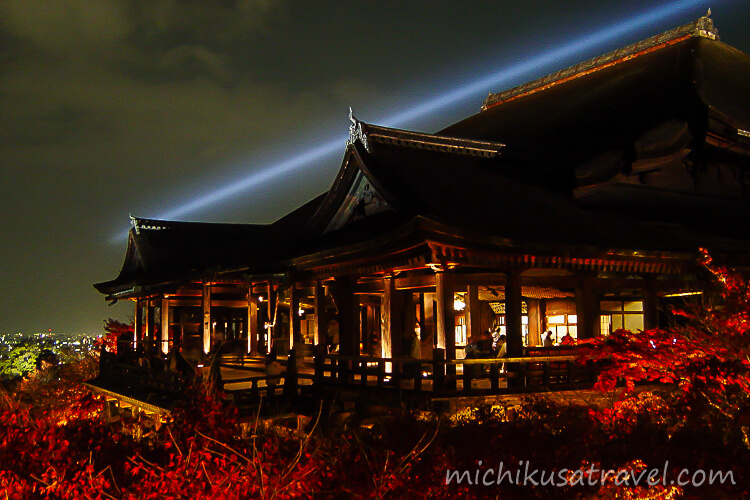
Highlights of Fushimi Inari Taisha
Fushimi Inari Taisha is the head shrine of approximately 3 ten thousand Inari shrines throughout Japan. At the foot of Mount Inari stand the two-story gate and main hall, followed by an approach lined with rows of vermilion torii gates. You can visit only the shrine buildings or walk the “mountain circuit” around the shrines and mounds throughout the mountain.
The Rōmon Gate and Main Shrine

As you pass through the large torii gate on the main approach, a vermilion-lacquered gate said to have been donated by Toyotomi Hideyoshi appears directly ahead. Guardian statues are enshrined on both sides of the gate.

The main hall stands beyond the tower gate. It draws worshippers seeking abundant harvests, business prosperity, and the safety of their families.
Senbon Torii
Proceeding from behind the main hall toward Mount Inari, you will find Senbon Torii, a dense tunnel of vermilion torii gates. The custom of dedicating torii gates spread during the Edo period and is said to express the wish that prayers will “pass through,” as well as gratitude when they have “come true.”

The path toward the inner shrine splits into two routes, and vermilion torii gates continue without interruption along both.

The row of torii gates curves gently along the approach, and the shades of vermilion change with the way the light falls.

Looking at a torii gate from the back reveals the donor’s name and the date of the donation.
Fox Statue
Fox statues, regarded as messengers of the deity Inari, are placed throughout the grounds. It is commonly explained that the key held in the mouth symbolizes the key to the rice storehouse, the jewel represents Inari’s spiritual virtue, the rice ear symbolizes abundant harvests of the five grains, and the scroll represents wisdom.
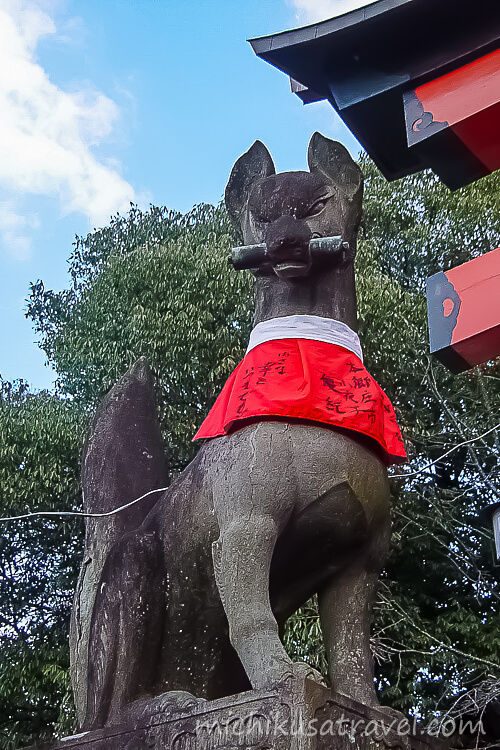
This fox statue watches over the shrine grounds. It does not represent Inari itself, but is worshipped as the deity’s messenger.

The fox statues placed alongside the torii gates and stone lanterns each have a different appearance and expression.

An ear of rice hangs around the fox statue’s neck as a prayer for abundant harvests.
Basic information about Fushimi Inari Taisha
The information below was checked against official sources on September 29, 2026. Please also check the latest information on the official website when planning your trip.
- 🔗 Official website
- Check the latest information about the shrine grounds, ceremonies, and visits.
伏見稲荷大社1300年にわたって、人々の信仰を集め続ける「お稲荷さん」の総本宮 伏見稲荷大社の公式ホームページinari.jp
- 📍 Location
- Fushimi, Kyoto, Kyoto Prefecture68
- 🕒 Visiting hours
- The grounds can be visited throughout the day. Check the official information for the operating hours of amulet counters and other services according to your purpose of visit.
- 💶 Admission
- Free
- ⏱ Time required
- Allow approximately 1 to 1 hours30 minutes to visit the main shrine, Senbon Torii, and Okusha Hohaisho Inner Shrine. If you also include the mountain circuit on Mount Inari, approximately 2 hours is a useful guideline. ⚠️ The grounds include continuous stairs and slopes, so allow plenty of time for breaks and crowds.

Access to Fushimi Inari Taisha
Railway
Inari Station on the JR Nara Line is right next to the shrine. From Fushimi Inari Station on the Keihan Main Line, it is about 5 minutes on foot eastward.
Route buses
It is about 7 minutes on foot east from the Kyoto City Bus stop "Inari Taisha-mae."
By car
The official website recommends using public transportation. The parking lot may be closed during periods such as the year-end and New Year holidays, so if you are visiting by car, check the information on traffic restrictions and parking in advance.

For attractions, transport and suggested itineraries, see “Kyoto: A guide to attractions, food, transportation, and suggested itineraries”.