Highlights of the Kyoto Railway Museum
The Kyoto Railway Museum, located in Kyoto’s Umekoji Park, is one of Japan’s largest railway museums. It opened in 2016 following the expansion and renovation of the Umekoji Steam Locomotive Museum, with some of the rolling stock from the Transportation Science Museum, which closed in 2014, relocated to the new museum.
The Umekoji Locomotive Depot, the oldest surviving reinforced-concrete locomotive depot, and steam locomotive number 233, Japan’s first mass-produced steam locomotive, are designated Important Cultural Properties of Japan.
Many other valuable vehicles are also on display, including the first cars of the Shinkansen 0 series electric multiple unit and the JNR Class 7100 steam locomotive “Yoshitsune.”
The SL Steam runs every day, with a steam locomotive hauling passenger cars. Along Umekoji Park, you can enjoy a round trip of approximately 1 kilometers.
Umekōji Locomotive Depot

The Umekoji Locomotive Depot is the oldest surviving reinforced-concrete locomotive depot and the largest surviving roundhouse by number of storage tracks. It is designated an Important Cultural Property of Japan.
Incidentally, by number of tracks, the former Tsuyama fan-shaped locomotive roundhouse at the Tsuyama Railroad Educational Museum is the 2-largest surviving roundhouse of its kind.
See the article below for tourist attractions in Tsuyama, including the Former Tsuyama Roundhouse.


Japanese National Railways steam locomotive 1070 (1080)

The Japanese National Railways Class 1070 steam locomotive was created by converting Class 6200 and Class 6270 tank locomotives between 1925 (Taisho 14) and 1928 (Showa 3). Class 6200 was a tender steam locomotive manufactured by British Neilson, while Class 6270 was manufactured by British Dübs. The wheel arrangement was also changed from 2B by adding 1 trailing axles, becoming 2B1.
JNR Class B20 steam locomotive No. 10

The JNR B20-class steam locomotive is a small tank locomotive built from 1944 to 1947. It was used as a shunting locomotive to move rolling stock within station and depot grounds. In 2002, it was restored to working order to commemorate the 30th anniversary of the opening of the Umekoji Steam Locomotive Museum, and it remains in active service as a shunting locomotive.
JNR Class C51 Steam Locomotive Number 239

The JNR C51-class steam locomotive is a large tender locomotive manufactured from 1919 to 1928. Locomotive 239 served as the dedicated locomotive for the imperial train carrying the Emperor.
JNR Class C53 steam locomotive No. 45

The JNR Class C53 was a passenger tender steam locomotive domestically produced after the American Locomotive Company (ALCO) analyzed the Class C52 design. The Class C52 was the last foreign-built steam locomotive class acquired by JNR, with only 6 locomotives imported in 1926. No Class C52 locomotives survive, but the Class C53 preserves an impression of their appearance.
JNR Class C55 steam locomotive No. 1

The JNR Class C55 is a tender steam locomotive for passenger trains, manufactured from 1935 to 1937. It appeared during the worldwide trend for streamlined steam locomotives, which included Britain’s Mallard; in the Class C55, locomotives 20 through 40—a total of 21 units—were fitted with streamlined casing. This example is locomotive 1, the first unit of the class.
JNR Type 56 steam locomotive 160 “SL Steam”

The Japanese National Railways C 56 class steam locomotives were small, lightweight tender locomotives manufactured from 1935 to 1939. Because they raced through highland areas such as the Koumi Line, they were nicknamed Pony. This locomotive is number 160, the last one built.

The SL Steam Train is a popular attraction in which a real working steam locomotive pulls passenger cars. Along Umekoji Park, visitors can enjoy a round-trip ride of approximately 1 kilometers.

After the SL Steam train’s final run, you can watch the locomotive turn around on the turntable and then return to the Umekoji Locomotive Depot.

JNR C57-class steam locomotive number 1

The JNR class C57 is a tender steam locomotive manufactured between 1937 and 1947. Its graceful appearance earned it the nickname the Noble Lady. This example is locomotive 1, the first of the class. It is also used to haul the SL Yamaguchi excursion train.

Something resembling a maintenance note can be seen.

JNR Class C58 steam locomotive No. 1

The JNR Class C58 steam locomotive was manufactured from 1938 to 1947 as a tender steam locomotive for both passenger and freight service. Its maximum operating speed is 85 kilometers per hour, close to that of Class 8620 (95 kilometers per hour), while its tractive effort (cylinder tractive force) is 12,570 kilograms, close to that of Class 9600 (13,702 kilograms). This locomotive is number 1, the first locomotive of the series.
JNR Class C59 Steam Locomotive Number 164

The Japanese National Railways C 59-class steam locomotive is a tender locomotive for mainline passenger trains, manufactured from 1941 to 1947. It was designed as the successor to the C 53 class to haul passenger trains on the Tokaido and Sanyo Main Lines. While the C 53 class was complex in terms of construction and maintenance because it used 3 cylinders, the C 59 class adopted 2 cylinders, improving maintainability.
Japanese Government Railways 7100-class steam locomotive, locomotive 1 “Yoshitsune”

The JNR 7100-class steam locomotive is a tender locomotive manufactured by H. K. Porter in the United States from 1880 to 1889. This locomotive is unit 1 and is known by the nickname “Yoshitsune.” Its cowcatcher and distinctive Diamond Stack chimney are characteristic of a steam locomotive from the American frontier era. It was introduced for the opening of the government-operated Horonai Railway, Hokkaido’s first railway.
8 7100-class locomotives were manufactured, but only 3 survive, including locomotive 1, “Yoshitsune.” 1 of these is locomotive 2, “Benkei,” displayed at the Railway Museum in Saitama, while the remaining 1 is locomotive 6, “Shizuka,” displayed at the Otaru Museum.
For information about the railway museum’s exhibits, such as Benkei-go and the sleeping car, please see the article below.
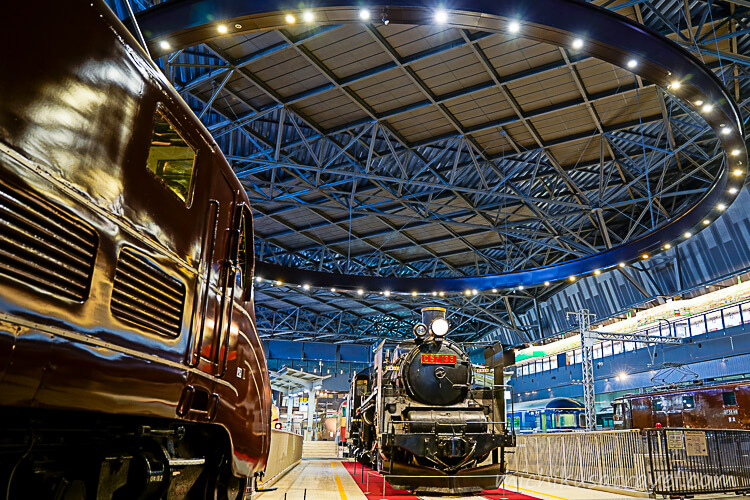
JNR Class C11 steam locomotive No. 64

The JNR C11-class steam locomotive is a small tank locomotive for passenger service, manufactured from 1932 to 1947. It was deployed on lines with strict axle-load limits. Axle load means the maximum weight that can be placed on 1 axles.
JNR Class C61 Steam Locomotive No. 2

The JNR C61-class steam locomotive is a tender locomotive for train service, manufactured from 1947 to 1949. After World War II, demand for freight transportation declined, leaving freight locomotives such as the D51 and D52 classes surplus. The C61 class was manufactured by repurposing boilers from the D51 class.
JNR Class C62 steam locomotive No. 1

The Japanese National Railways C 62-class steam locomotive is a tender locomotive manufactured from 1948 to 1949. While the C 61 class reused the boiler from the D 51 class, the C 62 class reused the boiler from the D 52 class. This is locomotive number 1, the first locomotive of the class.
The C62 class is known as the steam locomotive from Leiji Matsumoto’s Galaxy Express 999. In the original work and theatrical film, it bears the number plate “C62 48,” while the television anime version uses “C62 50.” Production of the C62 class ended with locomotive number 49 (C62 49), so “C62 50” is a fictional number.
JNR Class C63 Steam Locomotive No. 1 (Model)

The Japanese National Railways C-series63 steam locomotive is a legendary steam locomotive that was designed but never built. It was designed in 1956 as a tender steam locomotive for both passenger and freight service, but the plan was canceled as Japan shifted toward electrification and diesel power, and production remained only a dream. The Kyoto Railway Museum displays a model of the Japanese National Railways C-series63 steam locomotive, locomotive1.
Japanese National Railways 9600-class steam locomotive (9633)

The JNR 9600-class steam locomotive was Japan’s first mass-produced freight steam locomotive, created during the Taisho period by the Railway Bureau, predecessor of Japanese National Railways. It has nicknames such as “Kyu-roku” and “Yama-oyaji.” It became the foundation of Japan’s freight steam locomotives, leading to later locomotives such as the D 51.
JNR Class D50 steam locomotive No. 140

The Japanese National Railways D 50 type steam locomotive is a freight tender locomotive manufactured from 1923 to 1931. It was introduced as the successor to the 9600 type and served as a mainline freight locomotive with greater tractive effort. Its original type designation was 9900, but it was renamed the D 50 type following the revision of the designation regulations in 1928.
JNR Class D51 Steam Locomotive No. 1

The JNR 51 steam locomotive was manufactured from 1935 to 1945 as a tender locomotive. It is widely known by the nickname Degoichi and is considered a symbol of steam locomotives in Japan. 1184 locomotives were produced, and this is the commemorative locomotive numbered 1. Incidentally, the “D 51” indicates 4 driving axles, while the “C 62” indicates 3 driving axles.
Japanese National Railways Class D52 steam locomotive number 468

The JNR Class D52 steam locomotives are tender locomotives for freight service manufactured between 1943 and 1946. With greater tractive power than the Class D51, they are Japan's largest freight steam locomotives. They were introduced to meet the increased demand for transportation during World War II.
Shinkansen 0 series electric train

Just beyond the entrance hall, visitors are greeted by the first Shinkansen 0-series train. The Shinkansen 0 series was the first in the world to achieve commercial operation at speeds exceeding 200 kilometers per hour. It was created for the Tokyo Olympics in 1964 and connected Tokyo and Shin-Osaka in approximately 4 hours.
JNR Class 230 steam locomotive

The Japanese National Railways Class 230 steam locomotive was Japan’s first domestically produced mass-production steam locomotive. A total of 41 locomotives were built between 1902 (Meiji 35) and 1909 (Meiji 42). It is designated an Important Cultural Property of Japan.

From left: a Shinkansen electric train of the 500 series (521 car of the 1 series), a Japanese National Railways electric train of the 583 series (581 car of the 35 series), “Gekko,” and a Japanese National Railways electric train of the 485 series (489 car of the 1 series), “Raicho.”
Shinkansen 500 Series train

The Shinkansen 500-series train is a high-speed train that entered commercial service in 1997, designed with an emphasis on speed. It achieved the world’s fastest commercial operating speed at the time, exceeding 300 kilometers per hour.

The 500 series is the only Shinkansen train developed independently by JR West. At the Kyoto Railway Museum, JR West’s railway museum, it can be considered an iconic presence.
Japanese National Railways 1800-class steam locomotive

The JNR class 1800 (class 1801) was a small tank steam locomotive introduced in the early Meiji era to handle the steep gradient between Kyoto and Otsu over Osaka Pass. It was imported from the British firm Kitson in 1881.
Shinkansen 100N-series train

The 100-series Shinkansen train was introduced in 1985 as the successor to the 0-series Shinkansen for the Tokaido and Sanyo Shinkansen lines. It was developed to increase speed and improve service, and was operated mainly on Hikari and Kodama services.
The maximum speed of the 100 series is 220 kilometers per hour, and the 100N series (V formation), introduced in 1989, achieved operation at 230 kilometers per hour on the Sanyō Shinkansen. The 100N series was an improved model newly designed by JR West, with a luxurious formation incorporating 2 double-decker cars and 4 cars. It became popular as the “Grand Hikari.”
Japanese National Railways EF58-class electric locomotive

The JNR Class EF58 electric locomotive is a representative passenger locomotive of the Japanese National Railways in the postwar period. In 1958, JNR 20-series coaches appeared on the sleeper express Asakaze, and their blue carriages led them to be called the Blue Train. The EF58 class became the locomotive of the first Blue Train.
The dining car of the 20-series passenger cars of Japanese National Railways (Nashi 20 type) is used as a café at the Kyoto Railway Museum. A later 2-series sleeping car with a crew compartment (Nahaneve 22 type) is on display at the Railway Museum in Saitama.
For information about the railway museum’s exhibits, such as Benkei-go and the sleeping car, please see the article below.
JNR EF 66-class electric locomotive

The JNR EF 66-class electric locomotive is a direct-current electric locomotive developed for high-speed freight trains. From 1985 onward, it also served as the locomotive for the overnight limited express trains “Hayabusa” and “Fuji.” The EF 66 class is one of the locomotive classes that later became symbols of the Blue Train.
Japanese National Railways EF81 electric locomotive

The EF81 electric locomotive was compatible with both alternating and direct current. It could operate on extensive electrified routes and served in a wide range of regions, including Tohoku, Hokuriku, and Kyushu. It is also known as the locomotive that hauled the Twilight Express sleeper limited express connecting Osaka and Sapporo, which began service in 1989.
Locomotion 1 (model)

Locomotion 1 (Locomotion No. 1) was the world’s first steam locomotive to haul passenger trains. It was designed by George Stephenson and Robert Stephenson, father and son, and manufactured in 1825. It operated on the Stockton and Darlington Railway. The original is on display at the railway museum in Shildon, where this railway’s workshops were located.
Rocket (model)

The Rocket (Stephenson's Rocket) was one of the technological milestones in the early history of steam locomotives. It incorporated numerous groundbreaking technologies, including a multi-tube boiler that efficiently generated steam through many narrow tubes and a blastpipe that used exhaust steam to intensify the fire. Designed by Robert Stephenson, it was built in 1829.
A replica of Rocket is on display at the National Railway Museum in York, while the original is exhibited at the railway museum Locomotion in Shildon.
For information about exhibits such as Rocket at the United Kingdom’s National Railway Museum, see the article below.
Sky Terrace

From the outdoor observation deck known as the “Sky Terrace,” you can watch trains running on the JR Kyoto Line and the Tokaido Shinkansen. An N 700-series Shinkansen runs below the five-story pagoda of the World Heritage-listed To-ji Temple. Nintendo’s headquarters development building is also visible in the distance to the right.
Railway Diorama

This is a roundhouse. Although it differs in details such as the number of storage tracks, it appears to be modeled on the Umekoji locomotive depot.

This is a Japanese National Railways C-series57 steam locomotive, locomotive1 “SL Yamaguchi.”

The Tokaido Shinkansen 0 Series and Tohoku Shinkansen E5 Series come together in a dream pairing that transcends time and space.
Former Nijō Station Building

This wooden station building, constructed in year 1904 (Meiji year 37), features an irimoya-style roof. It serves as the exit of the Kyoto Railway Museum and is also used as the museum shop. It is a fitting way to conclude the visit, offering a close look at station architecture from the Meiji period.
Kyoto Railway Museum: Basic Information
The information below was checked against official sources on September 16, 2026. Please also check the latest information on the official website when planning your trip.
- 🔗 Official website
- Information on the Kyoto Railway Museum’s opening days, exhibitions and activities, admission fees, and the SL Steam can be found on the official website.
https://www.kyotorailwaymuseum.jp/www.kyotorailwaymuseum.jp
- 📍 Location
- Kankiji-chō, Shimogyō Ward, Kyoto
- 🕒 Opening hours
- From 10:00 to 17:00; admission is allowed until 16:30.
- 🚫 Closed days
- Every Wednesday, during the New Year period (from month 12 day 30 to month 1 day 1), and on other days. The museum is also open on Wednesdays during public holidays and school holiday periods.⚠️ Opening days may change, so check the official calendar.
- 💶 Admission
- General admission is 1,500 yen. Ticket-type prices, discounts, and tickets for the SL Steam are explained in detail in the following section, “Kyoto Railway Museum Tickets.”
- ⏱️ Visit duration
- Allow approximately 2 to 3 hours to see the original rolling stock and main exhibits. The indoor and outdoor areas include original vehicles ranging from steam locomotives to shinkansen, the Umekōji locomotive roundhouse, a railway diorama, the Sky Terrace, and hands-on exhibits.⚠️ If you also plan to ride the SL Steam or use the driving simulator, allow extra time for operating times and queues.

Tickets for the Kyoto Railway Museum
- 💶 Admission fees
-
- General: 1,500 yen
- University and high school students: 1,300 yen
- Junior high and elementary school students: 500 yen
- Preschool children (aged 3 and over): 200 yen
Group rates are available for groups of 20 or more, as well as discounts for visitors with disability certificates. University and high school students and junior high school students must present student ID.
- 🎫 SL Steam Train
- Riding the SL Steam Train requires an additional fee besides admission: 300 yen for general visitors and university and high school students, and 100 yen for junior high and elementary school students and preschool children aged 3 and over. Boarding tickets are sold at the SL platform ticket machine from opening time.⚠️ If you also plan to see other exhibits and experiences, check the operating times and ticket availability and plan your time accordingly.

Access to the Kyoto Railway Museum
The nearest station to the Kyoto Railway Museum is Umekoji-Kyoto-Nishi. After exiting through the station ticket gates, you can see the entrance to the Kyoto Railway Museum directly ahead.
From Kyoto Station to Umekoji-Kyoto-Nishi Station takes about 1 stops and 2 minutes on the JR Sagano Line. Incidentally, the Kyoto Railway Museum is about 20 minutes on foot from Kyoto Station. It is also possible to walk there from Kyoto Station.
Local bus and car
From Kyoto Station, take Kyoto City Bus routes 205 or 208, get off at “Umekoji Park・in front of JR Umekoji-Kyoto-Nishi Station,” and walk for about 3 minutes. On route 86, get off at “Umekoji Park・in front of Kyoto Railway Museum,” and the entrance is right there. The museum has no parking for general visitors, so relying mainly on public transportation is the most reassuring option.
Bus services may change, so please check the current information before using them.

For attractions, transport and suggested itineraries, see “Kyoto: A guide to attractions, food, transportation, and suggested itineraries”.