Highlights of the Otaru City General Museum’s Main Building

Otaru City General Museum Main Building is located in Temiya, Otaru, the birthplace of railways in Hokkaido, and is a museum focused on railways, science, and history.
The former Temiya Railway Facilities, including Locomotive Depot Number Three, Japan’s oldest surviving locomotive depot, are designated as an Important Cultural Property of Japan.
The JNR Class 7100 steam locomotive “Shizuka”, which tells the story of Hokkaido’s development, is preserved and exhibited here along with other valuable railway vehicles.
At the outdoor exhibition area, you can ride the American steam locomotive preserved in working condition, “Iron Horse”, and enjoy a train journey of approximately 400 meters round trip.
The museum focuses primarily on railway exhibits, but it also has science and history exhibits and a planetarium.
Japanese National Railways Class 7100 Steam Locomotive No. 6 “Shizuka”

Japanese National Railways Class 7100 steam locomotives were manufactured by the American H. K. Porter Company between 1880 and 1889 as tender locomotives. This is No. 6 of the class, known by the nickname “Shizuka.” Its cowcatcher at the front and distinctive chimney known as a diamond stack are characteristic features of steam locomotives from the American frontier era. It was introduced for the opening of the government-operated Horonai Railway, Hokkaido’s first railway.
A total of 8 Class 7100 locomotives were built, but only 3 survive, including No. 6, “Shizuka.” One is No. 1, “Yoshitsune,” displayed at the Kyoto Railway Museum, and another is No. 2, “Benkei,” displayed at the Railway Museum in Saitama.
For information about the highlights, opening hours, tickets, and more about the Kyoto Railway Museum, see the article below.
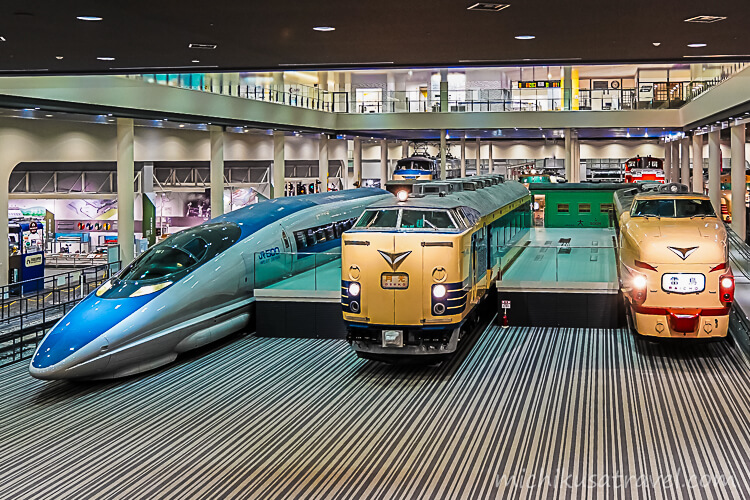
For information on the Railway Museum’s highlights, opening hours, tickets, and more, please see the article below.
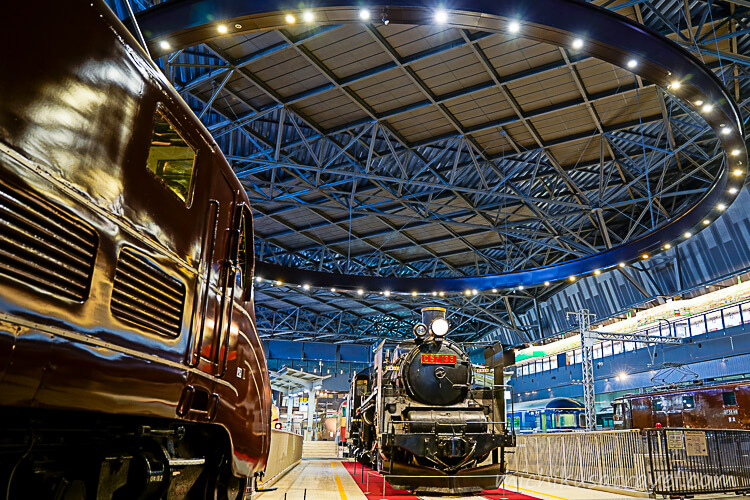
Former Temiya Railway Facilities

The building on the left is Locomotive Shed No. 1, and the building on the right is Locomotive Shed No. 3. Completed in 1885 (Meiji 18), Locomotive Shed No. 3 is the oldest surviving locomotive shed in Japan. Together with the turntable and other structures, it is designated as an Important Cultural Property of Japan.
JNR 7150-class steam locomotive “Daishō-gō”

The JNR Class 7150 steam locomotive Daishō was the only one of its kind built at the Temiya Works in 1895 (Meiji 28) and is the oldest surviving Japanese-built steam locomotive.
It was named “Daishō” to commemorate the victory in the First Sino-Japanese War, and after nationalization it came to be known as Class 7150. It uses parts from a JNR Class 7100 steam locomotive manufactured by the U.S. company H. K. Porter.
Japanese National Railways Ki 550-type freight car (Ki 1567)

The JNR Ki550 freight car (Ki1567) is a Russell-type snowplow for double-track lines, used as a service freight car by JNR.
A Russell-type snowplow (Russell car) is a snow-clearing vehicle that moves along railway tracks, pushing accumulated snow to both sides or to one side with a wedge-shaped plow blade or wings at the front of the vehicle. “Russell” comes from the American company Russell, which developed it.
JNR Ki800 freight car (Ki800)

The JNR Ki800 freight car (Ki800) is a type of service freight car that belonged to JNR and is a Maclay-type snowplow.
A Maclay-type snowplow (Maclay plow) is a railway snow-clearing vehicle designed to break down the high walls of snow accumulated on both sides of the track and push the snow toward the center of the track. “Maclay” comes from engineer Maclay of Canadian National Railway, who developed this technology.
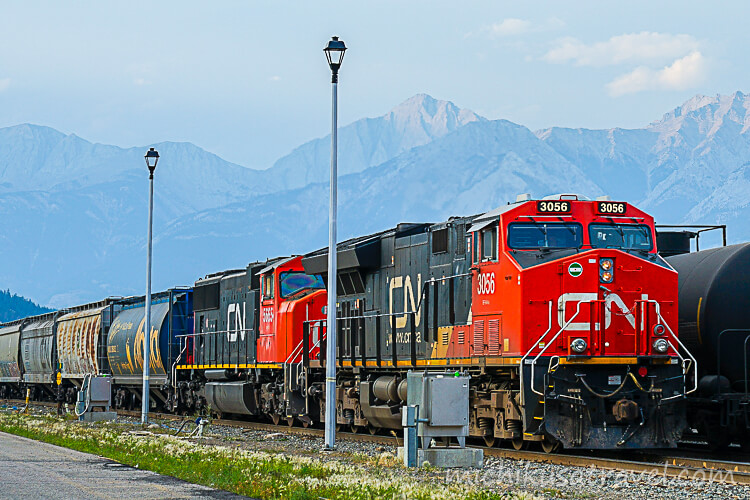
The article below provides more information about railways in Canada.
Japanese National Railways Ki 600-class freight car (Ki 601)

The Japanese National Railways Ki600 freight car (Ki601) was a service freight car used by Japanese National Railways and a rotary snowplow.
A rotary snowplow is a railway snow-clearing vehicle that uses rotating blades at the front to break up and take in snow, then throw it far away as it clears the tracks. Besides clearing snow from the tracks on its own, it is also used to send even farther away the snow that a Maclay plow has gathered in the center of the track.
JNR C12 steam locomotive

The Japanese National Railways Class C12 is a small tank steam locomotive manufactured from 1932 to 1947. It was deployed on lines with strict axle-load limits. An axle-load limit is the maximum weight that may be placed on 1 axle.
Japanese National Railways Kiha 57 series diesel railcar

The JNR KiHa 57 series was an express diesel railcar built between 1961 and 1962. To travel through the Abt-system section of the Shin'etsu Main Line between Yokokawa and Karuizawa (Usui Pass), it was equipped with features such as disc brakes that did not interfere with the rack rail. In the Abt-system section, it was hauled by a JNR Class ED42 electric locomotive.
The JNR ED42 electric locomotive is preserved and exhibited at the Usui-tōge Railway Cultural Village. The JNR ED40 electric locomotive, Japan’s first domestically produced DC electric locomotive with the Abt rack system, which was also used at Usui Pass, is preserved and exhibited at the Railway Museum in Saitama.
For information on the Railway Museum’s highlights, opening hours, tickets, and more, please see the article below.
Iron Horse

The Iron Horse is a steam locomotive imported for the opening of the Otaru Transportation Memorial Museum, the predecessor of the current Main Building. Like the Japanese National Railways Class 7100 steam locomotives, it was manufactured by the American company H. K. Porter, delivered to the United Fruit Company, and used to transport agricultural products in Guatemala. It was later used on tourist railways and at theme parks in the United States.
 You can ride the Iron Horse and enjoy an approximately 400-meter railway journey there and back. Temiya Station, the terminus, can be seen in the background.

You can watch the Iron Horse turn on the turntable from both the Temiya Station side and the Central Station side.
Basic information about the Otaru City General Museum Main Building
The information below was checked against official sources on September 13, 2026. Please also check the latest information on the official website when planning your trip.
- 🔗 Official website
-
Opening hours, admission fees, and exhibition status can be checked in the official facility information provided by Otaru City.
小樽市総合博物館( Otaru Museum ) | 小樽市www.city.otaru.lg.jp - 📍 Location
- 1-3-6 Temiya, Otaru, Hokkaido
- 🕒 Opening hours
- 9:30〜17:00 ⚠️ Opening hours and available facilities may change due to exhibitions, events, construction work, or other circumstances.
- 🚫 Closed
- Tuesdays (the following weekday when Tuesday is a public holiday), December 29 to January 3 ⚠️ Temporary closures may also occur at other times.
- 💶 Admission fees
-
- Adults — summer 400 yen / winter 300 yen
- High school students and residents of Otaru aged 70 or over — summer 200 yen / winter 150 yen
- Middle school students and younger — free
- Groups — 20 or more receive a 20% discount
- Free admission — holders of a physical disability certificate, intellectual disability certificate, or mental disability certificate, along with 1 accompanying person, are admitted free (the accompanying person must declare this at the ticket counter)
⚠️ The winter period runs from early November to late April, and some outdoor exhibits cannot be viewed during this period. Special exhibitions and similar offerings may require separate admission.
- 🎫 Tickets
-
- Combined admission ticket — grants admission to the Main Building, Canal Museum, and former Otaru Branch of Nippon Yusen Co., Ltd. (valid for 2 opening days) / adults 600 yen / high school students and Otaru residents aged 70 or over 300 yen
- Annual passport — grants admission to the same 3 facilities for 1 year / adults 1,200 yen / high school students and Otaru residents aged 70 or over 600 yen
- Also valid for the Temiya Cave Preservation Hall in summer (during its opening period) / ticket type cannot be changed after purchase
- ⏱️ Time required
-
- When mainly viewing the permanent exhibitions indoors — 1 hour to 1 hour 30 minutes
- When also viewing the outdoor railway vehicles and facilities designated as important cultural properties — 2 hours to 3 hours
⚠️ Some outdoor exhibits cannot be viewed in winter. If you combine your summer visit with a ride on the Iron Horse steam train, a special exhibition, or the planetarium, allow extra time.

Getting to the Main Building of Otaru City Museum
From Otaru Station, it is about a 22-minute walk to the Temiya Entrance of the Otaru City Museum Main Building. From the Otaru City Museum Canal Building beside the Otaru Canal, it is about a 17-minute walk to the Main Building. As it is slightly outside the city center, you can walk there or take a bus or taxi.
Local bus and car
To reach the main entrance from JR Otaru Station, take the bus to Otaru Aquarium via Takashima (route number 10) from bus stop 3 at the bus terminal in front of the station, get off at “General Museum,” and walk for about 3 minutes. Buses via Akaiwa do not stop at “General Museum,” so check the route number before boarding. Free parking is available in front of the main entrance to the Main Building.
Details on local bus services and driving routes are available in the City of Otaru’s official transportation guide.
