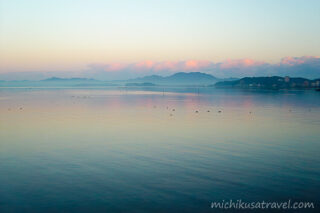
Highlights of Matsue Castle
Matsue Castle is located in Matsue, Shimane Prefecture. Its black exterior with board siding is a defining feature, and it is also called “Chidori Castle.”
In 1600, Horio Yoshiharu, who had distinguished himself in the Battle of Sekigahara, became the daimyō governing the provinces of Izumo and Oki. He initially took up residence at Gassan-Toda Castle, but because the mountain fortress was inconvenient for administration and developing a castle town, he planned to build Matsue Castle as a new base.
Construction of the castle began in 1607 and progressed under Horio Yoshiharu and his grandson Tadaharu; the main keep was completed around 1611. Matsue Castle was later used as the residence of the Kyōgoku and Matsudaira families.
Matsue Castle has one of the 12 surviving original castle keeps built before the Edo period. It is also one of the 5 castles whose keeps are designated National Treasures.
Main Keep
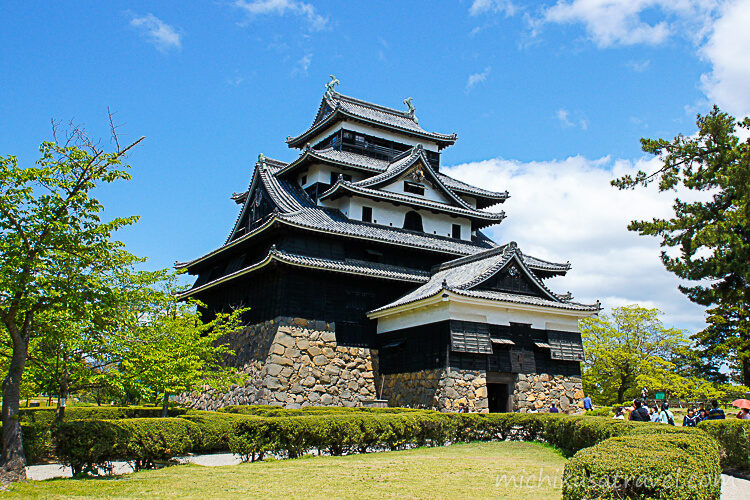
This is a main tower in a composite watchtower style, with 4 tiers, 5 floors, and 1 basement level. It is distinguished by its black, imposing exterior clad in boards. The roof is topped with shachi carved from wood and clad in copper sheeting; among surviving wooden shachi, these are the largest in Japan.
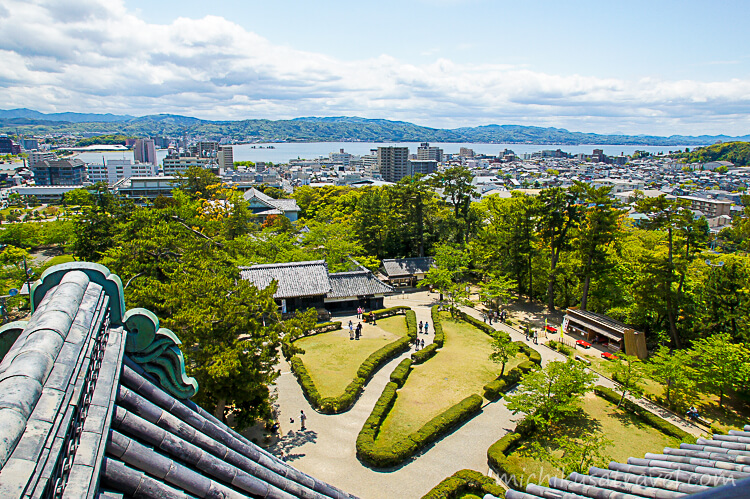
The view from the observation deck. You can see the cityscape of Matsue and Lake Shinji.
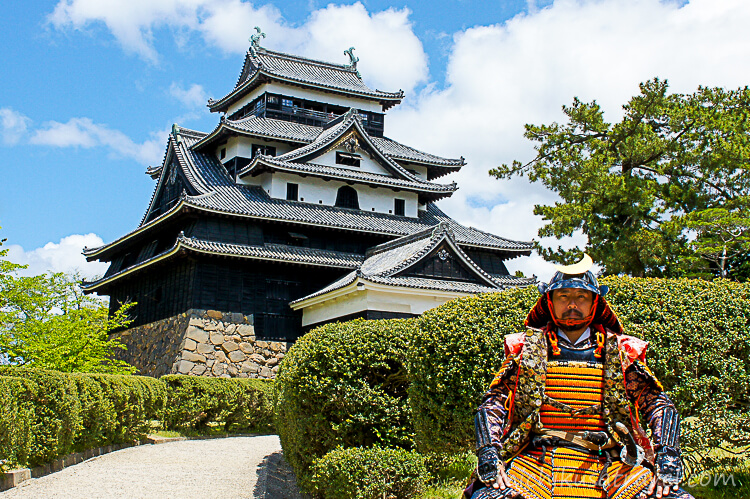
In front of Matsue Castle’s keep is Kamejiro Honma, captain of the Matsue Wakamusha-tai group, which was formed to promote Matsue.
Taiko Turret
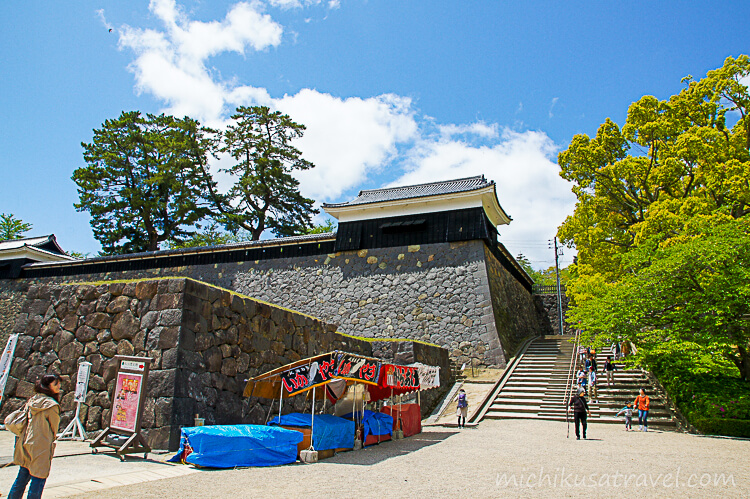
This structure was used to announce the time and signal emergencies by beating a drum. It was reconstructed in 2001 and stands on the upper level of the Ninomaru compound.
Ichino-mon
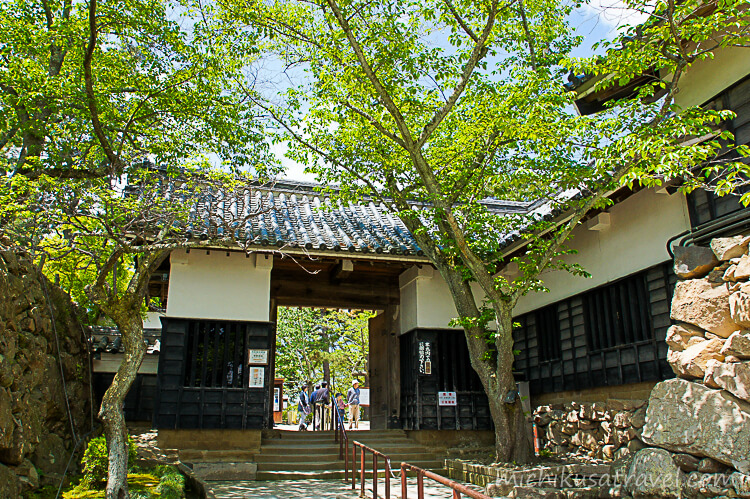
Passing through the First Gate brings you to the main compound, where the castle keep stands. The First Gate was reconstructed in 1960 along with part of the adjoining South Tamon Turret. The gate and turret form an integrated structure protecting the entrance to the main compound.
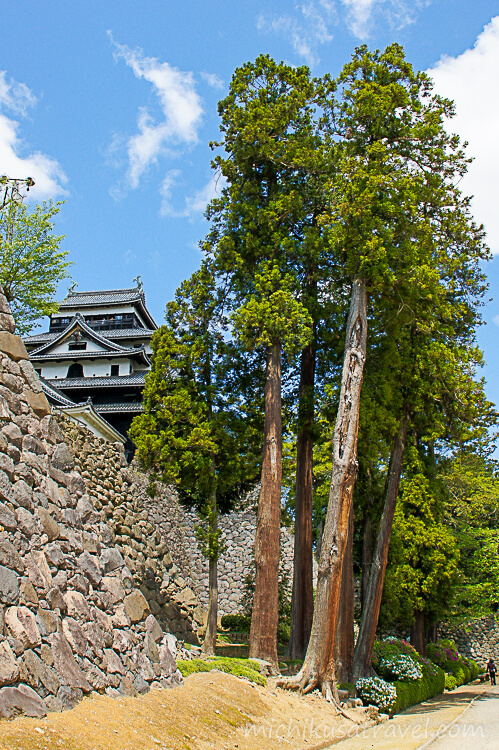
Cedar trees take root on the slope and grow vigorously.
Shiroyama Inari Shrine
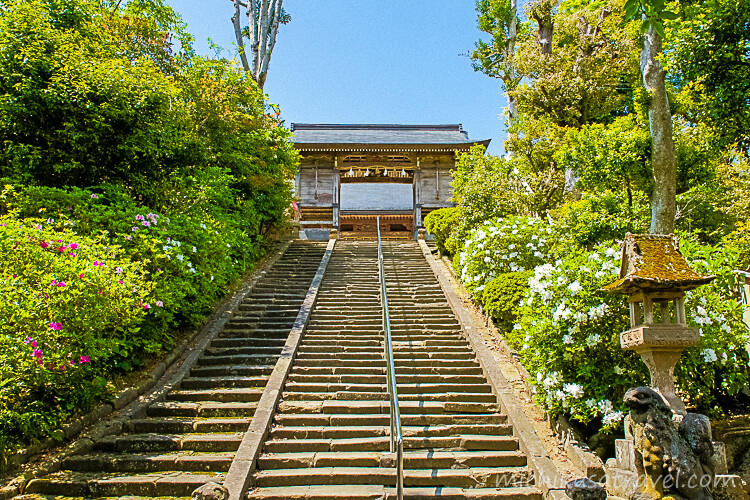
Shiroyama Inari Shrine is located in Matsue Castle Park. “Hōran-enya,” held once every 10 years as the shrine’s ceremonial procession, is considered one of Japan’s three major boat festivals, alongside Itsukushima Shrine’s “Kangen-sai” and Osaka Tenmangū’s “Tenjin-sai.”
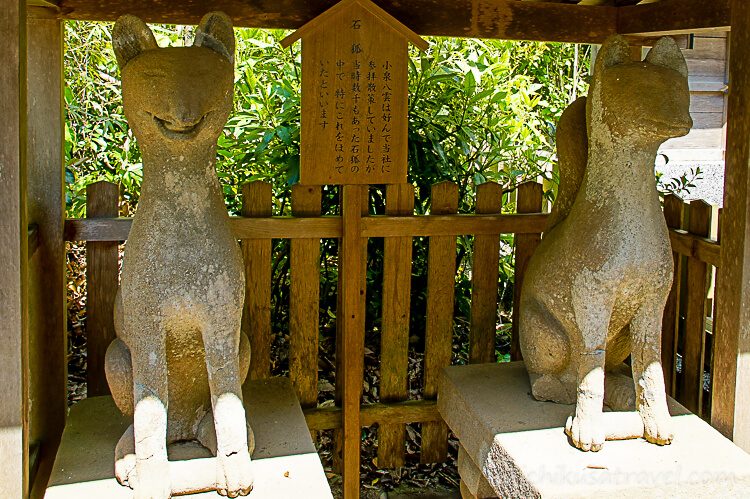
Stone foxes of various sizes line the grounds of Shiroyama Inari Shrine. These 2 in particular are said to have been favorites of Lafcadio Hearn.
Matsue Shrine
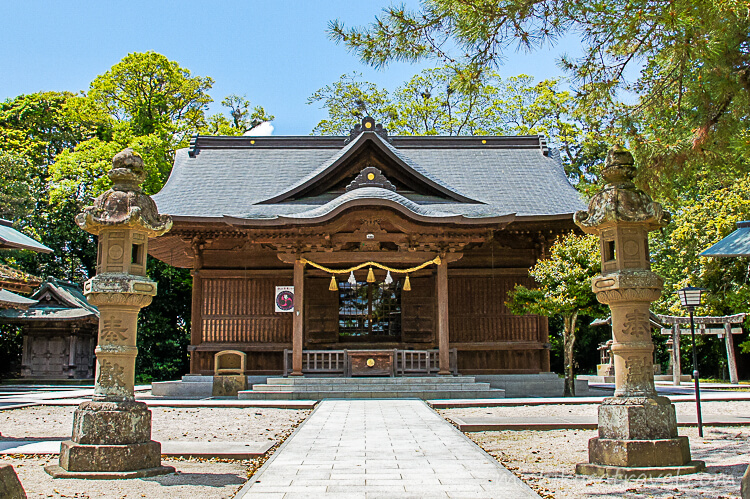
Matsue Shrine stands in the second bailey of Matsue Castle. Its principal deity is Naomasa Matsudaira, the first lord of the Matsue Domain from the Matsudaira family. It also enshrines Harusato Matsudaira, the family’s 7th lord of the Matsue Domain, known as “Fumai”, and Yoshiharu Horio, the founder of Matsue, among others.
When Matsue Castle was designated a National Treasure, 2 prayer plaques rediscovered at Matsue Shrine provided an important clue. The plaques were inscribed “New Year of the 16th year of the Keichō era (1611)” and were valued as evidence indicating when the Main Tower was completed.
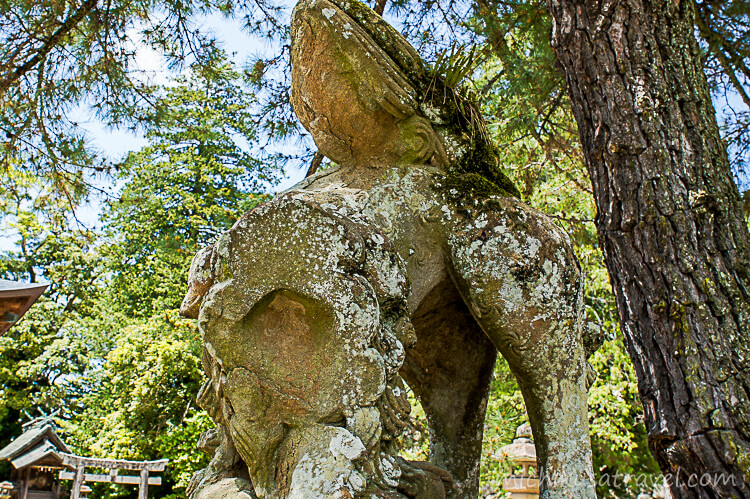
The komainu’s face looks as though it was gouged out of the clay with a thread. Apparently, there is no particular legend behind it.
Kounkaku
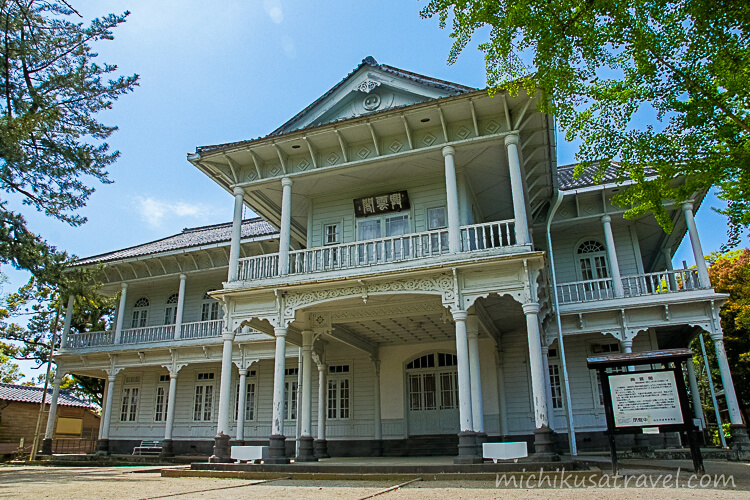
Kounkaku is a Western-style building from the Meiji era, standing next to Matsue Shrine. It was completed in the 36th year of the Meiji era (1903) as an exhibition hall for Matsue city crafts, and also served as a guesthouse, including accommodation for Crown Prince Yoshihito, later Emperor Taishō, during his visit to the San’in region in the 40th year of the Meiji era.
Basic Information about Matsue Castle
The information below was checked against official sources on September 16, 2026. Please also check the latest information on the official website when planning your trip.
- 🔗 Official Website
- Visit the official website of National Treasure Matsue Castle for information about the castle keep, Shiroyama Park, online tickets, events, and more.
国宝 松江城ホームページ国宝松江城公式サイト。国宝松江城は、全国で現存する12天守のうちの一つで、唯一の正統天守ともいわれています。別名「千鳥城」とも呼ばれている松江城の歴史や天守内外のみどころ、松江城のおすすめの歩き方など紹介しています。www.matsue-castle.jp
- 📍 Address
- 1-5 Tonomachi, Matsue, Shimane Prefecture
- 🕒 Admission Hours
-
- April 1–September 30: 8:30–18:00 (last admission at 17:30)
- October 1–March 31: 8:30–17:00 (last admission at 16:30)
- 🚫 Closed
- Open year-round. ⚠️ Hours may change due to events.
- 💶 Castle Keep Admission
- The standard individual admission fee is 1,200 yen. Prices by ticket type and online tickets are covered in detail in the following “Matsue Castle Tickets” section.
- ⏱️ Time Required
- Allow about 40–50 minutes to walk from Otemae up through the castle keep and back. ⚠️ The stairs inside the keep are steep, so allow extra time when it is crowded or if you are unsteady on your feet.

Matsue Castle Tickets
- 💶 Main Tower Admission
-
- Individual visitors: Adults: 1,200 yen; elementary and junior high school students: free
- Groups (30 people or more): Adults: 960 yen; elementary and junior high school students: free
- Matsue residents: Adults: 600 yen; elementary and junior high school students: free
- 🎫 Web Tickets
- The official website offers web tickets for Matsue Castle that let you enter the Main Tower without waiting in line at the ticket counter. A 3-attraction web ticket covering Matsue Castle, the Lafcadio Hearn Memorial Museum, and the Samurai Residence is also available. Choose a regular admission ticket or a combination ticket according to your travel date and the places you plan to visit.


Prices and sales conditions may change. Please check the latest information on the official website before purchasing.
Getting to Matsue Castle
From Ichibata Railway’s Matsue Shinjiko Onsen Station, walk northeast for about 14 minutes to reach Chidori Bridge at Matsue Castle. From JR Matsue Station, the walk to Matsue Castle takes about 30 minutes, so you can also take a bus or taxi.
Local bus and car
From JR Matsue Station, it is convenient to take the Lakeline around the castle town to “Matsue Castle, National Treasure (Ōtemae)”. For cars, the main parking lots are Ōtemae and Shiroyama-nishi. Motorcycles and bicycles each have designated parking areas.
Before setting out, check bus services and parking conditions in the access information on Matsue Castle's official website.

The related guide “【松江】観光スポット・グルメ・交通・モデルコースを解説” is currently available only in Japanese.