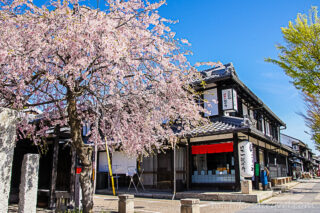
Highlights of Hikone Castle
Hikone Castle is a castle in Hikone City, Shiga Prefecture. It is known as the residence of the Ii clan.
In 1600, Tokugawa Ieyasu, who had won the Battle of Sekigahara, entrusted the rule of Ōmi Province to Ii Naomasa, one of the Tokugawa clan’s four great generals. Naomasa first entered Sawayama Castle, but disliked that it had been Ishida Mitsunari’s residence and planned to build Hikone Castle.
After Naomasa's death, construction of Hikone Castle was continued by his sons Naotsugu and Naotaka, and all construction work is completed in 1622.
Hikone Castle is one of the 12 surviving castle keeps built before the Edo period. It is also one of the 5 castles whose keep has been designated a National Treasure.
Ii Naotaka and Gotoku-ji’s beckoning cats
On his way home from falconry in Edo, Naotaka Ii passes a poor temple in Setagaya. A white cat makes a gesture as if beckoning Naotaka over and saying, “Come here, come here.”
Naotaka was puzzled and followed the cat into the temple. The white cat belonged to the priest. As he was talking with the priest, a thunderstorm suddenly broke out. Naotaka realized that the white cat had saved him.
Deeply moved, Naotaka made a donation and enlarged the temple, while also designating it as the Ii family temple. The temple was renamed “Gotokuji” after Naotaka’s posthumous name.
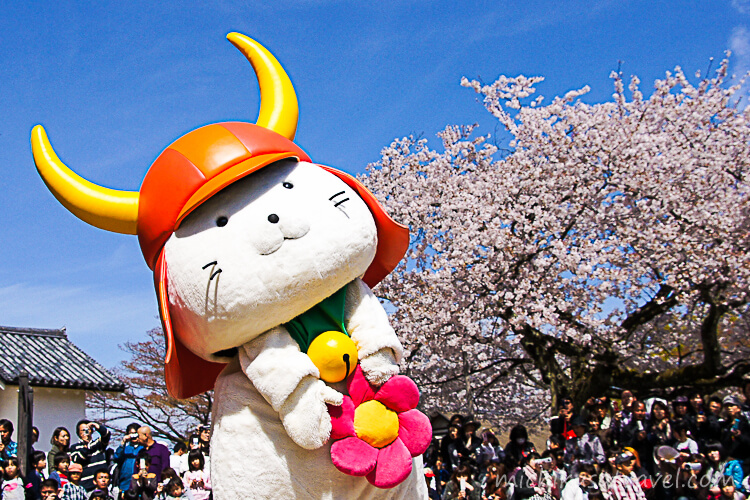
Hikone’s mascot character, Hikonyan, is also modeled on the white cat who appears in this story.
Main Keep
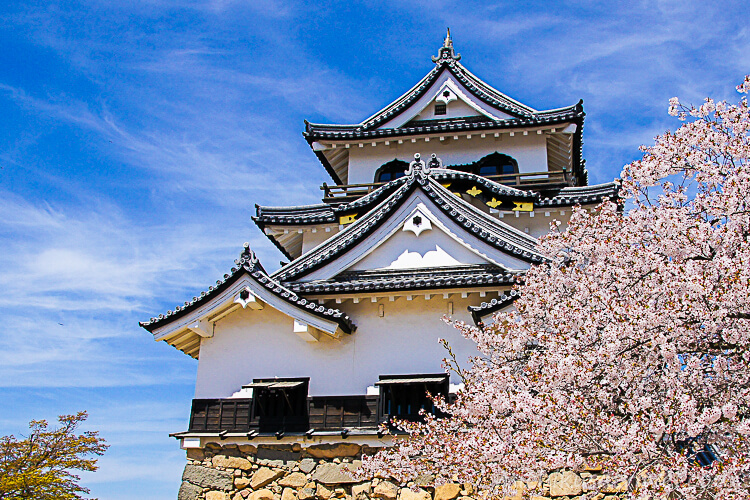
It is a multi-level, combined watchtower-style keep with 3 tiers, 3 above-ground floors, and 1 basement floors. Gabled, hipped, and karahafu roofs are combined in a remarkable balance. The golden decorative fittings on the karahafu roof also add a fine accent.
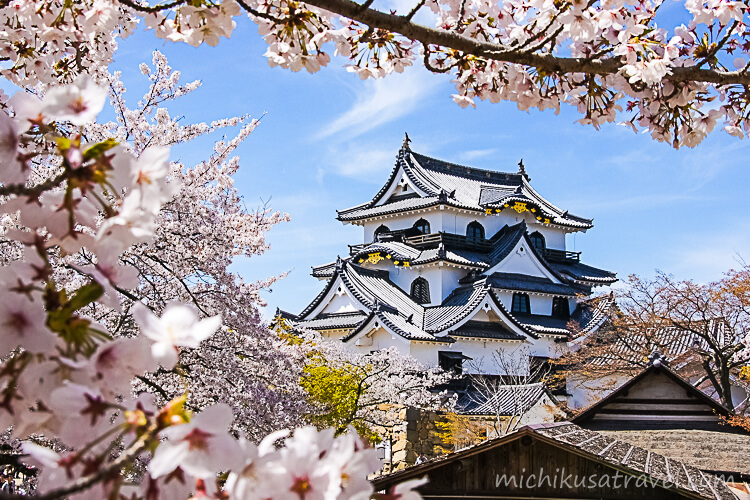
Tenbin Turret and Corridor Bridge
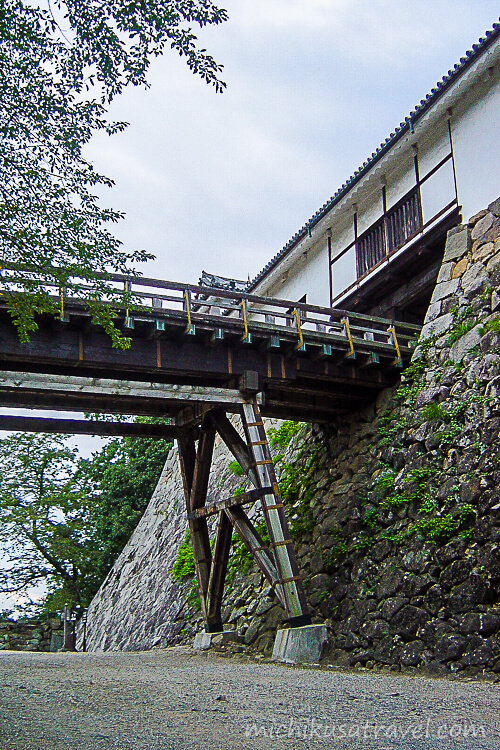
A long, rowhouse-like turret built on top of the stone walls is called a Tamon-yagura. The one at Hikone Castle has two-story corner turrets at both ends, and its front view resembles a balance scale, giving it the name Tenbin-yagura.
The Corridor Bridge leads to the Tenbin Turret. In an emergency, it was designed to be dropped to prevent the enemy from entering. It is also called a “drop bridge.”
Hikonyan
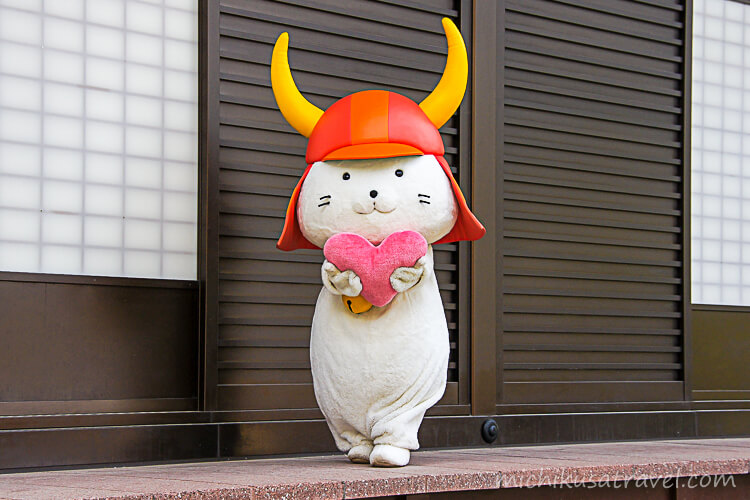
Hikonyan is known as a pioneer of the cute mascot boom. In 2007, he appeared as the mascot for the “National Treasure: 400th Anniversary of Hikone Castle’s Construction Festival” and gradually gained fans throughout Japan.
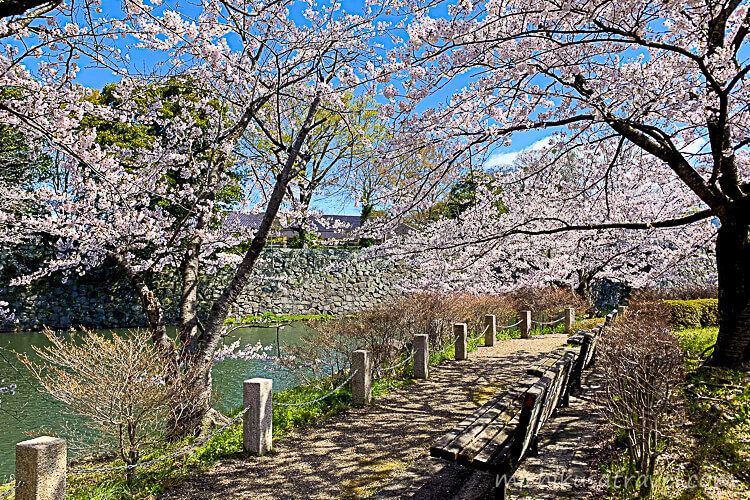
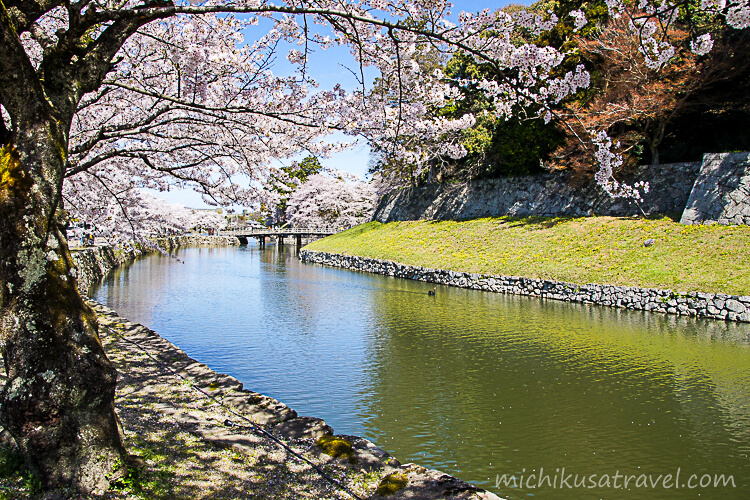
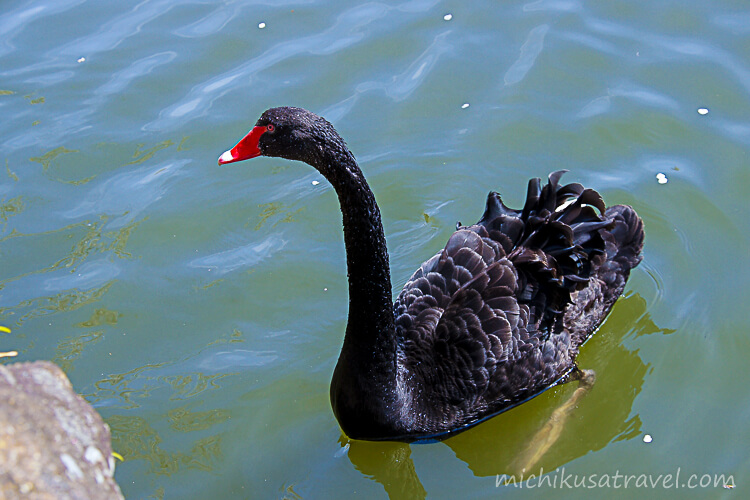
These are black swans kept in the moat of Hikone Castle.
Hikone Castle: Basic Information
The information below was checked against official sources on September 21, 2026. Please also check the latest information on the official website when planning your trip.
- 🔗 Official website
- Information about admission fees, opening hours and visiting Hikone Castle is available on the official websites of Hikone City and Hikone Castle.
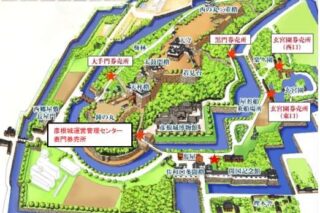 彦根城の観覧案内|彦根市彦根城は彦根山(金亀山)を利用して江戸時代初期に築かれた平山城(ひらやまじろ)です。現在も、山頂には国宝の天守があり、その周囲を巡るように重要文化財の各櫓(やぐら)が残っており、麓には下屋敷をはじめ内堀や中堀などが当初の姿を留めて...www.city.hikone.lg.jp【公式】 国宝 彦根城国宝彦根城の歴史、名勝、アクセスについてご紹介するサイトです。hikonecastle.com
- 📍 Address
- Kanegame-chō, Hikone City, Shiga Prefecture 1-1
- 🕒 Opening hours
- Every day: 8:30–17:00 (last admission 16:30).
- 🚫 Closing days
- Hikone Castle: Open year-round. ⚠️ Hikone Castle Museum may close at the end of the year or during exhibition changes. Combined tickets with the museum are not sold during those periods.
- 💶 Admission fees
-
- Hikone Castle, including Genkyū-en Garden: adults 1,000 yen, elementary and middle school students 300 yen
- Hikone Castle Museum: adults 700 yen, elementary and middle school students 350 yen
- Combined ticket for Hikone Castle and the museum: adults 1,500 yen, elementary and middle school students 550 yen
- Genkyū-en Garden single ticket: adults 400 yen, elementary and middle school students 150 yen
Group rates are available for groups of at least 30 people, and fee exemptions are available to residents of Hikone City.
- ⏱️ Visiting time
- According to the official information, allow just under 1 hours at minimum. The elevation difference from the entrance to the paid area to the main keep is about 50 meters, with an uphill path and approximately 140 stone steps. ⚠️ There are no elevators inside the main keep or the turrets. If you also plan to see Genkyū-en Garden and the museum, allow from 1 hours 30 minutes to around 2 hours.

How to get to Hikone Castle
From Hikone Station, walk straight northwest along Ekimae Oshiro-dori for about 14 minutes to reach the Omotemonbashi Bridge at Hikone Castle.
Local bus and car
From Hikone Station, you can walk or take a bus connecting the station with Hikone Castle. If you are arriving by car, use the Hikone Castle Tourist Parking Lot and check the official website for congestion and operating times before setting out.
The related guide “【彦根】観光スポット・グルメ・交通・モデルコースを解説” is currently available only in Japanese.