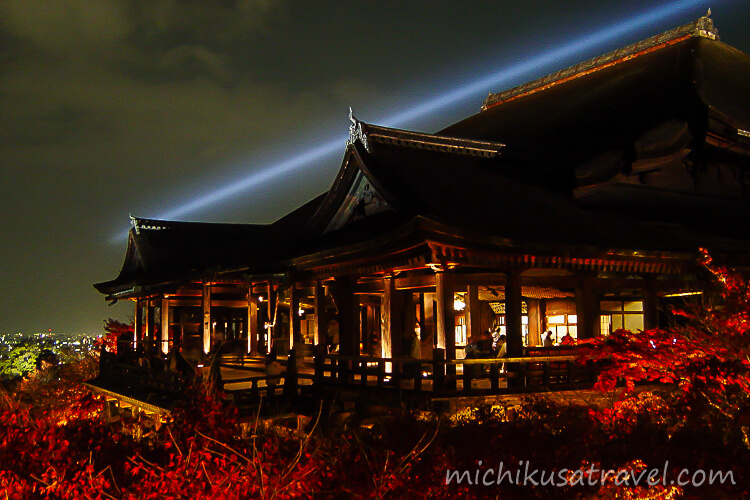
Highlights of Ninna-ji
Ninna-ji, founded in 888, is the head temple of the Omuro school of Shingon Buddhism. After Emperor Uda entered religious life, he established a residence in Omuro, leading the temple to be called the “Omuro Imperial Palace.” It preserves the history of monzeki temples, where members of the imperial family served as abbots. It is also known for “The Monk at Ninna-ji” in Tsurezuregusa.
Ninna-ji Palace and Gardens
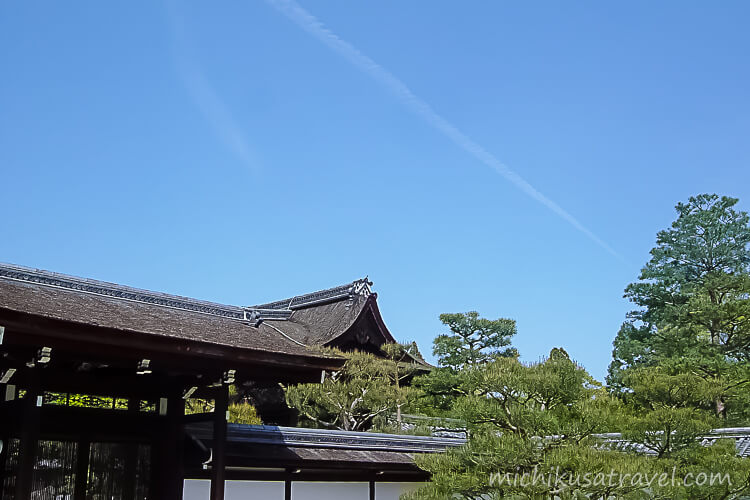
Under the blue sky, the cypress-bark roof of Ninnaji Palace overlaps with the garden trees. At the palace, visitors tour the White Shoin, Black Shoin, Shinden, and the South and North Gardens. In the South Garden with its white sand, and in the North Garden, where a teahouse and the five-story pagoda can be seen across the pond, visitors can enjoy a palace-style setting characteristic of a temple connected with the imperial court.
Imperial Messenger Gate

Standing south of the palace is Chokushimon Gate. Its graceful karahafu curves, cypress-bark roof, and intricate carvings create a dignified view at the front of the palace. From the front, you can appreciate how the undulating roof and finely carved details come together as a unified composition.
Five-Story Pagoda

The five-story pagoda, an Important Cultural Property, dates from the Edo period, and its roofs change little in size toward the upper levels. Looking up from the temple grounds, you can see the pagoda’s well-proportioned body and the arrangement of overlapping eaves. The contrast with the surrounding trees also conveys the height of the five vertically stacked stories.
Golden Hall
The Kondō, a National Treasure, is a building relocated from the Shishinden of the Kyoto Imperial Palace, preserving the transformation of palace architecture into a Buddhist hall. The fact that a palace-origin building has been passed down as Ninnaji’s central Buddhist hall reflects the history of temples connected with the imperial court. The Niōmon, Miedō, and Kannondō are also major highlights of the spacious temple complex.
Omuro Cherry Blossoms
Omuro-zakura on the western side of the temple grounds is a low-growing cherry tree known for blooming late. Its distinctive feature is that the flowers can be enjoyed at nearly eye level, while the spring blooming period and admission fees vary from year to year. It is also known for views of the five-story pagoda framed by the low cherry trees, creating one of the grounds’ signature spring landscapes.
Omuro Eighty-Eight Temple Pilgrimage
In the hills behind the temple, a pilgrimage route of about 3 kilometers leads around halls containing sand from each of the eighty-eight sacred sites on Shikoku. This is a highlight worth setting aside separate time for, apart from viewing the temple buildings and palace. Visiting the sites in sequence lets you walk through mountain scenery and see stone Buddhist statues distinct from the temple buildings in the grounds.
Basic Information about Ninna-ji
The information below was checked against official sources on September 30, 2026. Please also check the latest information on the official website when planning your trip.
- 🔗 Official website
- Check the latest published information and conditions for visiting and viewing the site.
拝観・交通案内 | 世界遺産 真言宗御室派総本山 仁和寺真言宗御室派総本山 仁和寺の公式ウェブサイトです。888年に創建、かつて門跡寺院として栄えた、格式ある寺院・仁和寺。所蔵の国宝・重要文化財や御室桜などの境内のみどころ、仁和寺でできる写経や宿泊など数々の体験についてご案内しています...ninnaji.jp
- 📍 Location
- Omuro Ouchi33, Ukyo Ward, Kyoto, Kyoto Prefecture
- 🕐 Visiting hours
-
- 3–11: 9:00–17:00 (last admission at 16:30)
- 12–2: 9:00–16:30 (last admission at 16:00)
- 💴 Admission
-
- Temple grounds: usually free
- Imperial Garden: adults 800 yen; high school students and younger, free
- Reihōkan and Omuro cherry blossoms: a separate fee applies during the viewing period
- ⏱ Recommended time
- Allow about 1 hours and 30 minutes for the palace and main temple buildings, or about 2 hours including the Omuro cherry blossoms and Reihōkan.
Visiting time varies depending on crowds and the scope of your visit.

How to Get to Ninna-ji Temple
Public transportation
It is about a 3-minute walk from Omuro-Ninna-ji Station on the Randen Kitano Line. You can also use the Omuro-Ninna-ji bus stop served by Kyoto City Bus and JR Bus.
For detailed route information, please check the transportation guide on the official website.
For attractions, transport and suggested itineraries, see “Kyoto: A guide to attractions, food, transportation, and suggested itineraries”.