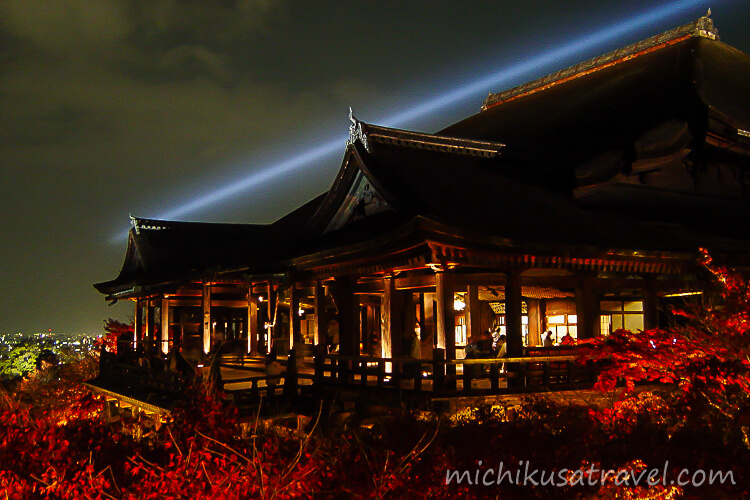
Highlights of Saga-Arashiyama
Sagano-Arashiyama is a sightseeing area in western Kyoto along the Katsura River, bringing together the scenery around Togetsukyo Bridge, the Bamboo Forest Path, and Tenryu-ji Temple. You can explore the mountains, river, temples, and streets of Sagano in one visit, with different scenery to enjoy in each season.
Togetsukyo Bridge

Togetsukyo Bridge, spanning the Katsura River, is an iconic Arashiyama landmark where the mountain scenery behind it and the flowing river can be viewed as one landscape. The bridge is said to have received its name after Emperor Kameyama, gazing at the moon moving across the sky above the bridge, remarked that it “resembles a moon crossing through a cloudless sky”.
Scenery along the Katsura River

Around Togetsukyo Bridge, the Katsuragawa River and mountain ranges spread out before you. Walking along the river lets you view Togetsukyo Bridge and Arashiyama from an angle different from the bridge itself. Yakatabune boats float on the river, bringing the greenery of the opposite bank and the water’s surface within close view.
Arashiyama Monkey Park
On Mount Iwata in the Arashiyama area, this paid attraction lets visitors observe wild Japanese macaques up close. The experience also includes walking uphill from the entrance to the observation area at the summit, where you can enjoy nature and views distinct from the flat area around Togetsukyō Bridge.
Check the Arashiyama Monkey Park official website for opening status and visitor information.

Tenryu-ji Temple

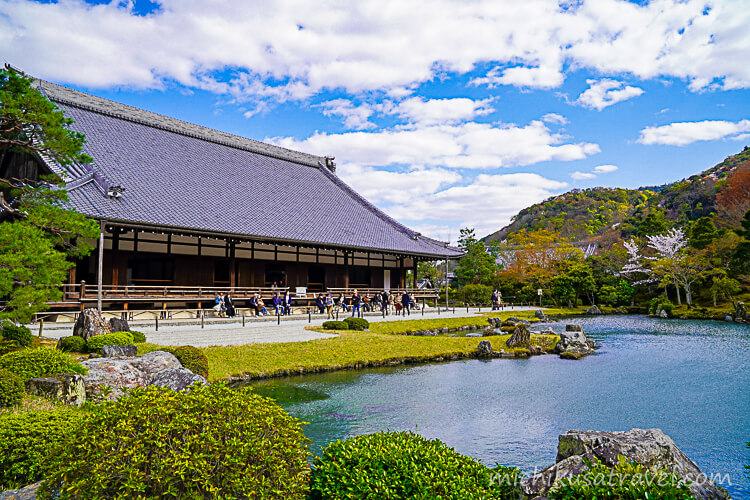
Tenryu-ji, in the center of Arashiyama, is part of the World Heritage Site “Historic Monuments of Ancient Kyoto.” Visitors can explore the Sogenchi Garden, designed by Musō Soseki, the Cloud Dragon painting in the Hatto Hall, and the Hyakka-en Garden. The north gate leads to the Bamboo Grove.
For details on the highlights, visiting hours, admission fees, and access, please see the article on Tenryu-ji Temple.
Bamboo Grove Path

Tall bamboo covers both sides of the walking path, filling the view with green. The section leading from Tenryu-ji Temple’s north gate toward Nonomiya Shrine is especially well known, and the way the light falls and the appearance of the bamboo change with the time of day.
Nonomiya Shrine
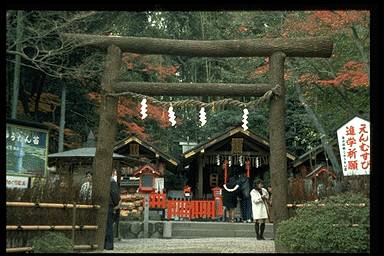
This is the historic site of Nonomiya, where princesses chosen as Ise priestesses underwent ritual purification. The black wooden torii gate and low bamboo fence convey the style of earlier times, and the site is also associated with The Tale of Genji. It is close to the bamboo grove, making it easy to visit during a walk.
Jōjakkō-ji Temple
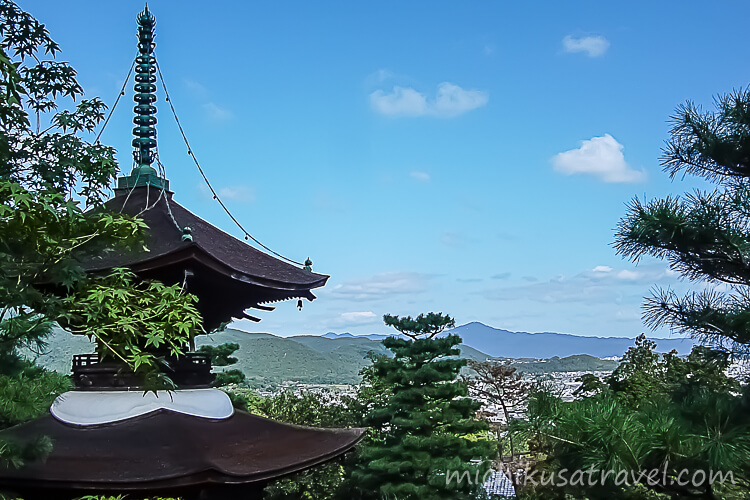
Set on the hillside of Mount Ogura, the temple features stone steps leading from the Niōmon Gate, the Tahōtō Pagoda, and views from the upper grounds. Add the autumn scenery of a mountain temple to a route heading north through Sagano. It is also appealing to watch the view change from the city to a mountain temple as you climb the steps.
Rakushisha

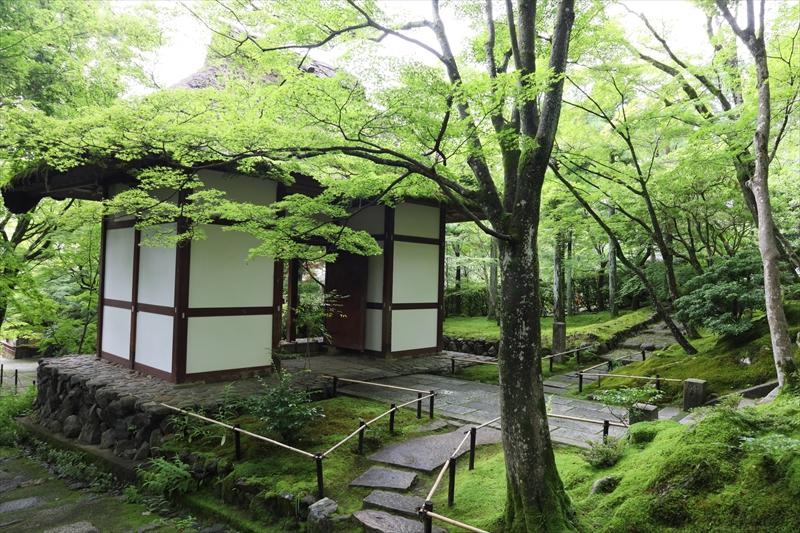
This is the former site of the thatched hermitage run by Mukai Kyorai, where Matsuo Bashō stayed and wrote the “Saga Diary.” As a destination separate from the bamboo grove, it offers a glimpse into haikai culture through the thatched hut and garden. Seen together with the rural landscape at the foot of Mount Ogura, it also conveys the atmosphere of the place where the works were created.
Nison-in Temple
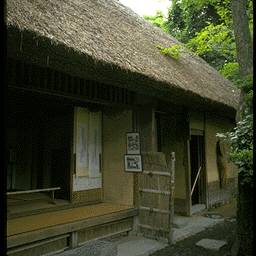
This temple on Mount Ogura enshrines Shaka Nyorai and Amida Nyorai as its principal objects of worship. The “Maple Horse Grounds” leads from the main gate to the main hall and can be included in a route linking the temples of Sagano. From around the main hall, you can look out over Mount Ogura and learn how the temple’s name derives from its two principal figures.

Essential Information on Saga-Arashiyama
The information below was checked against official sources on October 7, 2026. Please also check the latest information on the official website when planning your trip.
- 🔗 Official website
- Information on attractions in the Saga–Arashiyama area, main access options, and ways to avoid crowds is available here.
 エリア別観光情報「嵯峨・嵐山」|【京都市公式】京都観光Navi京都の観光スポット「嵯峨・嵐山エリア」の紹介と観光情報を掲載。目的から嵯峨・嵐山エリアの観光情報を探したり、主要スポットからおすすめの観光コースとルートを見ることができます。ja.kyoto.travel
- 📍 Location
- Around Togetsukyo Bridge and Sagano in Ukyo Ward and Nishikyo Ward, Kyoto
- 🕐 Access hours
- Public roads such as Togetsukyo Bridge and the Bamboo Grove are accessible at all times. Opening hours vary by temple, shrine, shop, and attraction.
- 💴 Fees
- Access to Togetsukyo Bridge, the Bamboo Grove, and walks along the Katsura River is free. Individual admission fees for the paid facilities introduced in this article are as follows.
- Arashiyama Monkey Park: adults (aged 16 and over) 800 yen, children (aged 4 to 15) 400 yen, free for children aged 3 and under
- Tenryu-ji: garden (Sogenchi and Hyakka’en): 500 yen for high school students and older, 300 yen for elementary and junior high school students, free for preschool children. The main halls (Daihojo, Shoin, and Tahoden) require an additional 300 yen on top of the garden admission fee. Special viewing of the Dharma Hall’s “Cloud Dragon” costs an additional 1 people 500 yen, separate from the regular admission fee
- Jojakko-ji: 600 yen
- Rakushisha: 300 yen, 150 yen for students, free for elementary school children and younger
- Nison-in: adults (junior high school students and older) 600 yen, free for elementary school children and younger
⚠️ Special viewings and events may have separate fees.
- ⏱ Time required
- Allow about 3 to 4 hours to visit Togetsukyo Bridge, Tenryu-ji, and the Bamboo Grove. If you include temple and shrine visits, a meal, and a walk farther into Sagano, allow from half a day to 1 days.⚠️ The time required varies depending on crowds, temple and shrine visiting times, and the extent of your walk.
Getting to Saga-Arashiyama
JR
From Kyoto Station, you can use Saga-Arashiyama Station on the JR Sagano Line. From the station, the route to Togetsukyō Bridge passes through the urban area of Sagano.
Randen
From central Kyoto or the Kitano-Hakubaichō area, the Arashiyama Station on Keifuku Electric Railroad’s Arashiyama Line, known as Randen, is convenient. The station is close to Tenryū-ji Temple and Togetsukyō Bridge, and the bamboo forest path is also within walking distance.
Hankyu Railway
From the Osaka or Kyoto-Kawaramachi direction, you can use Arashiyama Station on the Hankyu Arashiyama Line. The station is south of the Katsura River; cross Togetsukyō Bridge to reach the central area.
How to avoid the crowds
Togetsukyo Bridge and the Bamboo Grove get crowded during the spring and autumn travel seasons and during the day. Kyoto City’s official tourism website provides visitor-comfort levels by time of day and live camera images. Use them as a guide when choosing an earlier time to visit.
For attractions, transport and suggested itineraries, see “Kyoto: A guide to attractions, food, transportation, and suggested itineraries”.