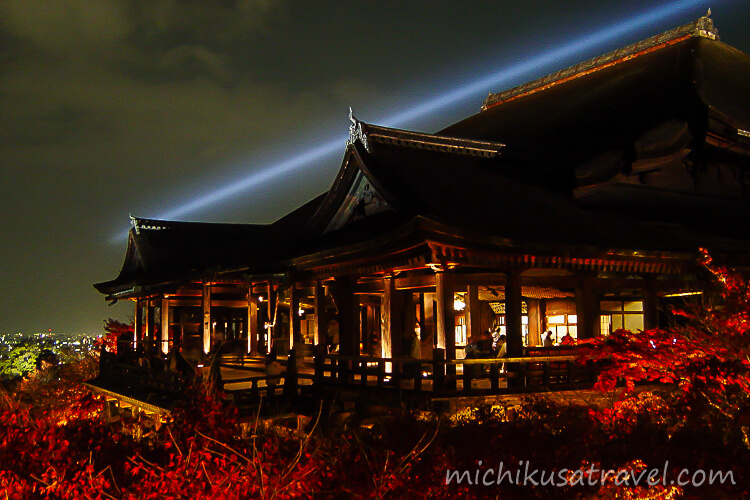
Things to See in Gion
Gion is one of Kyoto’s representative historic districts. It developed as the town in front of Yasaka Shrine and still conveys the scenery of a traditional geisha district, with teahouses lining its streets. Stone-paved lanes, traditional machiya townhouses with lattice doors, and the nearby Shirakawa River are concentrated within a compact area, allowing visitors to enjoy a different character on each street.
Hanamikoji and Historic Alleyway Streetscapes
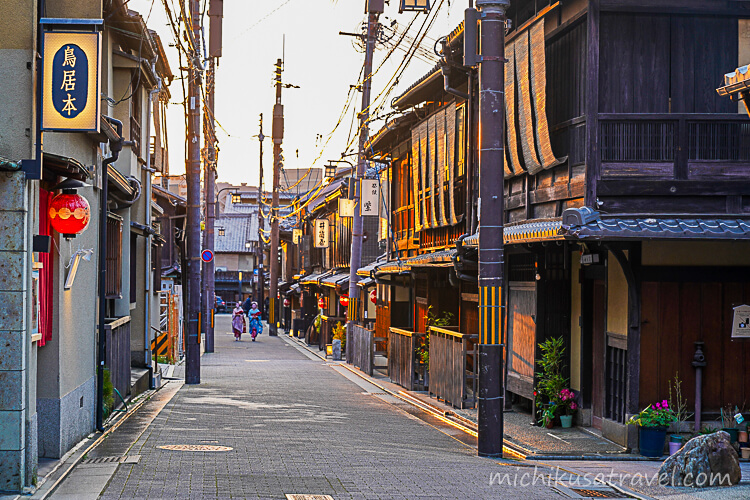
In the lanes lined with machiya townhouses and lattice doors, stepping just off the main street reveals the calm streetscape characteristic of Gion. Along Aoyagi Lane, the wooden latticework of the machiya and teahouse signs line the narrow passage.

Gion is an area that includes Gion Kobu and Gion Higashi, two of Kyoto’s five geisha districts. Because it is both a workplace and a place of residence for geiko and maiko, follow local guidance, do not obstruct passage, and do not photograph them from close range without permission.
Gion Shinbashi, Shirakawa, and Tatsumibashi

Around Tatsumi Bridge over the Shirakawa River, a streetscape of stone paving, traditional Kyoto machiya houses, and rows of willow trees remains. Gion Shinbashi along the river has been designated by the Japanese government as an Important Preservation District for Groups of Traditional Buildings, making it a place where you can experience Gion’s historic streetscape on foot.
Tatsumi Shrine

Tatsumi Shrine stands near where the Shirakawa River meets Shinbashi-dori and is a small shrine that symbolizes the scenery of Gion Shirakawa. Its vermilion tamagaki fence and torii gate stand out among the subdued tones of the stone paving and machiya townhouses. Close to Tatsumi Bridge and the streetscape along the Shirakawa, it also serves as a landmark when walking through the area.
Yasaka Shrine

Yasaka Shrine, majestically situated at the eastern edge of Gion, is deeply connected to the district’s name and history. Until the Meiji period, it was called “Gion Shrine,” and the town that formed in front of its gate contributed to Gion’s development.
For more information about the highlights within the grounds, including the main hall designated as a National Treasure, Gion-zukuri architecture, and the West Tower Gate, see our article on Yasaka Shrine.
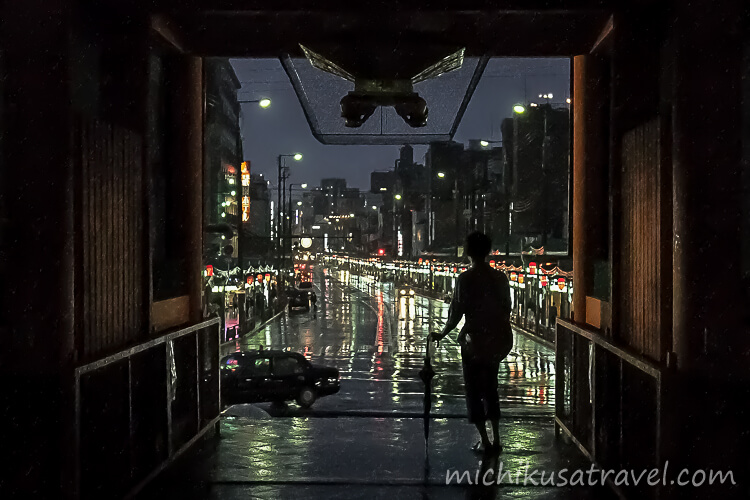
Walk toward Higashiyama

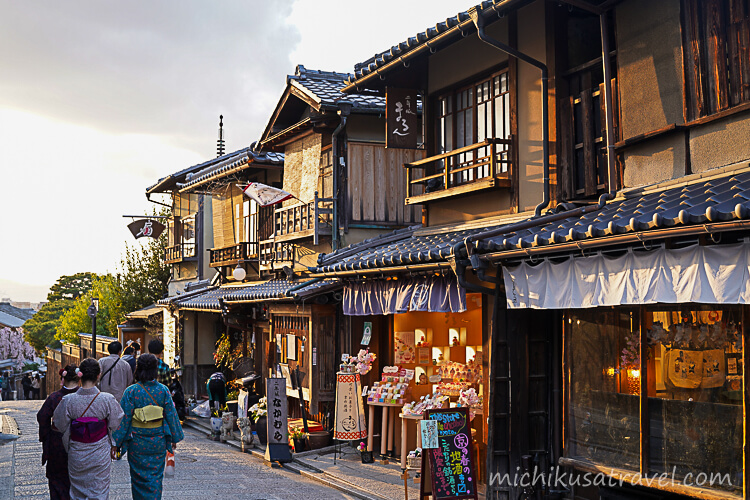
Head southeast from Gion to explore the Higashiyama streets leading to Yasaka Pagoda and Ninenzaka/Ninensaka. Strictly speaking, Yasaka Pagoda is not in Gion, but it is an easy stop on a walk connecting Gion with the area around Kiyomizu-dera Temple.
For more details about the streetscape and highlights of Ninenzaka / Ninen-zaka, please see the article below.
Basic Information on Gion
The information below was checked against official sources on September 30, 2026. Please also check the latest information on the official website when planning your trip.
- 🔗 Official website
- Check the highlights of the Gion and Kiyomizu-dera area, the main access options, and important notes for sightseeing.
 エリア別観光情報「祇園・清水寺」|【京都市公式】京都観光Navi京都の観光スポット「祇園・清水寺エリア」の紹介と観光情報を掲載。目的から祇園・清水寺エリアの観光情報を探したり、主要スポットからおすすめの観光コースとルートを見ることができます。ja.kyoto.travel
- 📍 Location
- Around Gion-chō, Higashiyama Ward, Kyoto City, Kyoto Prefecture
- 🕐 Passing hours
- Public roads can be used all day. However, opening hours for teahouses, shops, temples, and shrines vary by facility.
- 💴 Fees
- Walking through the historic streets is free. Special visits to temples and shrines, dining, shopping, and other activities require separate payment.
- ⏱ Time required
- Allow approximately 1–2 hours to walk through Hanamikoji, Gion Shinbashi, Shirakawa, Tatsumi Bridge, and Tatsumi Shrine. If you also visit Yasaka Shrine or dine in the area, allow additional time. ⚠️ The time required varies depending on crowds and the extent of your walk.
Getting to Gion
Railway
From Gion-Shijo Station on the Keihan Main Line, you can walk to Hanamikoji and Gion Shirakawa. From Kyoto-Kawaramachi Station on the Hankyu Kyoto Line, the easiest route is to cross Shijo Bridge, pass through the area around Gion-Shijo Station, and enter Gion.
Bus
If you start your walk from Yasaka Shrine, the “Gion” stop served by Kyoto City Bus is convenient. As travel times often vary due to road congestion, also consider using the train and walking.
Exploring the Area on Foot
From Gion-Shijō Station, continue through Gion Shirakawa, across Tatsumi Bridge and along Hanamikoji, then head east to Yasaka Shrine. This creates a smooth route without having to retrace your steps between the same places several times. If you continue toward Higashiyama, you can proceed from Yasaka Shrine via Maruyama Park and Nene no Michi toward Ninenzaka / Ninen-zaka.
For attractions, transport and suggested itineraries, see “Kyoto: A guide to attractions, food, transportation, and suggested itineraries”.