
What is Kyoto
Kyoto is the capital of Kyoto Prefecture.
From the relocation of the capital to Heian-kyo in 794 until the Meiji period, it flourished as Japan's capital for more than a thousand years. Because of this history, it is known asthe “City of a Thousand Years”.
The city is home to Kiyomizudera, Kinkakuji, Ginkakuji, Ryoanji and Tenryuji temples, as well as Nijo Castle. These temples, shrines and castles are included on the World Cultural Heritage list as the “Historic Monuments of Ancient Kyoto.”
Higashiyama retains historic streetscapes around Gion and Kiyomizu-dera Temple; in Arashiyama, you can enjoy bamboo groves and temples, while the area around the Kamo River offers waterside scenery. Temple and shrine architecture, gardens, and traditional culture shaped by a long history have been passed down throughout the city.
Kyoto Tourist Attractions
Here are the recommended attractions in Kyoto, presented as a ranking.
October 7, 2026 We checked each attraction’s official information.
-
1placeKiyomizu-dera

Beyond the main hall and Kiyomizu no Butai, Kyoto city and the surrounding mountains spread out before you. Highlights include the main hall known as Kiyomizu no Butai, Otowa Waterfall, and views of Kyoto from the temple grounds. Located at the heart of a Higashiyama walk, the temple can be visited together with Ninenzaka and Sannenzaka along the approach.For details about the highlights, visitor information, and access, see the article about Kiyomizu-dera.
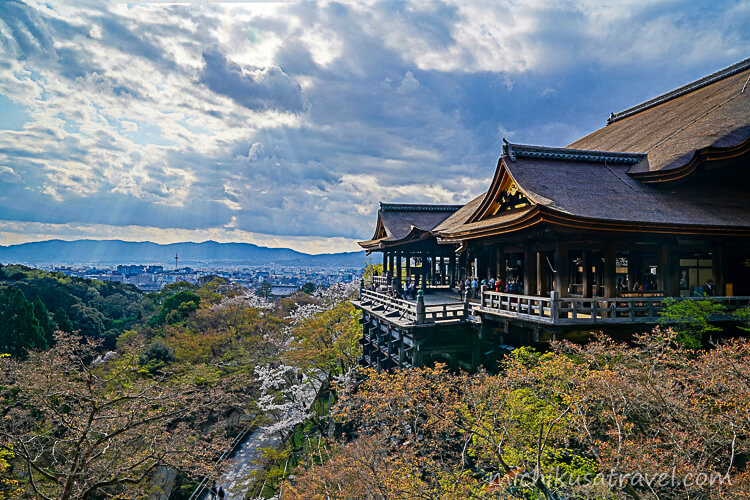 Kiyomizu-dera: Highlights, visiting hours, admission fees, and accessThis guide covers the highlights of the World Heritage site Kiyomizudera, including the main hall and Kiyomizu Stage, Otowa-no-Taki Waterfall, and three-story pagoda, along with visiting hours, admission fees, and access, based on official information and on-site research as of September 2026.michikusatravel.com
-
2placeFushimi Inari Taisha

Fushimi Inari Taisha, the head shrine of all Inari shrines in Japan, is known for Senbon Torii, a series of thousands of vermilion torii gates. Walking beyond the main shrine buildings along the path leading up Mount Inari lets you experience the full breadth of this place of worship.For details on highlights, visitor information, and access, see the article about Fushimi Inari Taisha.
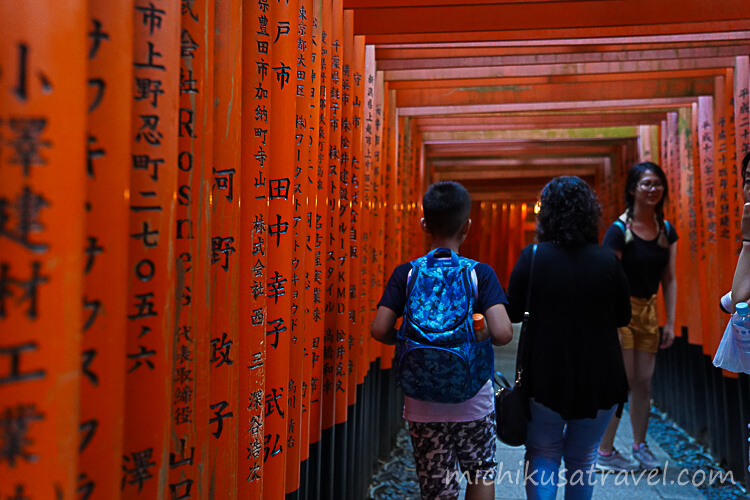 Fushimi Inari Taisha: Highlights, Visiting Hours, Time Required, and AccessThis guide explains the highlights of Fushimi Inari Taisha—including the tower gate, main hall, Senbon Torii, and fox statues—as well as visiting hours, time required, and access, based on official information and on-site research as of 2026 9.michikusatravel.com
-
3placeKinkaku-ji
 For more details about highlights, visitor information, and access, see the article on Kinkaku-ji.
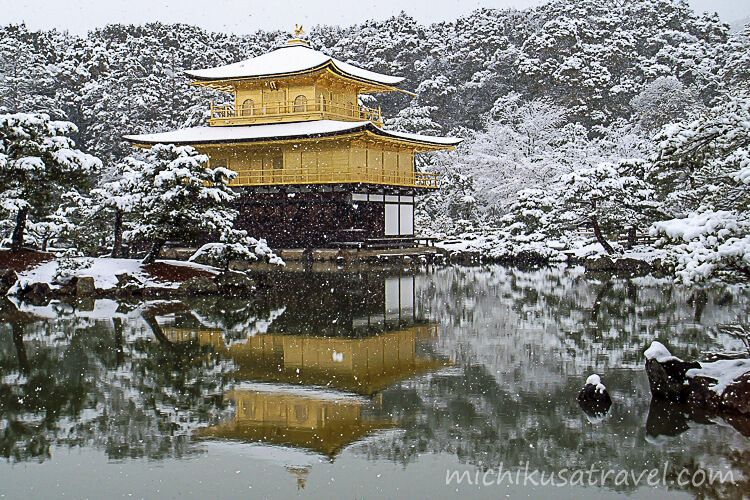 Kinkaku-ji: Highlights, visiting hours, admission fees, and accessWe explain the highlights of the World Heritage site Kinkaku-ji, including the shariden, Kyōkochi Pond and gardens, along with visiting hours, admission fees and access, based on official information and on-site research as of September 2026.michikusatravel.com
-
4thNijō Castle
 Built by Tokugawa Ieyasu, this castle was the setting for the transfer of political power back to the emperor. Through the wall paintings and architecture of Ninomaru Palace, the Kara Gate, and the gardens, you can trace the history of the Edo shogunate and Kyoto.
For details on Nijō Castle’s highlights, visitor information, and access, see the article about Nijō Castle.
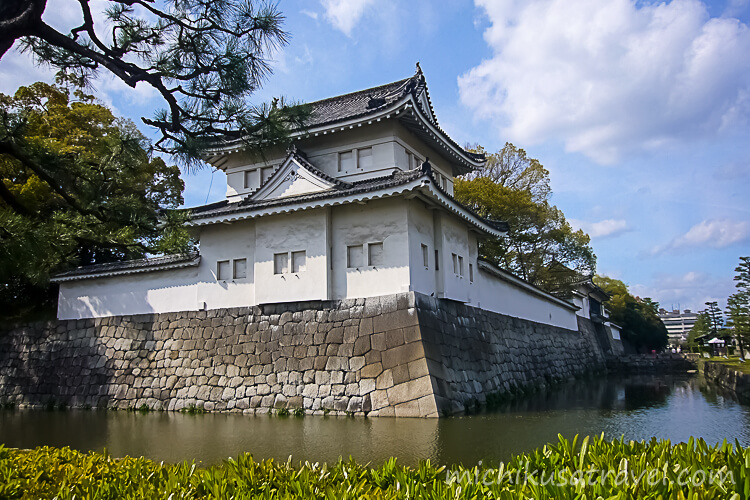 Nijō Castle: A guide to highlights, opening hours, tickets, and accessWe explain the highlights of the World Heritage Site Nijō Castle, including Ninomaru Palace, Kara-mon Gate, East Main Gate, and Honmaru Palace, as well as opening hours, tickets, and access, based on official information and on-site research as of September 2026.michikusatravel.com
-
5thGinkaku-ji
Ginkaku-ji, officially named Jishō-ji, is a temple symbolizing Higashiyama culture. In one continuous circuit, visitors can enjoy the Silver Pavilion, the white-sand terraces Ginsyadan and Kōgetsudai, the moss garden, and the view from the mountain.
 銀閣寺 | 臨済宗相国寺派正式名称を東山慈照寺といい、相国寺の塔頭寺院の一つ。名の由来は金閣寺に対し、銀閣寺と称せられることとなったといわれています。www.shokoku-ji.jp
-
6thRyoan-ji Temple
A Zen temple world-famous for its dry landscape stone garden. In addition to the Hojo garden arranged with fifteen stones, you can walk around Kyoyochi Pond and through the gardens on the temple grounds, appreciating their tranquil spatial composition.
大雲山 龍安寺|Ryoanjiwww.ryoanji.jp -
7thSanjūsangendō
Sanjūsangendō, officially called Rengeō-in Hondō, is known for its seated statue of the Thousand-Armed Kannon and one thousand standing Kannon statues. Major highlights include the long main hall extending from north to south and the large collection of Buddhist statues arranged inside.
https://www.sanjusangendo.jp/www.sanjusangendo.jp -
8placeTo-ji Temple
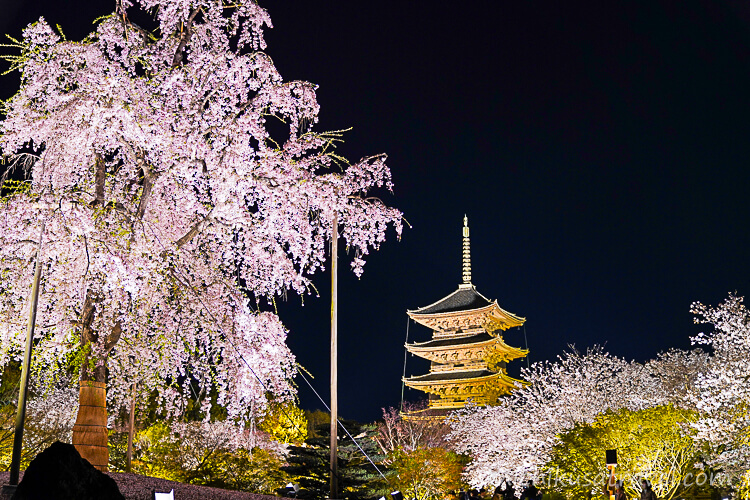
This temple has continued since the construction of Heian-kyo, and its official name is Kyōō-gokoku-ji. Visitors can explore the five-story pagoda that creates Kyoto’s iconic scenery, the three-dimensional mandala in the lecture hall, the main hall, and other areas.For more information about the highlights, visitor information, and access, see the article about To-ji Temple.
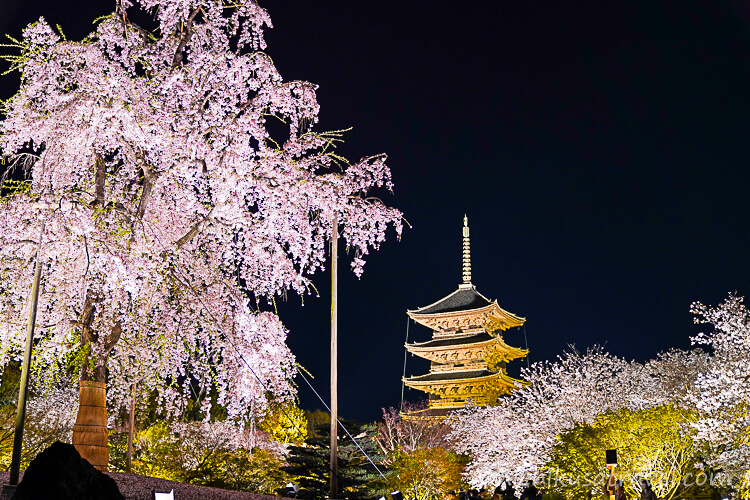 Tō-ji: Highlights, hours, tickets, and accessThis guide covers the highlights of Tō-ji, a UNESCO World Heritage site, including its five-story pagoda, the three-dimensional mandala in the Lecture Hall, the Main Hall, and Mieidō Hall, along with visiting hours, tickets, and access, based on official information and on-site research as of September 2026.michikusatravel.com
-
9placeTenryū-ji

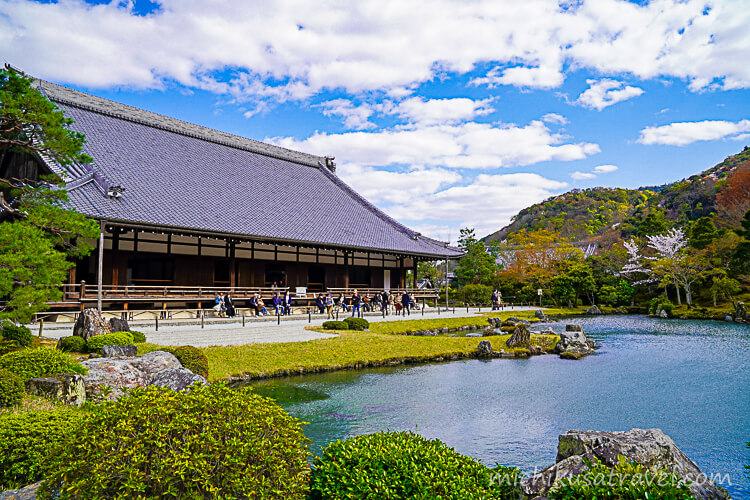
Sōgenchi Pond spreads out in front of the Great Abbot’s Hall, offering views of Arashiyama’s mountain range across the water.
Tenryū-ji is the head temple of the Tenryū-ji school of Rinzai Zen and a component of the World Heritage site “Historic Monuments of Ancient Kyoto”. Explore Sōgenchi Garden, which uses Arashiyama as borrowed scenery, and the temple complex; the north gate leads to the Bamboo Grove.For detailed information about highlights, visiting guidance, and access, see the article about Tenryū-ji.
 Tenryū-ji: Highlights, Visiting Hours, Admission Fees, and AccessThis guide covers the highlights of the World Heritage site Tenryū-ji, including the Sōgenchi Garden, the Large Abbot’s Quarters and the dragon painting in the Dharma Hall, as well as opening hours, admission fees and access, based on official information and an on-site visit as of 2026 9.michikusatravel.com
-
10placeNanzen-ji
 This Zen temple brings together the large Sanmon Gate, the Hojo garden, and the Suirokaku Aqueduct of the Lake Biwa Canal on the same grounds. The contrast between temple architecture and modern civil-engineering heritage creates a landscape unlike that of any other temple in Kyoto.臨済宗大本山 南禅寺臨済宗大本山 南禅寺 公式サイトwww.nanzenji.or.jp
-
11placeGion
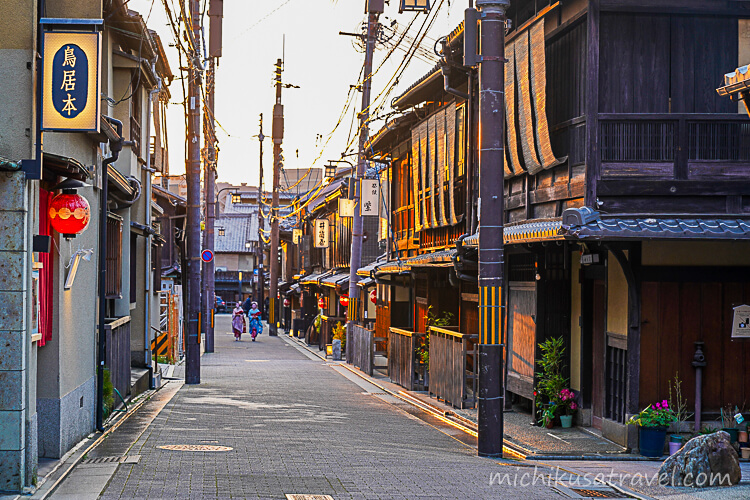
Machiya houses and teahouse signs line Aoyagi Lane, while the evening light illuminates the wooden latticework. A townscape characteristic of Kyoto's geisha district remains around Hanamikoji Street and Tatsumi Bridge. Walking from Yasaka Shrine to Kenninji Temple lets you experience the history of both the temple town and the geisha district.For details about attractions, visitor information, and access, see the article about Gion.
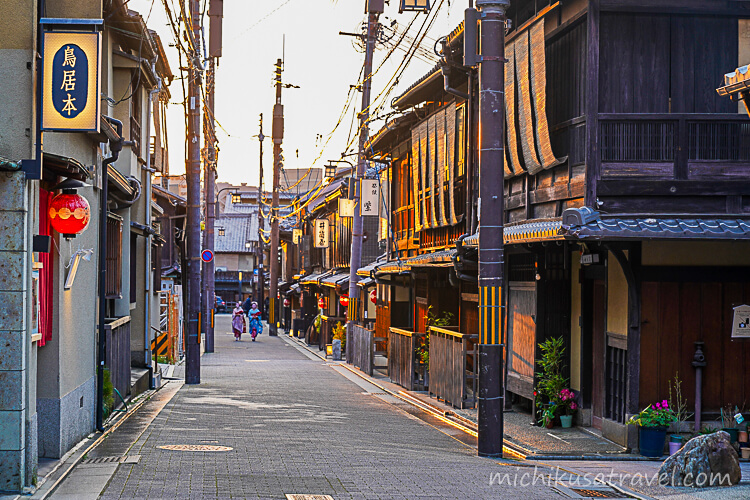 Gion: Highlights, Access Hours, Fees, and How to Get ThereWe explain the highlights, passage hours, prices, and access to attractions such as Hanamikoji in Gion, Gion Shinbashi and Shirakawa, Tatsumi Bridge, Tatsumi Shrine, and Yasaka Shrine, based on official information and on-site research as of 2026 9.michikusatravel.com
-
12placeKyoto Imperial Palace
This palace served for many years as the residence of Japan’s successive emperors, offering a glimpse into court culture through buildings such as Shishinden and Seiryōden. Located in the center of Kyoto Gyoen National Garden, it is easy to combine with a walk around the surrounding area.
ホーム - 京都御所京都御所の公式情報を提供する宮内庁のウェブサイト。建築物や庭園、障壁画・調度などを画像や動画と共に紹介。アクセス方法や参観休止日、特別公開の情報など最新情報も随時掲載しています。kyoto-gosho.kunaicho.go.jp -
13placeShimogamo Shrine
Officially named Kamo-mioya-jinja, this shrine is part of the World Heritage site “Historic Monuments of Ancient Kyoto.” Along the approach through Tadasu no Mori to the shrine buildings, an old sacred landscape of the Kyoto Basin remains.
 京都・世界遺産 下鴨神社(賀茂御祖神社)千年の杜「糺の森」に包まれた、京都最古の神社。心を整える参拝を。所在地: 〒606-0807 京都府京都市左京区下鴨泉川町59 |下鴨神社祭神東殿 - 玉依姫命(たまよりひめのみこと)。賀茂別雷命(上賀茂神社の祭神)の母。西殿 -...www.shimogamo-jinja.or.jp
-
14placeSaihōji Temple
Known as the Moss Temple, this temple features a garden covered with more than one hundred species of moss. Visits require advance registration, so plan your visit for a specific date.
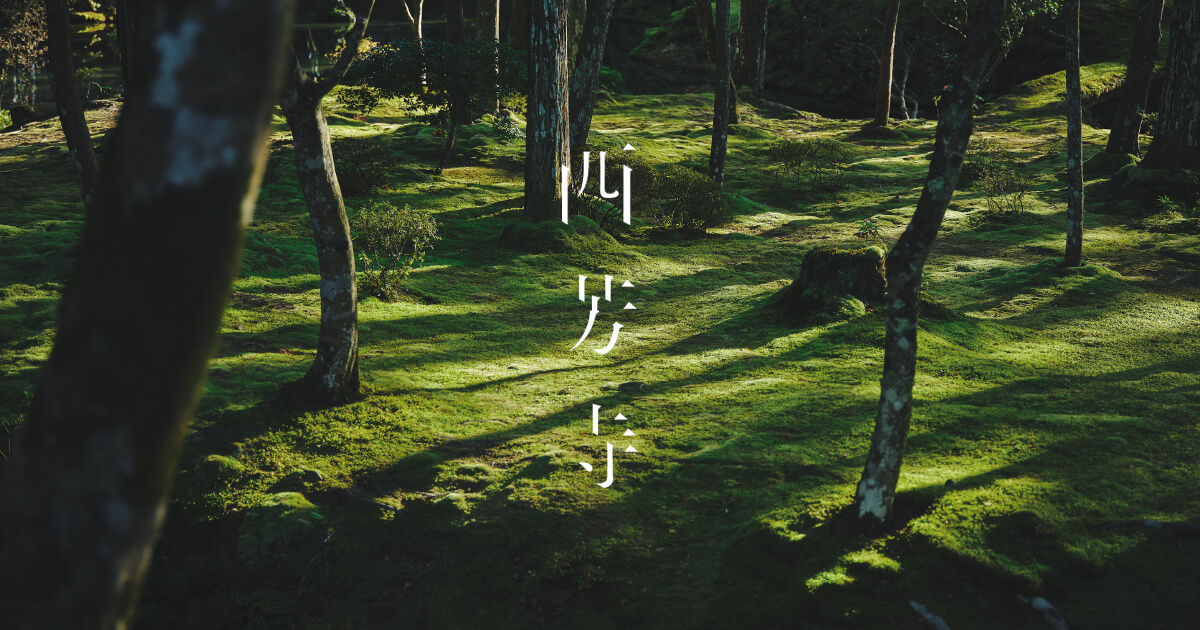 西芳寺|苔寺 Saihoji | Kokedera調律と閃きの庭。世界文化遺産にも登録される臨済宗の禅刹「西芳寺」オフィシャルサイト。参拝はハガキまたはオンラインでの事前申込制となっております。saihoji-kokedera.com
-
15placeKatsura Imperial Villa
An imperial family villa from the early Edo period, where a group of shoin buildings harmonizes with a strolling garden. During a visit booked in advance, you can follow the changing views across the pond and appreciate the simple design.
Information on visits and public access is available on the Imperial Household Agency’s official page for Katsura Imperial Villa.
ホーム - 桂離宮桂離宮の公式情報を提供する宮内庁のウェブサイト。建築物や庭園、障壁画・調度などを画像や動画と共に紹介。アクセス方法や参観休止日、最新情報も随時掲載しています。kyoto-gosho.kunaicho.go.jp -
16placeTōfukuji
A Zen temple known for Tsūtenkyō Bridge, which spans the temple grounds and the valley. Along with architecture such as the abbot’s garden at Hōjō and the Sanmon Gate, visitors can enjoy the expansive scenery created by the fresh greenery and autumn foliage of the Senjokukan ravine.
トップページ - 臨済宗大本山 東福寺臨済宗大本山 東福寺 -日本最古の最大級の伽藍tofukuji.jp -
17placeNinna-ji
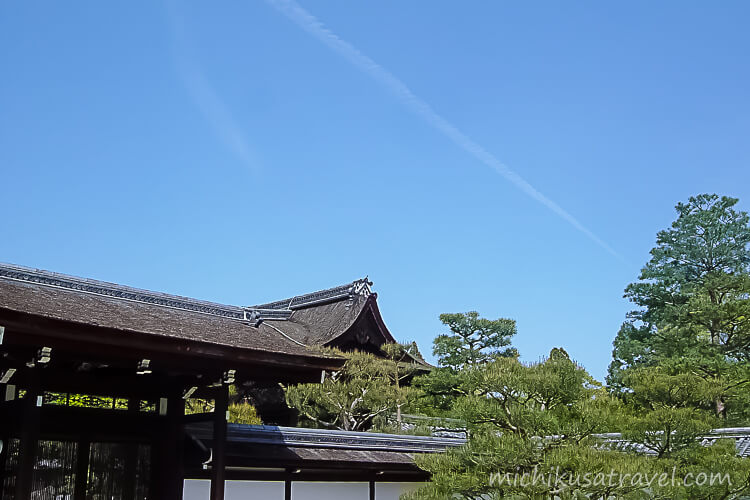
Ninna-ji Palace’s cypress-bark roof and garden treesFor details about the highlights, visitor information, and access, please see the article on Ninna-ji.
 Ninna-ji: Highlights, visiting hours, admission fees, and accessThis guide covers the highlights of the World Heritage site Ninna-ji, including the Nio-mon Gate, Goten Palace, Kondo Hall, five-story pagoda, and Omuro-zakura cherry trees, as well as visiting hours, admission fees, and access, based on official information and local research as of 2026 9.michikusatravel.com
-
18thKamigamo Shrine
Officially named Kamo-wakeikazuchi Shrine, it is one of Kyoto’s oldest shrines. The sand cones in front of Hosodono, the National Treasures Honden and Gonden, and the spacious grounds tell the history of Kamo worship.
 賀茂別雷神社(上賀茂神社:かみがもじんじゃ)公式Webサイト上賀茂神社は、京都でもっとも古い神社であり、雷(いかづち)の御神威により、厄を祓いあらゆる災難を除き給う厄除(やくよけ)明神・落雷除・電気産業の守護神として広く信仰されていますwww.kamigamojinja.jp
-
19thEikando
Officially named Zenrin-ji, Eikando is known for the Mikaeri Amida statue, depicted looking back over its shoulder, and its autumn foliage. From the buildings and corridors along the slope, you can enjoy the temple grounds’ varied elevations.
永観堂(Eikando,Kyoto)京都永観堂禅林寺HPwww.eikando.or.jp -
20placeNishi Hongan-ji
This is the head temple of the Honganji school of Jōdo Shinshū and a World Heritage site. The Karamon Gate, Hōun-kaku Pavilion, Goeidō Hall, and other buildings retain the flamboyant architecture and decoration of Momoyama culture.
 |龍谷山 本願寺【お西さん(西本願寺)】-本願寺への参拝(参る・知る・観る)お西さんで知られる浄土真宗本願寺派の本山、本願寺の公式サイト。参拝のご案内、親鸞聖人の教えや歴史、世界文化遺産に指定された境内のご紹介。www.hongwanji.kyoto


View places ranked 21st and below (109 entries)
-
21thDaigoji
This World Heritage temple spreads across the eastern side of the Yamashina Basin. You can explore its five-story pagoda, the oldest wooden structure in Kyoto Prefecture, the Sanboin Garden, and its cherry-blossom scenery.
世界遺産 京都 醍醐寺世界遺産醍醐寺。真言宗醍醐派總本山。京都市伏見区。国宝五重塔をはじめ数々の国宝・重要文化財を蔵する醍醐寺の境内、行事、略縁起などを紹介。www.daigoji.or.jp -
22placeKennin-ji
Considered Kyoto’s oldest Zen temple, it is the head temple of the Kennin-ji branch of the Rinzai school. Visitors can see highlights including the abbot’s garden, the Twin Dragons painting in the Dharma Hall, and a reproduction of Tawaraya Sōtatsu’s Wind God and Thunder God folding screen.For details on the highlights, visiting information, and access, see the article about Kennin-ji.
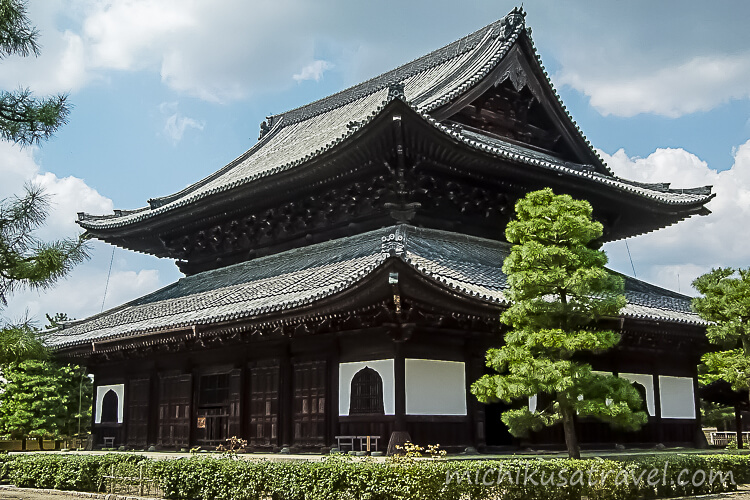 Kennin-ji Temple: Highlights, Visiting Hours, Admission Fees, and AccessThis guide introduces the highlights of Kennin-ji, including the abbot’s residence garden, the Twin Dragons ceiling painting, and the Wind and Thunder Gods folding screen, as well as visiting hours, admission fees, and access, based on official information current as of 2026/10 and an on-site visit.michikusatravel.com
-
23placeKōdai-ji
The temple was founded by Nene, the widow of Toyotomi Hideyoshi, to honor his memory. You can explore the Kaizandō, mausoleum, garden, and bamboo grove along Higashiyama’s undulating terrain.
鷲峰山 高台寺www.kodaiji.com -
24thGion Matsuri
This festival of Yasaka Shrine is held in two parts, the former festival and the latter festival. Through the yamaboko procession and Yoiyama evenings, visitors can experience Kyoto’s traditional merchant-town culture, passed down through generations.
 祇園祭「どんな祭?」|【京都市公式】京都観光Navi祇園祭は、日本三大祭のひとつ。 祭のハイライトは17日と24日に行われる34基の山鉾巡行。「京都祇園祭の山鉾行事」はユネスコ無形文化遺産にされています。ja.kyoto.travel
-
25placeSaga-Arashiyama
Head west from the city center and use this area as a base for a full day exploring the waterfront, temples, shrines, and Sagano. The scenery changes as you move from the bustle around Togetsukyō Bridge toward the quiet northern paths, allowing you to include time in nature during your Kyoto stay.
The sights, transport, and walking routes stretching from the Katsura River to Sagano are covered in detail in the dedicated Saga-Arashiyama article.
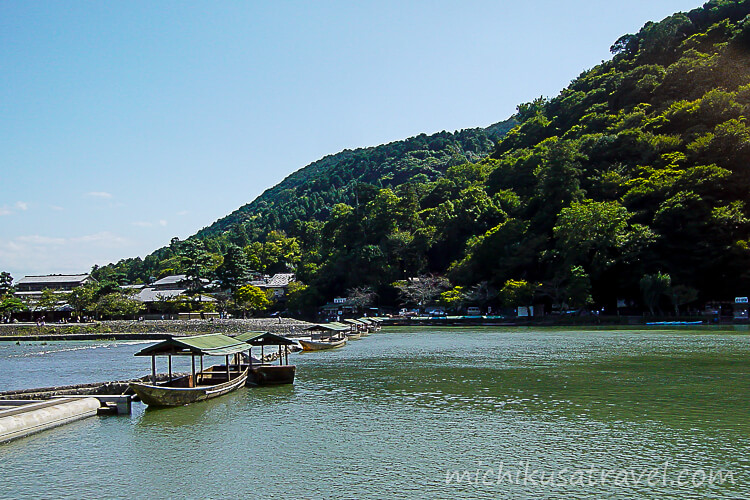 Saga-Arashiyama: A guide to highlights, fees, time required, and accessThis guide explains the highlights of Saga Arashiyama—including the Bamboo Forest Path, Togetsukyō Bridge, Nonomiya Shrine, Jōjakukōji, Nison-in and Rakushisha—as well as prices, time required and access, based on official information and on-site research as of 2026 10.michikusatravel.com
-
26placeDaitokuji Temple
Daitokuji is the head temple of the Daitokuji branch of the Rinzai school and a large Zen temple complex with numerous subtemples. You can choose among gardens with different opening periods and buildings associated with tea culture.For details about the highlights, visitor information, and access, see the article on Daitokuji Temple.
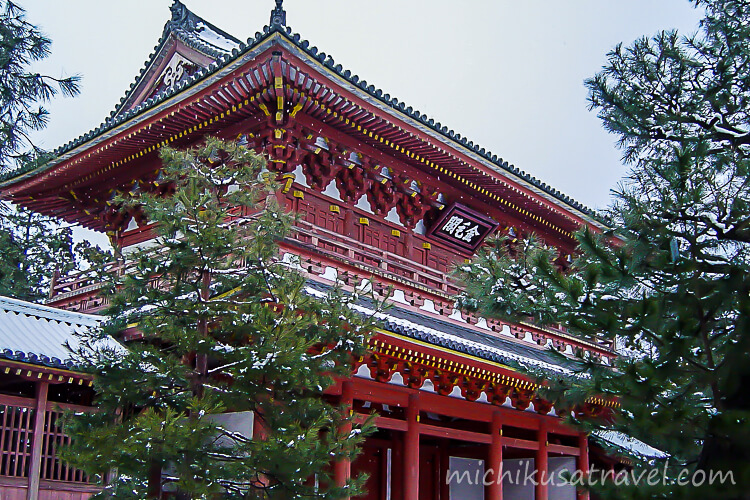 Daitoku-ji: Highlights, visiting hours, admission fees, and accessThis guide explains Daitokuji’s highlights, including the Sanmon gate Kimmōkaku, the complex’s seven temple buildings, its subtemples, and its connection with the tea ceremony, along with visiting hours, prices, and access, based on official information and on-site reporting as of 2026year9month.michikusatravel.com
-
27thKifune Shrine
This ancient shrine is dedicated to the god of water and is known for its approach lined with vermilion lanterns along stone steps. The main sanctuary, Yui no Yashiro, and Okunomiya are scattered in the mountains along the Kifune River.
 貴布禰総本宮 貴船神社貴船神社は万物の命の源である水の神を祀る、全国二千社を数える水神の総本宮です。kifunejinja.jp
-
28placeSanjūsangen-in
This Tendai Buddhist temple stands in the mountain village of Ohara. The moss-covered Yūseien garden, Ōjō Gokuraku-in, and childlike Jizō statues create a tranquil garden landscape.
天台宗 京都大原三千院京都市左京区大原にある天台宗のお寺 大原三千院(きょうとおおはらさんぜんいん)の公式ホームページです。三千院の行事、アクセス、四季の様子ご紹介しております。www.sanzenin.or.jp -
29placeBamboo Grove Path
This narrow path through the bamboo grove in Sagano can be walked together with visits to Tenryu-ji Temple’s north gate and Nonomiya Shrine. The interplay of light and sound created by the tall bamboo is one of Arashiyama’s signature walking experiences. 竹林の小径|【京都市公式】京都観光Navi観光スポット・サービス情報。京都にある観光情報をカテゴリ別にご用意しました。行きたいスポットへは、エリアで検索できる機能が便利です。ja.kyoto.travel
-
30PlaceTogetsukyo Bridge
This iconic bridge in Arashiyama spans the Katsura River. From the bridge and riverbanks, you can enjoy panoramic views of the river, mountain ranges, and seasonal trees. It serves as a starting point for exploring Arashiyama.Details about the highlights of Togetsukyo Bridge and visitor information are available on the dedicated page of the official Kyoto City tourism website.
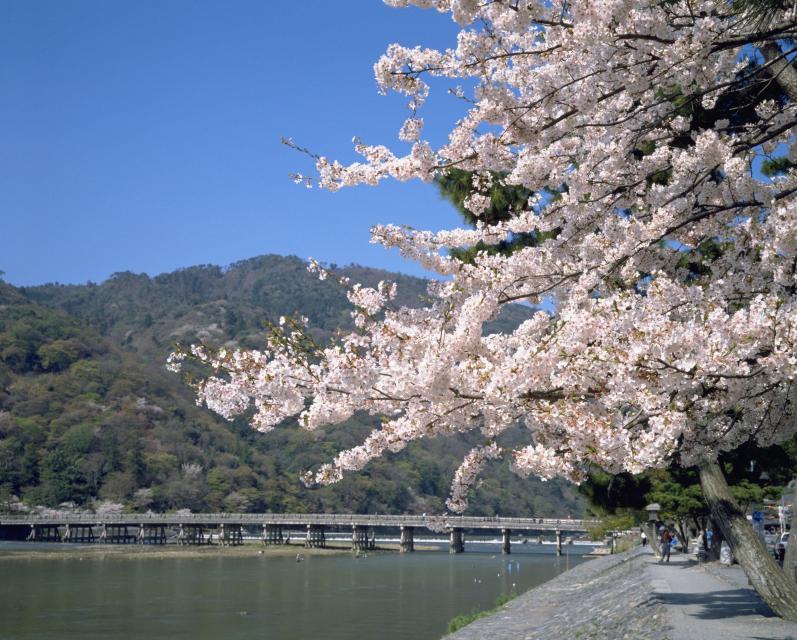 渡月橋|【京都市公式】京都観光Navi観光スポット・サービス情報。京都にある観光情報をカテゴリ別にご用意しました。行きたいスポットへは、エリアで検索できる機能が便利です。ja.kyoto.travel
-
31thYasaka Shrine
Located at the eastern edge of Gion, this shrine hosts the Gion Festival. The grounds, stretching from the West Tower Gate through the main hall to the dance hall, are an easy place to stop at the beginning or end of a walk through Gion.For detailed information on highlights, visitor information, and access, please see the article about Yasaka Shrine.
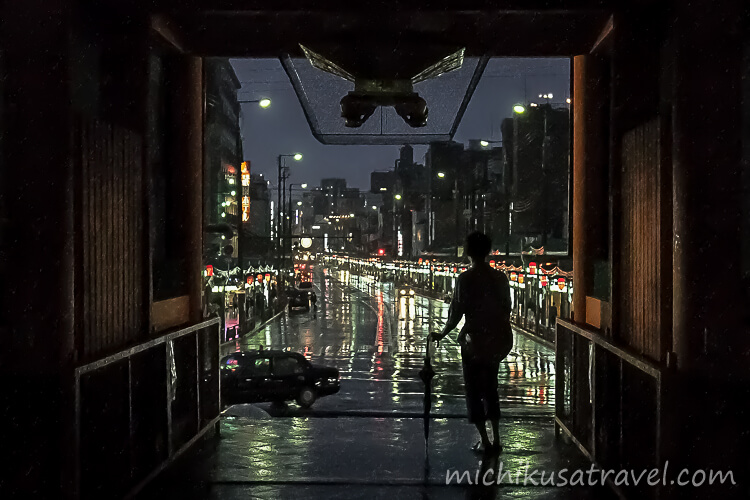 Yasaka Shrine: Highlights, Visiting Hours, Time Needed, and AccessThis guide explains the highlights of Yasaka Shrine, including its west tower gate, main hall, Gion faith, and grounds at night, along with visiting hours, time required, and access, based on official information and on-site research as of 2026year9month.michikusatravel.com
-
32placeHeian Shrine
This shrine was founded to commemorate the eleven-hundredth anniversary of the transfer of the capital to Heian. The grand torii gate, vermilion buildings, and pond-centered strolling garden create an iconic landscape in the Okazaki district.For more information about the highlights, visitor information, and access, please see the article about Heian Shrine.
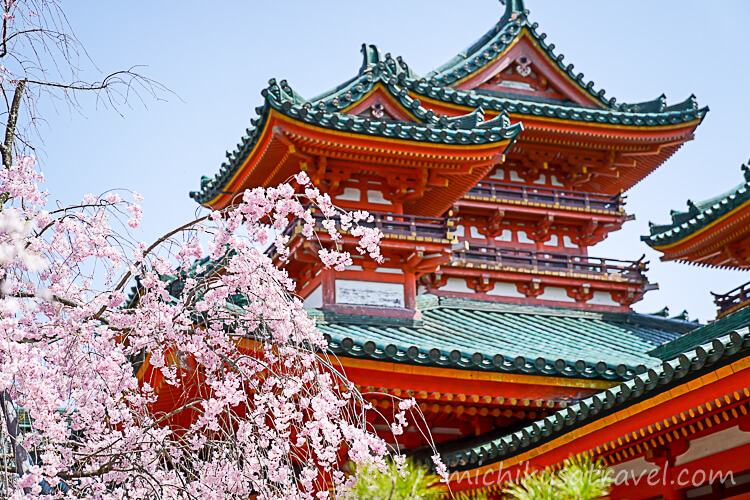 Heian Jingu Shrine: Highlights, Visiting Hours, Admission and AccessThis guide covers the highlights of Heian Shrine—including the Otenmon Gate, Daigokuden Hall, four sacred gardens, Taiheikaku Pavilion, grand torii, and Jidai Matsuri—as well as worship hours, admission fees, and access, based on official information and on-site research as of 2026 year 9 month.michikusatravel.com
-
33placeKyoto National Museum
This national museum’s collection focuses mainly on Buddhist art and archaeological and craft materials related to Kyoto. The architecture of the Meiji Kotokan and the modern Heisei Chishinkan is also a highlight.
 京都国立博物館京都国立博物館の公式ウェブサイトです。京博の展示・イベント情報やご利用案内、ご自宅で楽しめるコンテンツ等を紹介しています。www.kyohaku.go.jp
-
34placeKitano Tenmangū
This is the head shrine of Japan’s Tenmangū shrines, dedicated to Sugawara no Michizane. Alongside its shrine buildings and plum garden, it is a place where faith meets Kyoto’s everyday culture, including the monthly “Tenjin-san” festival held on the twenty-fifth of each month.For more information about highlights, visitor information, and access, see the article on Kitano Tenmangū.
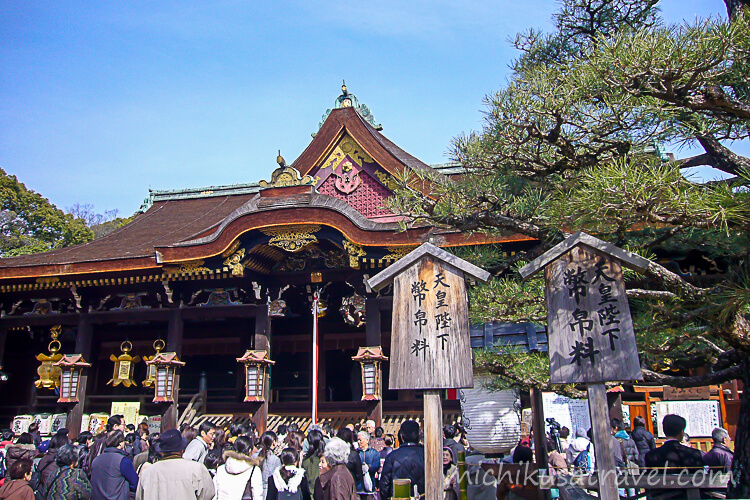 Kitano Tenmangū: Highlights, Visiting Hours, Fees, and AccessThis guide covers the highlights of Kitano Tenmangū, including the honden main hall designated as a national treasure, Sankōmon Gate, the plum garden, and the Tenjin Market, along with visiting hours, fees, and access, based on official information and on-site research as of 9 2026.michikusatravel.com
-
35PlaceKurumadera Temple
This mountain temple stands on the slopes of Mount Kurama. Walking along the approach from the mountain gate to the main hall, you can experience cedar groves, historic sites of faith, and views from the mountaintop.
総本山 鞍馬寺総本山 鞍馬寺の公式サイト。千二百余年の歴史をもつ鞍馬寺は、義経と天狗をめぐるパワースポットの霊山であり、『源氏物語』若紫巻の「北山寺」です。与謝野晶子・鉄幹ゆかりの地。国宝、山内、行事(ウエサク祭・竹伐り会式)などの紹介。京都市...www.kuramadera.or.jp -
36placeDaikaku-ji
This monzeki temple originated as Emperor Saga’s detached palace. Enjoy the shinden-zukuri-style buildings and corridors together with Ōsawa Pond within the temple grounds.For detailed information about highlights, visiting guidance, and access, see the article about Daikaku-ji.
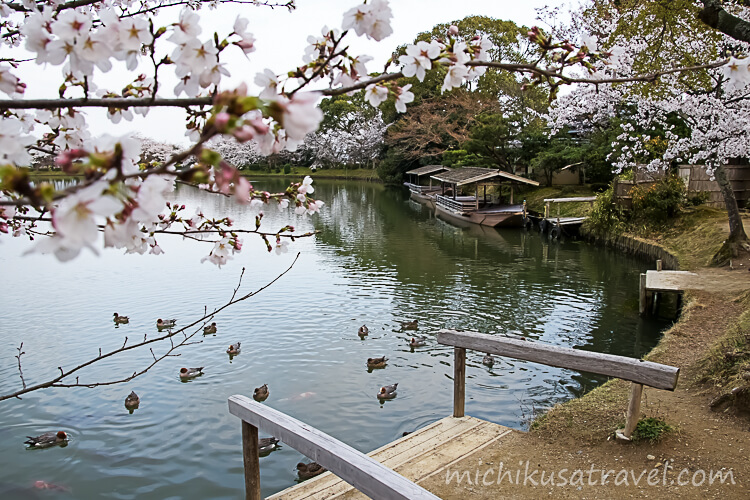 Daikakuji: Highlights, Visiting Hours, Admission Fees, and AccessWe explain the highlights of the former Saga Imperial Palace, including the Daikakuji temple complex, Shinden Hall, the Murasame Corridor, the pier at Ōsawa Pond, cherry blossoms, the water’s surface at dusk, the Shingyō-hōtō pagoda, and the Imperial Sealed Heart Sutra Hall, along with visiting hours, admission fees, and access, based on official information and on-site research as of September 2026.michikusatravel.com
-
37placeSagano Scenic Train
This sightseeing train connects Torokko Saga Station and Kameoka Station. Through the windows, you can view the Hozukyo Gorge and mountain scenery that changes with the seasons.
Operating days and boarding information are available on the official Sagano Scenic Railway website.
運行スケジュール – 嵯峨野観光鉄道嵯峨野観光鉄道 運行スケジュール、運転日時と空席状況券、時刻表をご覧いただけます。www.sagano-kanko.co.jp -
38thKōzan-ji
Kōzan-ji in Toganoo is a World Heritage temple. Visit the national treasure Sekisui-in and explore the temple’s history alongside the generations-old Chōjū jinbutsu giga picture scrolls.
Check the official Kōzan-ji website for visiting hours and information about the temple grounds.
高山寺kyoto-kosanji.jp -
39placeShugakuin Imperial Villa
At the foot of Mount Hiei, three imperial villas—the Upper, Middle, and Lower Villas—spread across the landscape. A tour route takes you through the expansive grounds, including rural scenery and gardens that use the mountain ranges as a borrowed backdrop.
Information about visiting and public access is available on the Imperial Household Agency’s official page for Shugakuin Imperial Villa.
ホーム - 修学院離宮修学院離宮の公式情報を提供する宮内庁のウェブサイト。建築物や庭園、障壁画・調度などを画像や動画と共に紹介。アクセス方法や参観休止日、最新情報も随時掲載しています。kyoto-gosho.kunaicho.go.jp -
40placeChion-in
It is the head temple of the Jōdo school, with the enormous Sanmon Gate and Miei-dō Hall standing on the slope of Higashiyama. The buildings associated with the Tokugawa family and the long stone stairway convey the scale of the temple grounds.
 浄土宗総本山 知恩院知恩院は浄土宗の開祖、法然上人がお念仏のみ教えを広め、入寂された遺跡に建つ京都の由緒ある寺院です。正式名称は華頂山知恩教院大谷寺という、浄土宗の総本山です。www.chion-in.or.jp
-
41placePhilosopher’s Path
This walking path follows a branch of the Lake Biwa Canal from the vicinity of Ginkaku-ji to the vicinity of Nyakuō-ji Shrine. Enjoying cherry blossoms, fresh greenery, and autumn foliage, you can walk between Ginkaku-ji and the Nanzen-ji area.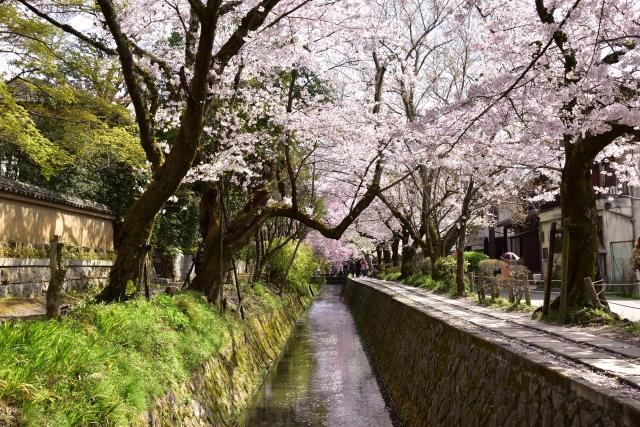 哲学の道|【京都市公式】京都観光Navi観光スポット・サービス情報。京都にある観光情報をカテゴリ別にご用意しました。行きたいスポットへは、エリアで検索できる機能が便利です。ja.kyoto.travel
-
42thHanamikoji Street
A stone-paved street running north to south through Gion, lined with teahouses and traditional townhouses. Walking along the street toward Kennin-ji Temple, you can experience the history of the geisha district and its present-day streetscape.
 エリア別観光情報「祇園・清水寺」|【京都市公式】京都観光Navi京都の観光スポット「祇園・清水寺エリア」の紹介と観光情報を掲載。目的から祇園・清水寺エリアの観光情報を探したり、主要スポットからおすすめの観光コースとルートを見ることができます。ja.kyoto.travel
-
43placeHōkan-ji / Yasaka Pagoda
This is one of Kyoto’s signature views: a five-story pagoda rises above the streetscape of Higashiyama. Walking with views of the pagoda from Ninenzaka or Yasaka-dōri, you can enjoy the way the slopes and traditional machiya houses overlap. Its official name is the five-story pagoda of Hōkan-ji. Atmospheric traditional Kyoto streets, including Ishibeikōji, spread around Yasaka Pagoda.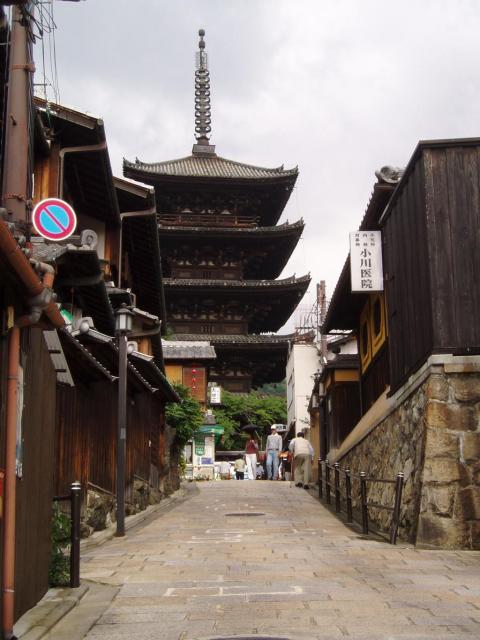 法観寺(八坂の塔)|【京都市公式】京都観光Navi観光スポット・サービス情報。京都にある観光情報をカテゴリ別にご用意しました。行きたいスポットへは、エリアで検索できる機能が便利です。ja.kyoto.travel
-
44thNinenzaka / Ninen-zaka
This stone-paved slope leads to Kiyomizu-dera and is lined with traditional townhouses and shops. It connects with Sannenzaka and the Yasaka Pagoda, allowing visitors to enjoy Higashiyama's changing elevations and historic streetscape on foot.For details on highlights, visitor information, and access, please see the article about Ninenzaka / Ninen-zaka.
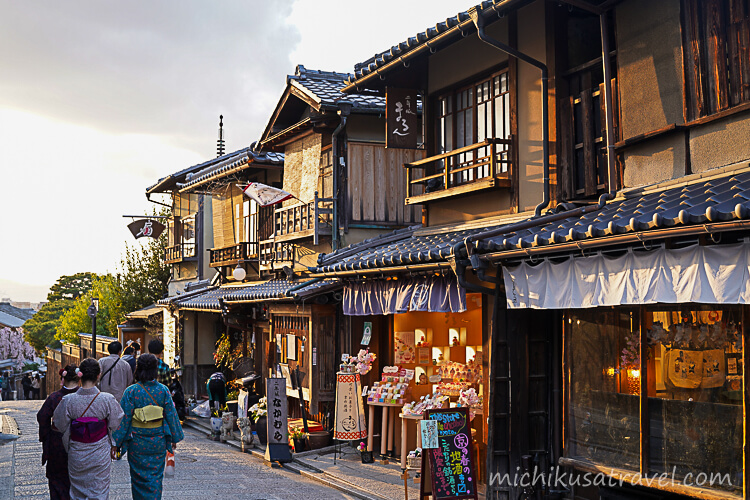 Ninenzaka: Highlights, passage hours, fees, and access guideWe explain the stone-paved streets of Ninenzaka / Ninenzaka and Kyoto machiya, highlights including the walking route linking Kiyomizu-dera, Yasaka Pagoda, and Kōdai-ji, passage times, fees, and access, based on official information and on-site research as of 2026 9.michikusatravel.com
-
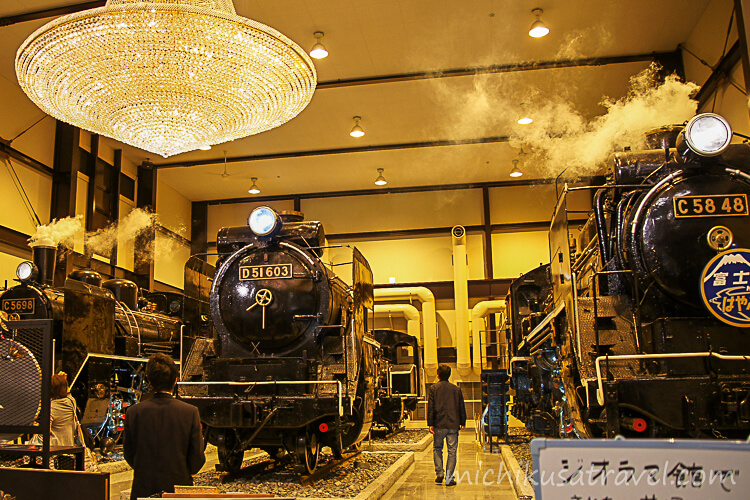
45placeKyoto Railway Museum
For more information about the highlights, visitor information, and access, see the article about Kyoto Railway Museum.
Kyoto Railway Museum
 Kyoto Railway Museum: Highlights, Opening Hours, Tickets and AccessThis guide covers highlights of the Kyoto Railway Museum, including the Umekoji Roundhouse, steam locomotives, the 0 and 500 Series Shinkansen, the SL Steam Train, and the railway diorama, as well as opening hours, admission and SL ride tickets, and access, based on official information and an on-site visit as of 2026/9.michikusatravel.com
-
46placeKyoto City KYOCERA Museum of Art
This museum was created through the renovation of the Kyoto Municipal Museum of Art, which opened in 1933, and reopened after renewal in 2020. A modern glass entrance has been added to the main building in the Teikankazukuri style, creating a harmonious space where old and new architecture meet and visitors can enjoy a wide range of exhibitions.For more information about the highlights, exhibitions, visitor information, and access, see the article about the Kyoto City KYOCERA Museum of Art.
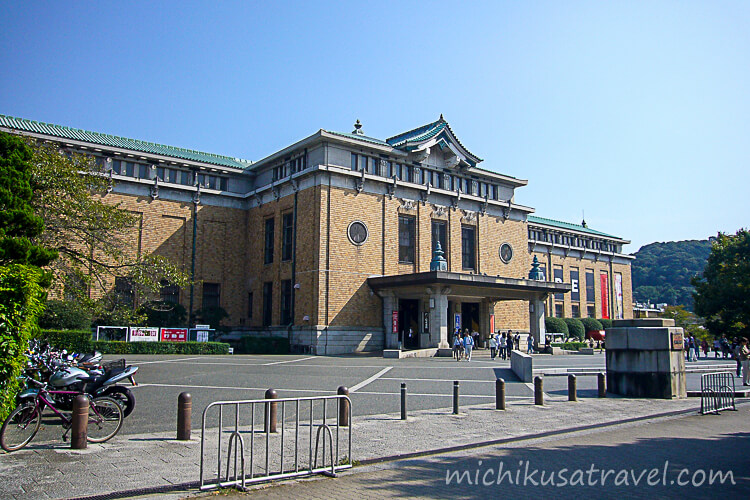 Kyoto City KYOCERA Museum of Art: Highlights, opening hours, admission fees, and accessWe explain the highlights of the Kyoto City KYOCERA Museum of Art, including its imperial-crown-style main building, Glass Ribbon, and collection rooms, along with opening hours, admission fees, and access, based on official information and on-site research as of October 2026.michikusatravel.com
-
47placeSennyū-ji Temple
It is the head temple of the Sennyū-ji school of Shingon Buddhism and is known as the “Imperial Temple” because it serves as the mortuary temple for successive emperors and members of the imperial family. As you explore the temple complex, you can see the architecture of the Buddha Hall, a Kannon statue modeled on Yang Guifei, and cultural properties that convey its deep ties to the imperial family.
【公式】皇室御香華院 御寺 泉涌寺 – 京都東山 御寺 泉涌寺の公式WEBサイトですmitera.org -
48thJingoji Temple
This temple complex spreads across the mountainside in Takao. You can view the National Treasure statue of Yakushi Nyorai and one of Japan’s three most celebrated temple bells, and try kawarake throwing on the grounds.
For visiting hours and information about the temple grounds, see the official Jingoji Temple website.
弘法大師霊場 遺迹本山 高雄山神護寺ホームページ京都高雄山神護寺のホームページですwww.jingoji.or.jp -
49thMyoshinji Temple
Myoshinji Temple is the head temple of the Myoshinji school of Rinzai Zen, with a spacious grounds lined with temple buildings and subtemples. Highlights include the Zen temple layout connecting the Sanmon Gate, Buddha Hall, and Dharma Hall, as well as the gardens of subtemples open to visitors.For details about the highlights, visitor information, and access, please see the article about Myoshinji Temple.
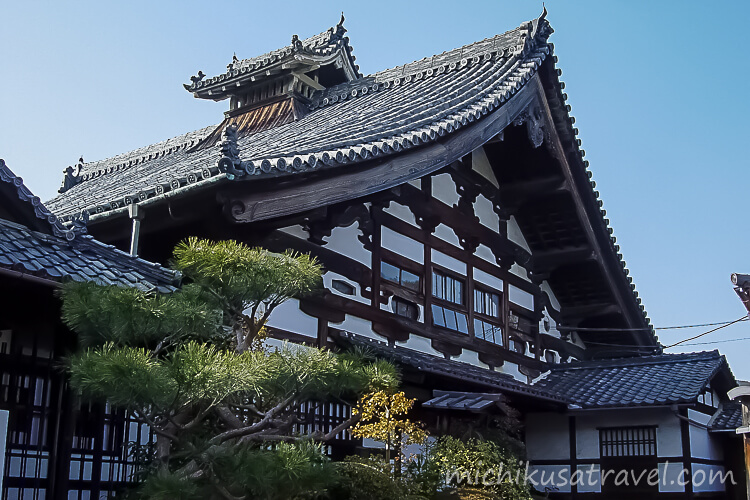 Myoshinji Temple: Highlights, visiting hours, admission fees, and accessThis guide covers the highlights of Myoshinji Temple, including the Sanmon Gate, the cloud dragon painting in the Hatto Hall, the temple bell designated as a National Treasure, Daikuri, and the subtemples, along with visiting hours, admission fees, and access, based on official information and on-site research as of 2026 9.michikusatravel.com
-
50placeŌkōchi Sansō Garden
This garden on Mount Ogura was created over about 30 years by Denjirō Ōkōchi, a film actor of the Shōwa era. As you walk along the circular path, you can enjoy sukiya architecture, seasonal plantings, and views of Kyoto and Mount Hiei.
 大河内山荘庭園|【京都市公式】京都観光Navi観光スポット・サービス情報。京都にある観光情報をカテゴリ別にご用意しました。行きたいスポットへは、エリアで検索できる機能が便利です。ja.kyoto.travel
-
51placeJidai Matsuri
This major festival at Heian-jingū Shrine features a procession dressed in costumes from different historical periods. Through the customs of each era, tracing back from the Meiji Restoration to the Heian period, visitors can experience Kyoto’s history.
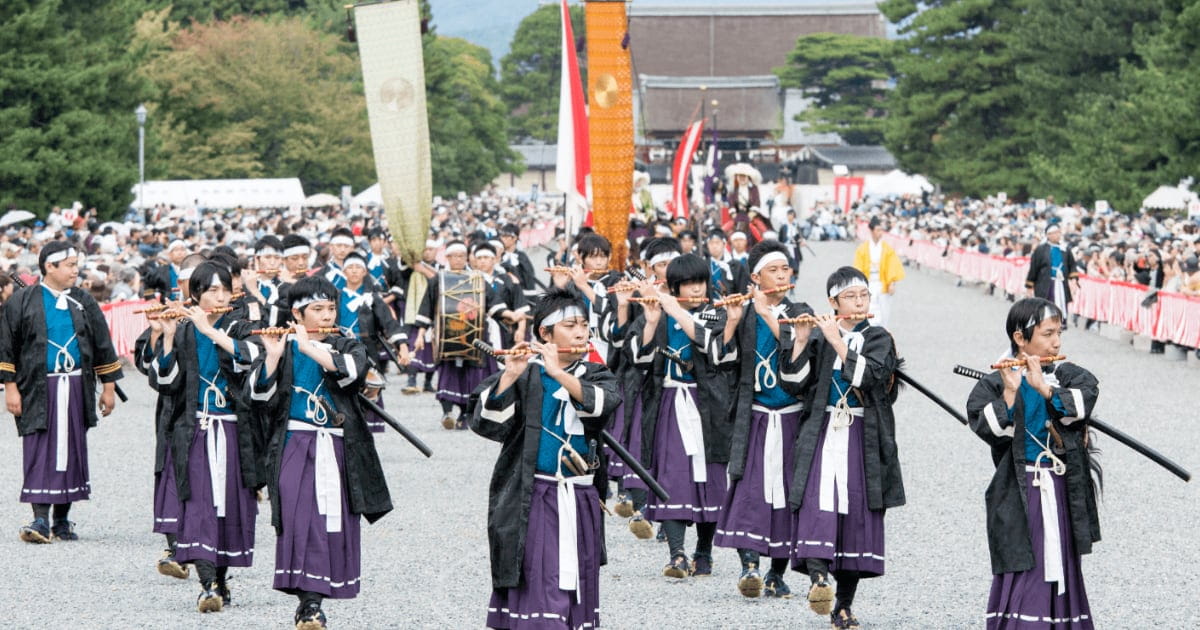 時代祭「どんな祭?」|【京都市公式】京都観光Navi京に広がる時代絵巻。時代祭は葵祭、祇園祭とともに京都三大祭の一つとして知られ、国内はもとより海外からの参観者も多く、沿道には豊かな国際色が見受けられます。10月22日(雨天順延)。ja.kyoto.travel
-
52thAoi Matsuri
Aoi Matsuri is an annual festival held at Kamigamo Shrine and Shimogamo Shrine. A procession dressed in court attire from the imperial era departs from the Kyoto Imperial Palace, passes through Shimogamo Shrine, and proceeds to Kamigamo Shrine.
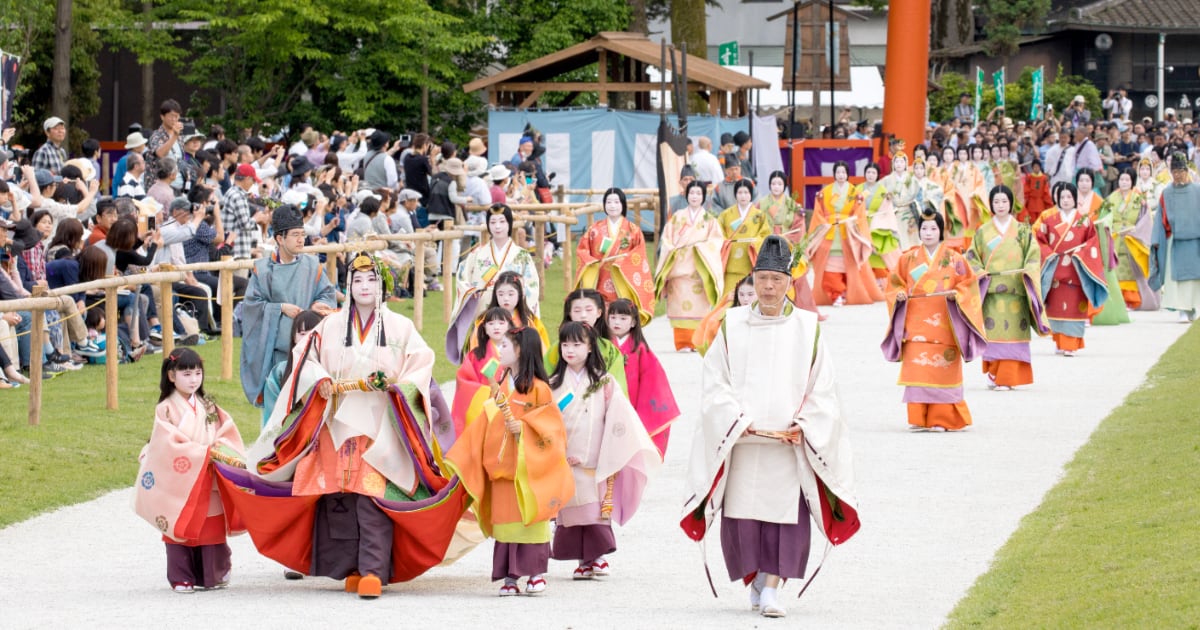 葵祭「どんな祭?」|【京都市公式】京都観光Navi葵祭は、京都三大祭のひとつ。約1500年前に起源をもつ優雅で古趣に富んだ祭り。総勢500名以上が平安貴族の姿で、京都御所~下鴨神社~上賀茂神社へと向かう行列が有名です。ja.kyoto.travel
-
53placeGozan no Okuribi
This is an annual ceremony held on August 16 to send off the spirits. Fires are lit in turn at Daimonji, Myōhō, Funagata, Hidari-Daimonji, and Toriigata, making letters and shapes appear in Kyoto’s night sky.
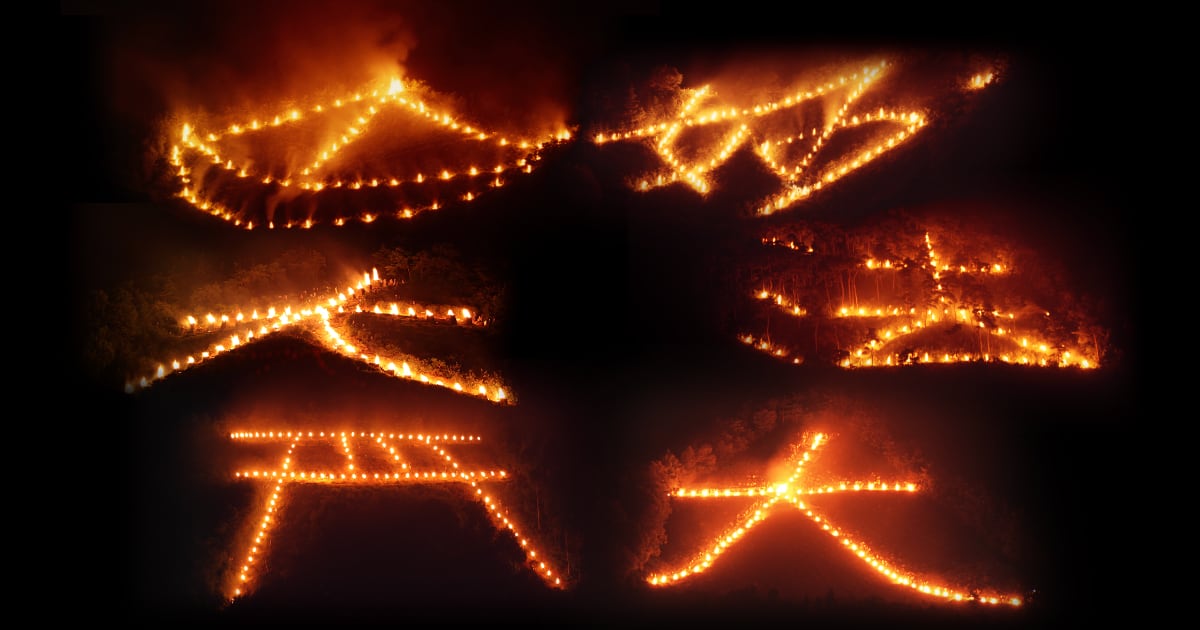 京都五山送り火「どんな行事?」|【京都市公式】京都観光Navi京都五山送り火は、京の夏の夜空を彩る風物詩のひとつ。夏の夜空をいろどる五山送り火は、8月16日 午後8時より点火。ja.kyoto.travel
-
54placeMinamiza
A kabuki theater at the eastern end of Shijo Bridge, it symbolizes Kyoto’s theater culture. In addition to seeing a performance, the combination of its facade with the raised tower and Gion’s streetscape is especially striking.
 南座松竹株式会社の公式サイトです。歌舞伎や演劇の公演情報をご紹介しています。www.shochiku.co.jp
-
55placeKamogawa River
This river flows north to south through central Kyoto and is popular for its stepping stones and riverside promenades. Walking along it, you can enjoy the changing scenery at each bridge and take in the mountain ranges and the city's expanse.
For more information about highlights, visitor information, and access, please see the article about the Kamogawa River.
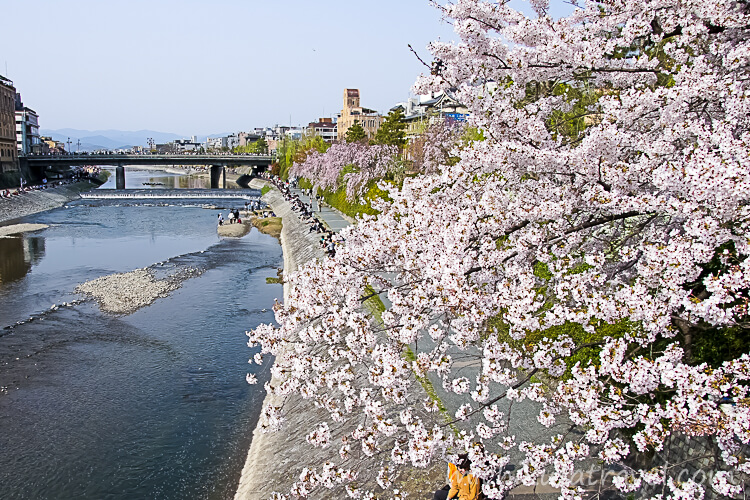 Kamo River: Highlights, Opening Hours, Suggested Time, and AccessThis guide covers the highlights around Shijō and Sanjō on the Kamogawa River, the cherry-lined riverbanks, the Kamogawa Delta, usage hours, walking times and access, based on official information and on-site research as of 2026 9.michikusatravel.com
-
56placeKyoto Gyoen National Garden
This vast national garden surrounds the Kyoto Imperial Palace. You can enjoy a leisurely walk in the heart of the city, following gates, historic sites, trees, and gravel paths that retain the atmosphere of the former court-aristocrat district.
京都御苑 | 一般財団法人国民公園協会京都御苑へようこそ!最新情報や見どころの紹介、グルメ情報、アクセス、駐車場情報などを掲載しています。fng.or.jp -
57PlaceThe Museum of Kyoto
This museum presents Kyoto’s history and culture comprehensively. You can also see the red-brick building of the former Bank of Japan Kyoto Branch alongside special exhibitions covering various fields.
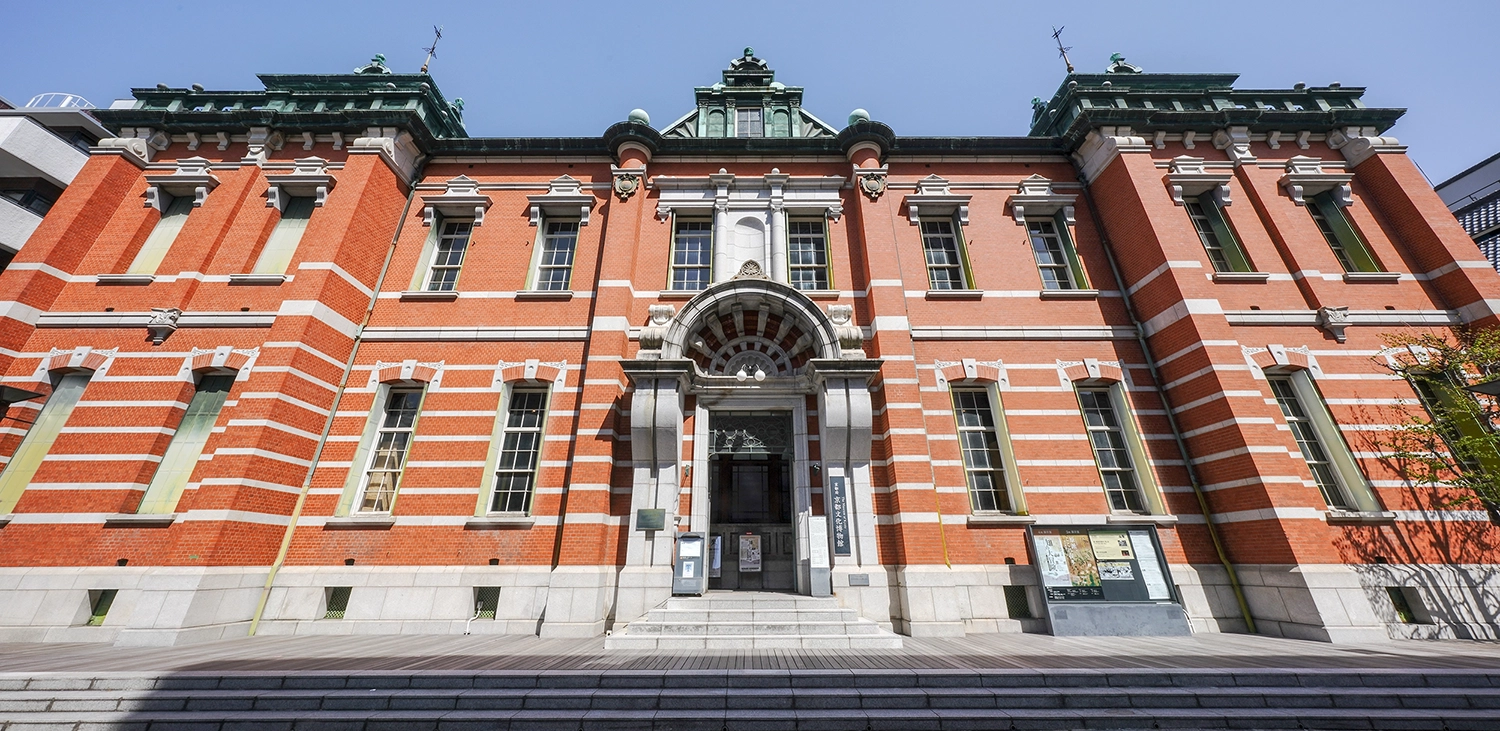 京都府京都文化博物館京都の歴史と文化の紹介。京都府京都文化博物館のご利用案内。総合展示、特別展、フィルムシアターでの映画上映、その他の催物の最新情報。京都府京都文化博物館別館(重要文化財・旧日本銀行京都支店)の紹介。www.bunpaku.or.jp
-
58placeKyoto International Manga Museum
The Kyoto International Manga Museum uses a former elementary school building to collect and exhibit manga materials from Japan and around the world. Visitors can take manga from shelves covering an entire wall and experience Kyoto’s manga research and cultural outreach.
For more information about highlights, visitor information, and access, see the article on the Kyoto International Manga Museum.
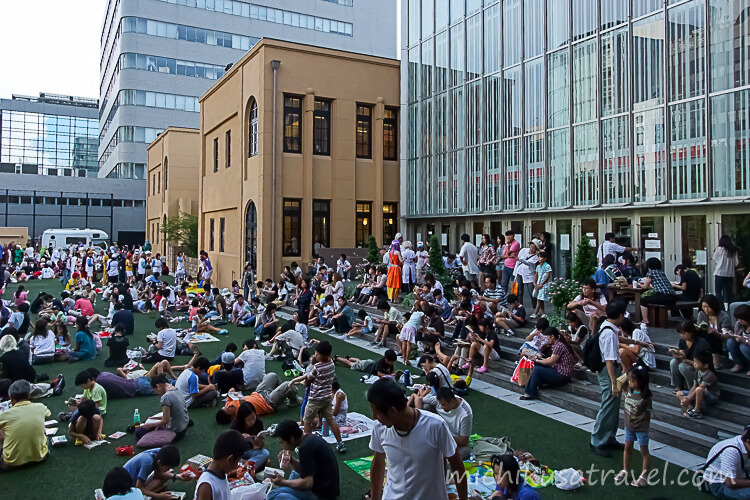 Kyoto International Manga Museum: Highlights, Opening Hours, Admission Fees, and AccessThis guide covers highlights of the Kyoto International Manga Museum, including the manga wall, former school building, reading on the lawn, and special exhibitions, as well as opening hours, admission fees, and access, based on official information and on-site research as of 9 2026.michikusatravel.com
-
59placeGekkeikan Okura Sake Museum
This museum presents the history of sake brewing in Fushimi through a former sake brewery, tools, and documents. Visitors can learn about the relationship between Fushimi’s water and sake culture and experience the region’s distinctive industrial landscape.
 月桂冠大倉記念館京都・伏見、お酒の史料館「月桂冠大倉記念館」の見所をご紹介。www.gekkeikan.co.jp
-
60thToei Uzumasa Kyoto Studio Park
This interactive attraction lets you walk through open-air sets from period dramas and experience Japan’s filmmaking culture. The whole family can enjoy Edo-period streetscapes, as well as exhibits and events about ninja and special effects.
https://www.toei-eigamura.com/www.toei-eigamura.com -
61placeNishiki Market
This roughly four hundred-meter shopping street brings together shops selling Kyoto vegetables, pickles, dried foods, fresh fish, sweets and more. Known as “Kyoto’s kitchen,” it lets you compare the city’s food culture during a short stroll.
 トップページwww.kyoto-nishiki.or.jp
-
62placeteamLab Biovortex Kyoto
Located within walking distance of Kyoto Station, this is teamLab's largest museum in Japan. More than 50 artworks are presented across a space of over 1 hectare, allowing visitors to continuously explore immersive experiences in which light, sound, and bodily movement connect with the artworks throughout the expansive museum.
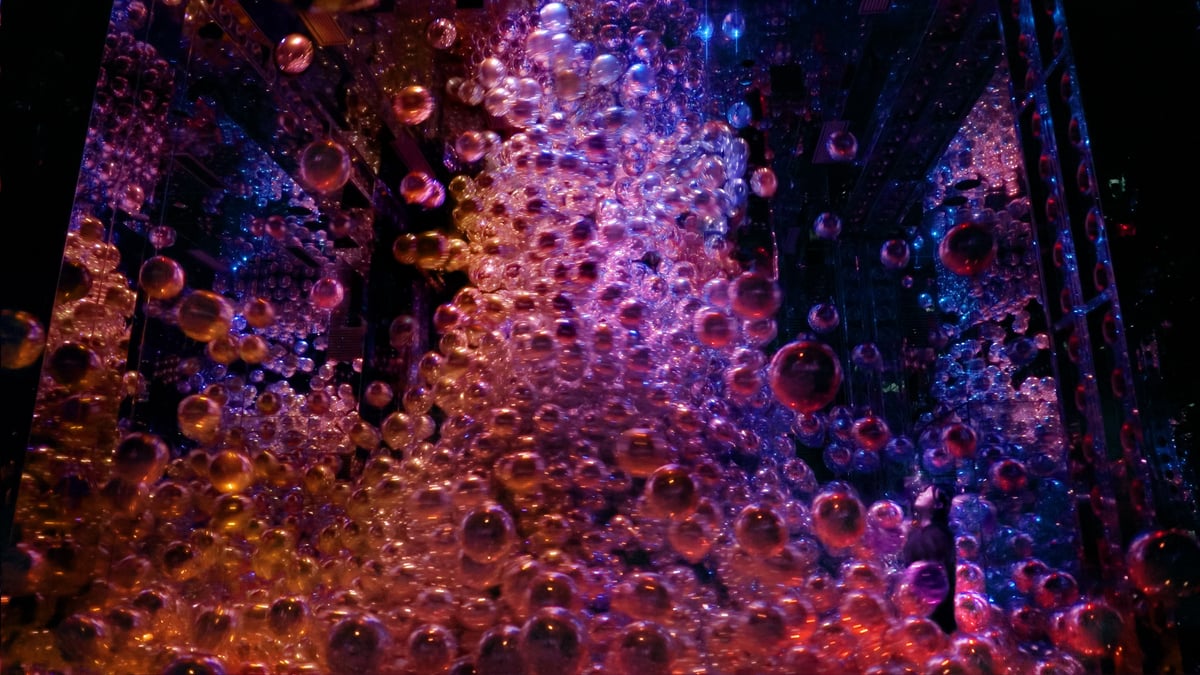 【公式】チームラボ バイオヴォルテックス 京都2025.10.07(火) - 常設 京都www.teamlab.art
-
63thOhara
Ohara is a satoyama countryside area at the foot of Mount Hiei, with expansive rural scenery. Walking along the mountain roads, you can visit Sanzen-in, Jakō-in, and Hōsen-in together.
For local highlights and transportation information, visit the official website of the Ohara Tourism Preservation Association.
 大原観光保勝会京都・洛北の観光地、大原観光保勝会の公式WEBサイトです。三千院、寂光院をはじめとする天台宗のお寺や、大原温泉、赤しそなど、歴史と自然が調和した豊かな里山の観光をお楽しみください。kyoto-ohara-kankouhosyoukai.net
-
64placeKeage Incline
These are the remains of an inclined railway used to overcome the elevation difference along the Lake Biwa Canal. Today, you can walk along the tracks and see the former equipment up close.
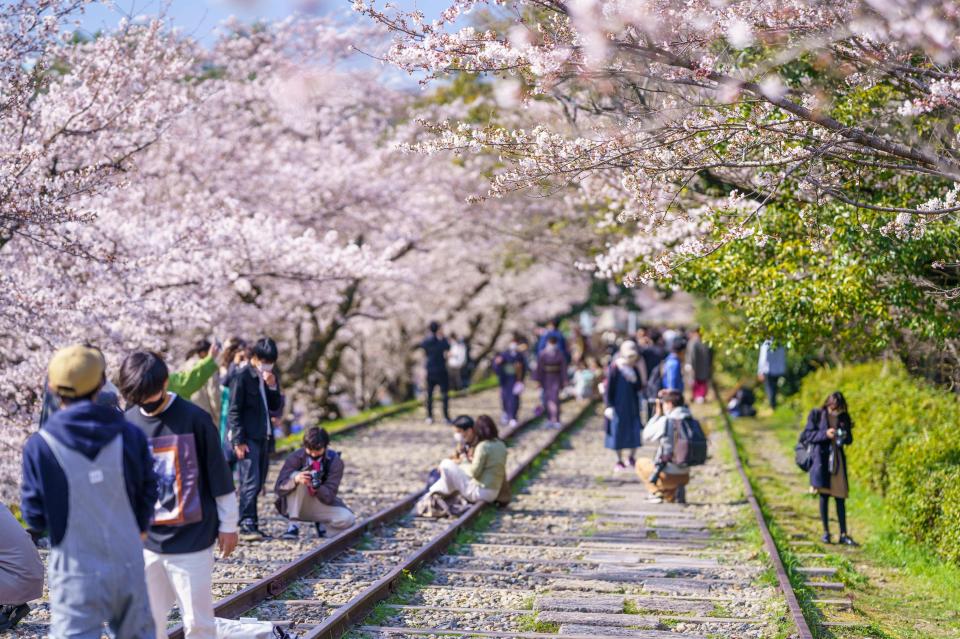 蹴上インクライン|【京都市公式】京都観光Navi観光スポット・サービス情報。京都にある観光情報をカテゴリ別にご用意しました。行きたいスポットへは、エリアで検索できる機能が便利です。ja.kyoto.travel
-
65placeSaga Torii Moto
This is a preservation district for traditional buildings along the road leading to the first torii gate of Atago Shrine, where machiya-style townhouses and thatched farmhouses remain. Walk north from Adashino Nenbutsu-ji Temple to follow a quiet streetscape distinct from central Arashiyama.
 きょうと修学旅行ナビ | 見学スポット | 嵯峨鳥居本「きょうと修学旅行ナビ」は京都への修学旅行をサポートするホームページです。体験学習施設やモデルコース、見学スポットなど、修学旅行に役立つ情報が満載です。shugakuryoko.kyoto.travel
-
66placeJōjakkō-ji Temple
This temple stretches across the slope of Mount Ogura. Walk among the stone steps surrounded by autumn leaves and visit the tahōtō pagoda, then enjoy views of the surrounding scenery from the upper part of the temple grounds.
Visit the official Jōjakkō-ji Temple website for visiting hours and information about the temple grounds.
常寂光寺 JOJAKKO-JI紅葉の名所・日蓮宗の寺院jojakko-ji.or.jp -
67placeAdashino Nenbutsuji Temple
A Jōdo Buddhist temple in Adashino, an area long regarded as a place of burial, where numerous stone Buddhist images and pagodas stand in Saikyō no Kawara on the grounds. While walking through the historic streets of Saga-Toriimoto, visitors can encounter the region's tradition of honoring the dead and its sense of impermanence.
Visiting hours and information about the temple grounds are available on the official Adashino Nenbutsuji website.
華西山東漸院念仏寺|あだし野念仏寺京都嵯峨野にある浄土宗寺院。平安時代以来風葬の地であった化野に弘法大師が五智山如来寺を開創。その後法然上人の常念仏道場となり今に至ります。西院の河原、水子供養、風光明媚な竹林、千灯供養で知られています。nenbutsuji.jp -
68thRurikoin
This temple in Yase harmonizes sukiya-style architecture with a garden. During its seasonal openings, you can admire fresh greenery and autumn foliage reflected in the polished floors and tables.
瑠璃光院|【京都市公式】京都観光Navi観光スポット・サービス情報。京都にある観光情報をカテゴリ別にご用意しました。行きたいスポットへは、エリアで検索できる機能が便利です。ja.kyoto.travel -
69placeDaihōon-ji / Senbon Shakadō
This temple preserves a main hall designated a National Treasure, retaining the appearance of the Kamakura period. Inside, visitors can view up close Kaikei’s statues of the Ten Principal Disciples and the Six Kannon.
Viewing hours and information about the cultural properties are available on the official Daihōon-ji website.
大報恩寺 | 京洛最古の国宝建築と仏像につつまれて時の旅へのいざないdaihoonji.jp -
70thShokoku-ji
Founded by Ashikaga Yoshimitsu, this major temple has numerous temple buildings spread across its spacious grounds. In the Hatto lecture hall, you can experience the “singing dragon,” while the Jotenkaku Museum offers art passed down through the temple.
Visit information is available on the official Shokoku-ji website.
 相国寺 | 臨済宗相国寺派臨済宗相国寺派の大本山である相国寺は、京都五山第二位に列せられる名刹です。正式名称は萬年山相國承天禅寺。www.shokoku-ji.jp
-
71thKoryuji Temple
This temple has one of the oldest histories in Kyoto. Visitors can view the Maitreya Bodhisattva statue in a half-seated contemplative pose, known as Japan’s first National Treasure, and admire its serene expression up close.
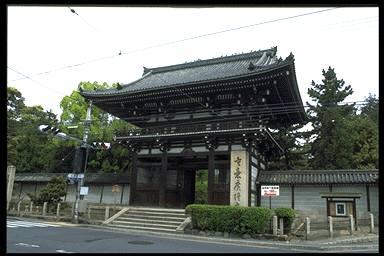 広隆寺|【京都市公式】京都観光Navi観光スポット・サービス情報。京都にある観光情報をカテゴリ別にご用意しました。行きたいスポットへは、エリアで検索できる機能が便利です。ja.kyoto.travel
-
72placeYoshimine-dera
This temple stretches along the slopes of Nishiyama. On the grounds, you can see Yūryū-no-matsu, a designated natural monument, and look out over the Kyoto Basin from the heights.
Visit hours and information about the grounds are available on the official Yoshimine-dera website.
京都・西山 西国第二十番札所 善峯寺www.yoshiminedera.com -
73placeJonan-gu Shrine
This grand Shinto shrine draws worshippers who seek protection from inauspicious directions. Its sacred garden, Rakusuien, features Japanese gardens in a variety of styles, where visitors can enjoy seasonal flowers including weeping plum blossoms.
Visit the official Jonan-gu Shrine website for visiting hours and information about the sacred garden.
城南宮 | 京都の南、方除け ・厄除けの祈祷、車のお祓いの神社。巫女が神楽を舞い、庭園は花と紅葉の名所です京都の南、方除け ・厄除けの祈祷、車のお祓いの神社。巫女が神楽を舞い、庭園は花と紅葉の名所です。www.jonangu.com -
74placeGioji Temple
This is a nunnery associated with Gio, who appears in The Tale of the Heike. You can quietly explore the thatched hermitage surrounded by bamboo and the moss garden spreading across the grounds in shades of green.
Check the official Gioji Temple website for visiting hours and information about the temple grounds.
 祇王寺京都奥嵯峨「平家物語」悲恋の尼寺として知られる 祇王寺の公式ホームページ。www.giouji.or.jp
-
75placeNison-in
This temple enshrines Shakyamuni Buddha and Amitabha as its principal figures. The approach leading straight from the main gate to the main hall is called the “Maple Path” and lets you walk surrounded by trees.
小倉山 二尊院|トップページ小倉山のふもと二尊院で、千二百年の静寂と出会う。京都嵯峨 二尊院の公式ホームページ。トップページです。nisonin.jp -
76placeArashiyama Monkey Park
This attraction lets you observe wild Japanese macaques near the summit of Mount Iwata. After climbing the mountain trail, you can enjoy both the monkeys and views over Kyoto city.
https://www.monkeypark.jp/www.monkeypark.jp -
77placeAtago Shrine
This is the head shrine of the faith in protection from fire, situated on the summit of Mount Atago. Reaching the shrine buildings from the main approach is a serious mountain hike, with the route continuing on foot along a mountain trail.
See the official Atago Shrine website for information about visiting and climbing the mountain.
【公式】愛宕神社【総本宮_京都】当社は全国に約900社を数える愛宕神社の総本宮として京都市の愛宕山上に鎮座します。 古くより火伏・防火に霊験のある神社として知られています。atagojinjya.jp -
78placeNonomiya Shrine
This shrine stands at the site where the Ise Saiō purified herself before her service. The bark-covered black torii gate and low bamboo fence preserve the forms of earlier times, while also offering a glimpse into the world of The Tale of Genji.
Visit information is available on the official Nonomiya Shrine website.
良縁、子宝、学問の神様 野宮神社 ── 源氏物語の宮 ──nonomiya.com -
79thSeiryoji / Saga Shakado
This ancient temple has long been known as Saga’s Shakado. Its principal object of worship is a National Treasure standing statue of Shakyamuni, brought from the Song dynasty. Here, visitors can encounter the history of the faith handed down through the temple.
Visiting hours and information about the temple grounds are available on Seiryoji’s official website.
HOME清凉寺(嵯峨釈迦堂)の公式ウェブサイトです。清凉寺の簡単な歴史、境内の案内、参拝の案内、年中行事、交通の案内などを登載。また清凉寺境内・建物の写真もいくつか載せています。www.seiryoji.or.jp -
80thChishaku-in
This is the head temple of the Chizan school of Shingon Buddhism, with temple buildings and gardens spread across its grounds. Visitors can view screen paintings by the school of Hasegawa Tōhaku and appreciate them together with the renowned garden.
 智積院|【京都市公式】京都観光Navi観光スポット・サービス情報。京都にある観光情報をカテゴリ別にご用意しました。行きたいスポットへは、エリアで検索できる機能が便利です。ja.kyoto.travel
-
81placeShoren-in
Shoren-in is a monzeki temple with close ties to the imperial family. Known for preserving the Blue Fudō tradition, it also lets visitors see a large camphor tree designated as a natural monument while walking through the gardens.
Visiting hours and information about the temple grounds are available on the official Shoren-in website.
天台宗 青蓮院門跡京都市東山区粟田口に位置する天台宗の門跡寺院、青蓮院門跡。拝観案内、夜間拝観の他、飛地境内「将軍塚」、国宝「青不動尊」の紹介等。www.shorenin.com -
82placeKonkaikōmyō-ji
It is the head temple of the Jōdo school. At the end of the Edo period, it housed the headquarters of Kyoto’s military governor. You can trace the history connected with the large temple gate, the Miei-dō Hall, the Aizu domain, and the Shinsengumi.For more information about highlights, visitor information, and access, see the article on Konkaikōmyō-ji.
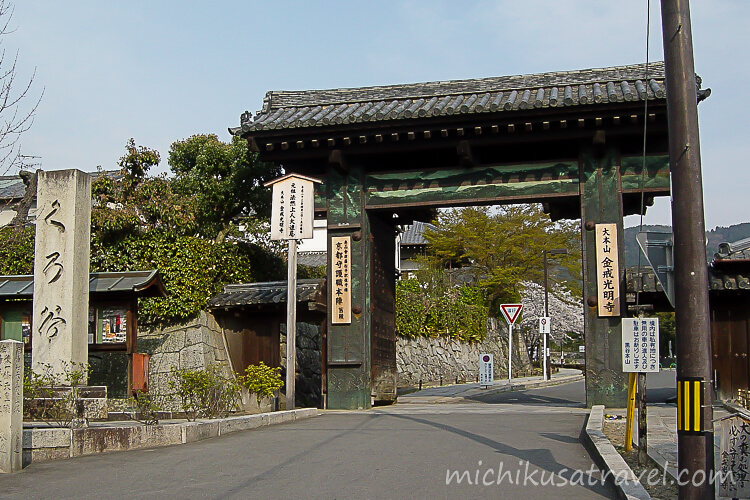 Kinkai Kōmyōji: Guide to Highlights, Visiting Hours, Admission Fees and AccessThis guide covers the highlights of Konkai Kōmyō-ji, including the Kōraimon gate, Sanmon gate, Miei-dō Hall, three-story pagoda, and history associated with the Aizu domain and Shinsengumi, as well as visiting hours, admission fees, and access, based on official information and on-site research as of 9 2026.michikusatravel.com
-
83placeRokuharamitsu-dera Temple
This pilgrimage temple in western Japan is said to have been founded by Kūya. Visitors can see the standing statue of Kūya and the seated statue of Taira no Kiyomori, while tracing the history of Rokuhara, which once spread across this area.
Information on visiting hours and cultural properties is available on the official Rokuharamitsu-dera Temple website.
補陀洛山 六波羅蜜寺六波羅蜜寺は西国三十三所第17番札所観音霊場、都七福神の一・巳成金弁財天、醍醐天皇第二皇子光勝空也上人により開創されたお寺です。rokuhara.or.jp -
84thKyoto Station
Kyoto Station is the gateway to Kyoto, where Shinkansen and conventional railway lines converge. Designed by Hiroshi Hara, the station building features a grand staircase, an aerial passageway, and observation spaces, allowing you to enjoy contemporary architecture even while passing through.For more information about the highlights, visitor information, and access, please see the article on Kyoto Station.
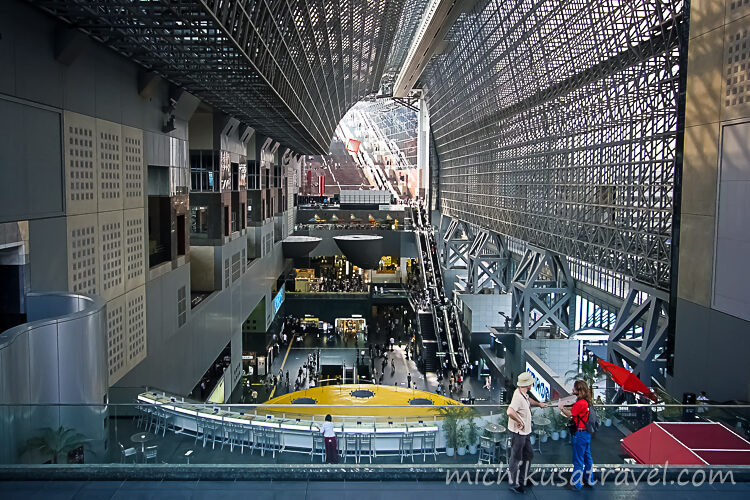 Kyoto Station: Highlights, Visitor Information, Time Required, and AccessThis guide covers highlights such as Kyoto Station’s Grand Staircase, the central concourse, the Skyway and trains visible on the platforms, along with practical information, time required and access, based on official information and an on-site visit as of 2026 9.michikusatravel.com
-
85thNidec Kyoto Tower
Nidec Kyoto Tower is an observation tower standing in front of Kyoto Station. From the observation deck, you can look out over the city, Higashiyama, and Nishiyama, helping you understand the terrain of the Kyoto Basin and the relative positions of the places you plan to visit.For detailed information about highlights, visitor information, and access, see the article about Nidec Kyoto Tower.
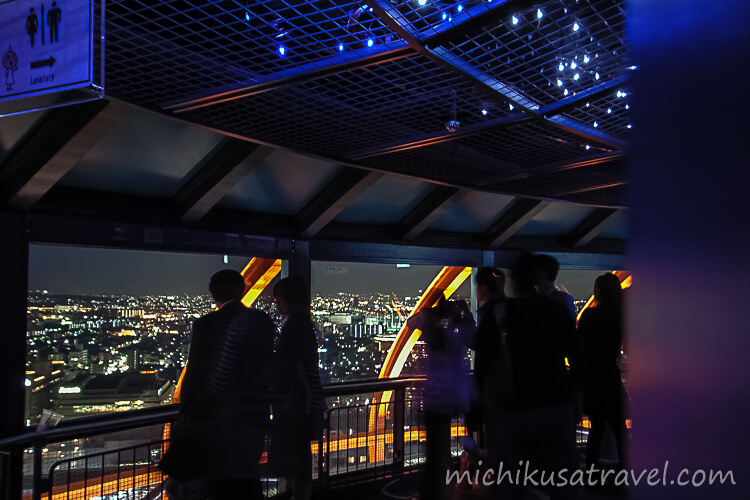 Nidec Kyoto Tower: Highlights, Opening Hours, Admission Fees, and AccessWe explain the highlights of Kyoto Tower, including its observation deck, views of Kyoto, and illuminations, as well as opening hours, prices, and access, based on official information and local research as of 2026year9month.michikusatravel.com
-
86thOtagi Nenbutsu-ji
This ancient temple stands north of Saga Toriimoto. Its grounds are lined with about 1200 rakan statues, each carved by a different visitor and each with a unique facial expression.
Opening hours and information about the temple grounds are available on the official Otagi Nenbutsu-ji website.
 Otagi Nenbutsuji TempleOfficial site of Otagi Nenbutsuji Temple in Kyoto's Arashiyama area. 愛宕念仏寺www.otagiji.com
-
87placeJakkō-in
This is a convent where Kenreimon’in Tokuko prayed for the members of the Heike clan. Visit the setting of the Ōhara pilgrimage in The Tale of the Heike and encounter the history preserved in the stories of the mountain village.
Check the official Jakkō-in website for visiting hours and information about the temple grounds.
京都大原 寂光院京都大原の地に優しくひっそりとたたずむ寂光院。聖徳太子が御父用明天皇の菩提を弔うために建立されたと伝えられる尼寺です。www.jakkoin.jp -
88thHosen-in Temple
This temple has a long history as a monks’ residence of Shorin-in. Visitors can admire the Banjō-en garden, viewed as if the spaces between its pillars were picture frames, and a five-needle pine tree approximately 700 years old.
For visiting hours and garden information, see the official Hosen-in website.
京都 大原 宝泉院 ~ 額縁庭園のお寺・額縁寺 ~京都 大原 宝泉院 額縁庭園 額縁寺www.hosenin.net -
89placeEnkōji
This temple originated as a school founded by Tokugawa Ieyasu. Explore the Jūgyū no niwa and Hōryūtei gardens, each with a distinct atmosphere, and listen for the sound of the suikinkutsu water basin.
Visiting hours and information about the temple grounds are available on the official Enkōji website.
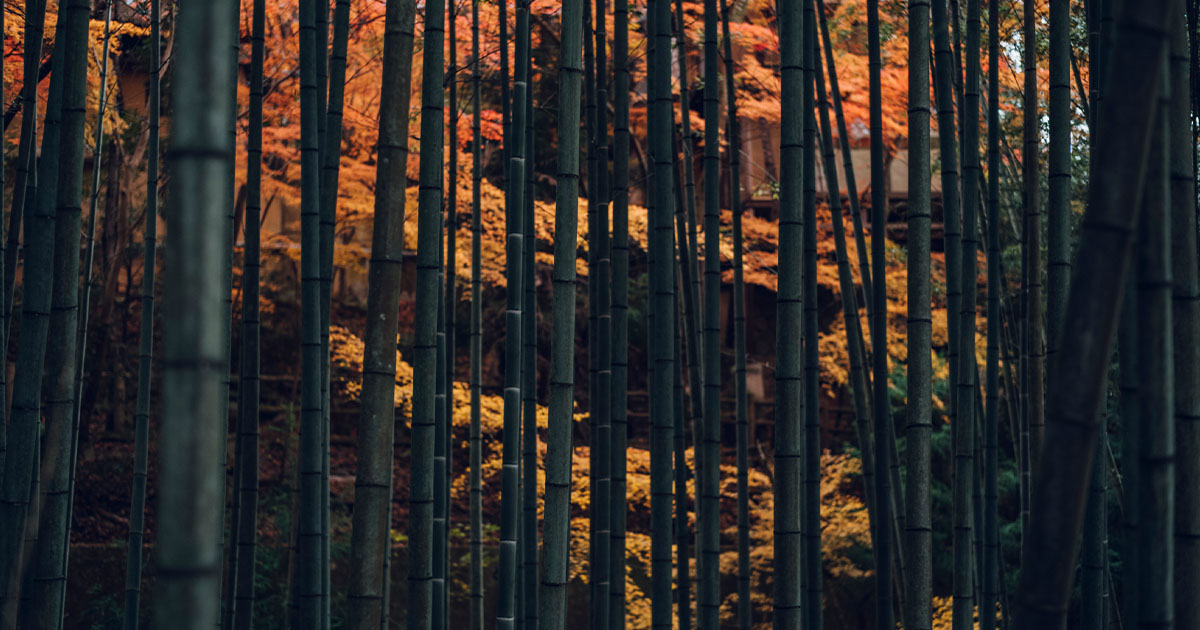 瑞巌山 圓光寺|Zuiganzan Enkouji Temple圓光寺(えんこうじ)は、京都市左京区一乗寺にある臨済宗南禅寺派の寺院。山号は瑞巌山、開山は三要元佶(閑室)、開基(創立者)は徳川家康。当寺では徳川家康の命により、日本における初期の活字本の一つである「伏見版」の印刷事業が行われた。www.enkouji.jp
-
90placeHōnen-in
This lush temple lies uphill from the Philosopher’s Path. Pass through the thatched temple gate and walk around the tree-lined grounds while viewing the white sand garden.
Visiting hours and event information are available on Hōnen-in’s official website.
法然院のホームページwww.honen-in.jp -
91placeMibudera Temple
The temple is known as the place where the Shinsengumi conducted military training. The Mibu Mound preserves historic sites associated with members of the unit, along with the tradition of the silent theater performance “Mibu Kyogen.”For details on the highlights, visitor information, and access, please see the article about Mibudera Temple.
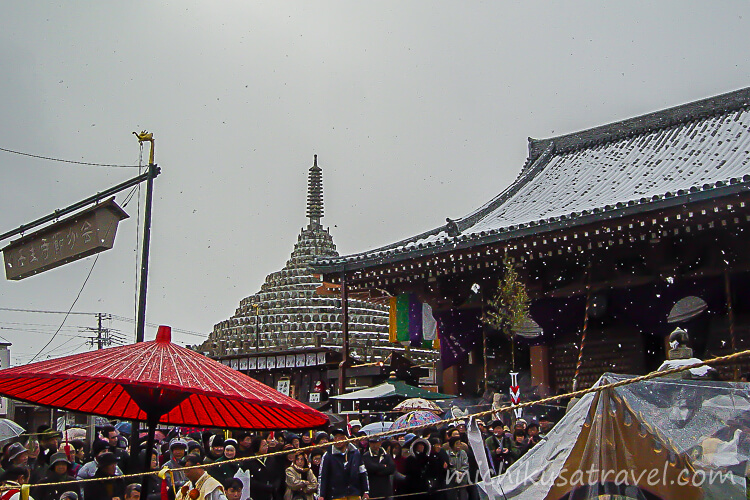 Mibu-dera Temple: Highlights, Visiting Hours, Admission Fees, and AccessThis guide covers the highlights of Mibu-dera Temple, including the Main Hall, the Sen-tai-buttō Pagoda, the Setsubun-e festival, Mibu kyōgen, and Mibu-zuka associated with the Shinsengumi, as well as visiting hours, admission fees, and access, based on official information and on-site research as of September 2026.michikusatravel.com
-
92PlaceKōetsuji Temple
This temple originated as the site of the artist village built by Hon’ami Kōetsu. On the grounds, you can explore the Kōetsu fence and group of tea houses, and look through the trees toward the three Takamine mountains.
 光悦寺|【京都市公式】京都観光Navi観光スポット・サービス情報。京都にある観光情報をカテゴリ別にご用意しました。行きたいスポットへは、エリアで検索できる機能が便利です。ja.kyoto.travel
-
93placeGenko-an Temple
This temple in Takamine is known for its round Window of Enlightenment and square Window of Delusion. Visitors can look up at the blood-stained ceiling, said to be a remnant of Fushimi Castle, and admire the garden that uses the surrounding landscape as a borrowed backdrop.
See the official Genko-an Temple website for visiting hours and information about the temple grounds.
京都 源光庵|悟りの窓・迷いの窓の禅寺京都・鷹峯にある源光庵の公式ホームページ。「悟りの窓・迷いの窓」で知られる曹洞宗の禅寺です。genkouan.or.jp -
94thZuishin-in
This monzeki temple is associated with Ono no Komachi. Visit the preserved makeup well on the temple grounds, view the Buddhist statues in the main hall, and explore the plum garden in season.
Visiting hours and information about the temple grounds are available on the official Zuishin-in website.
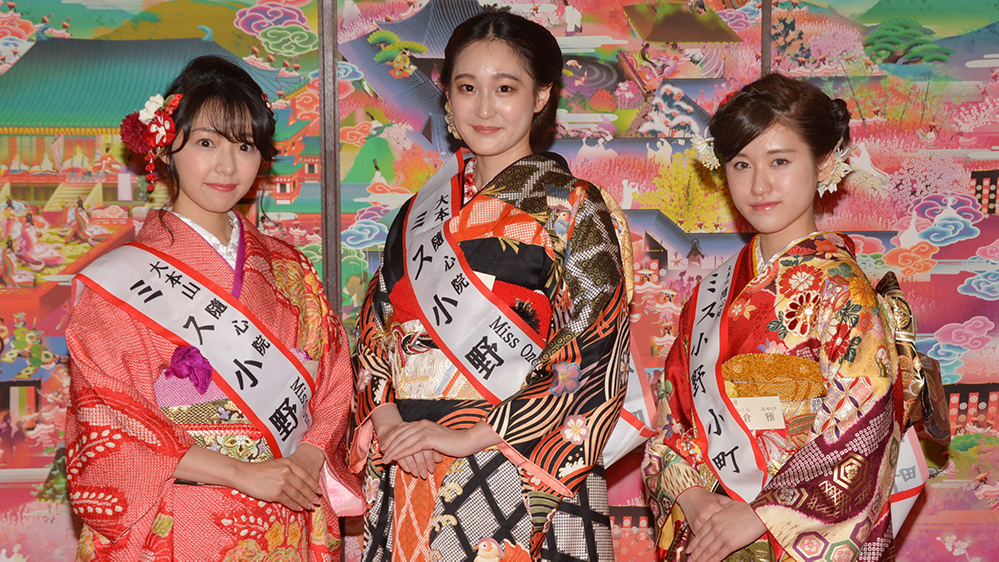 真言宗 大本山・隨心院小野小町ゆかりの寺www.zuishinin.or.jp
-
95thBishamondō
This monzeki temple stands on the mountainside in Yamashina. Visitors can explore the Shinden and Bansui-en garden, and the temple is also known for the weeping cherry trees and autumn foliage that adorn its grounds.
Visiting hours and information about the grounds are available on the official website of Bishamondō Monzeki Temple.
 毘沙門堂門跡天台宗 護法山安国院出雲寺 毘沙門堂 毘沙門堂は大宝三年(703)、文武天皇の勅願により開かれた天台宗の寺院です。 開山当初は、京都の出雲路橋付近(現在の御所北側)にあり「出雲寺」と呼ばれていましたが、後に「毘沙門堂」となります。...www.bishamon.or.jp
-
96placeTeradaya
This riverside inn in Fushimi is known as the setting of the Teradaya Incident and the attack on Ryōma Sakamoto. Visit the building, which preserves the story of events at the end of the shogunate, and discover Fushimi’s history.
Visitor information is available on the official Teradaya website.
寺田屋teradaya.jp -
97placeFushimi Jikkokubune
This sightseeing boat operates seasonally along a branch of the Ujigawa River. From the water, you can view Fushimi’s townscape lined with sake breweries, as well as Misu Lock at the end of the route.
Operating days and boarding information are available on the official Jikkokubune page of the Fushimi Tourism Association.
伏見 十石舟|NPO法人 伏見観光協会kyoto-fushimi.or.jp -
98placeShōseien
This garden was created as a detached precinct of Higashi Hongan-ji Temple and is designated a national Place of Scenic Beauty. Follow the paths through its chisen-kaiyū-style garden, where the scenery changes around the pond.
Visiting hours and garden information are available on the Shōseien page of the official Higashi Hongan-ji website.
 渉成園|真宗大谷派(東本願寺)真宗大谷派(東本願寺)の公式サイトの「渉成園」ページです。渉成園は東本願寺の飛地境内地にある庭園です。四季折々の花が咲きほこり、変化に富んだ景観は「十三景」と称され、文人趣味にあふれる仏寺庭園として国の名勝に指定されています。www.higashihonganji.or.jp
-
99placeTatsumibashi Bridge
This small bridge crosses the Shirakawa in Gion, where the river, willow trees, and machiya townhouses come together to form a single landscape. Even a short walk around the area lets you experience the waterside atmosphere characteristic of Gion.エリア別観光情報「祇園・清水寺」|【京都市公式】京都観光Navi京都の観光スポット「祇園・清水寺エリア」の紹介と観光情報を掲載。目的から祇園・清水寺エリアの観光情報を探したり、主要スポットからおすすめの観光コースとルートを見ることができます。ja.kyoto.travel -
100placeShogunzuka
This burial mound stands on a detached precinct belonging to Shoren-in and was created to protect Heian-kyo. From the large stage at Seiryu-den on the grounds, you can enjoy a broad view of the Kyoto Basin.
Visit times and information about the grounds are available on the official Shogunzuka Seiryu-den website.
天台宗青蓮院門跡 将軍塚青龍殿京都東山山頂に新名所誕生 「青龍殿」「大舞台」と「将軍塚」のご案内www.shogunzuka.com -
101placeMaruyama Park
This is Kyoto City’s oldest park, stretching east of Yasaka Shrine. Visitors can stroll through its circuit-style garden and enjoy the spring scenery of Gion’s celebrated night-blooming cherry blossoms.
For information about the park’s facilities and visitor guidelines, see the official Maruyama Park website.
円山公園のご案内円山公園は、明治19(1886)年に開園した京都市内で最も古い公園です。祗園しだれ桜に代表される桜の名所であり、古くから市内随一の行楽地として発展してきました。昭和6(1931)年には国の名勝にも指定されています。kyoto-maruyama-park.jp -
102placeOta Shrine
This affiliated shrine stands about 800 m east of Kamigamo Shrine. Ota-no-sawa on the grounds is known for its colony of rabbit-ear irises, designated a national natural monument. In mid-May, deep purple flowers cover the marsh, allowing visitors to enjoy both the faith associated with the ancient shrine and the seasonal natural scenery.
大田神社 | 賀茂別雷神社(上賀茂神社:かみがもじんじゃ)公式Webサイト上賀茂神社は、京都でもっとも古い神社であり、雷(いかづち)の御神威により、厄を祓いあらゆる災難を除き給う厄除(やくよけ)明神・落雷除・電気産業の守護神として広く信仰されていますwww.kamigamojinja.jp -
103placeIppodo Chaho Kyoto Main Store
This is the main store of a Japanese tea specialty shop founded in 1717. In the machiya-style shop, you can choose tea leaves and experience Kyoto’s tea culture in the tea room while exploring different brewing methods and flavors. 京都本店/喫茶室 嘉木鴨川や京都御所まで歩いて5分ほど、ウインドウショッピングも楽しい寺町通りにある京都本店。「茶 一保堂」の暖簾が目印です。お茶選びはもちろん、喫茶室も併設。散策のお伴にテイクアウトもご用意しております。各種イベントも随時開催、お茶の...www.ippodo-tea.co.jp
-
104placeYasui Konpiragu Shrine
This shrine is known for prayers to sever bad ties and form good ones. It has a unique visiting ritual: passing through the monument for severing and forming ties, which is covered with wish plaques.For details on the highlights, visitor information, and access, see the article about Yasui Konpiragu Shrine.
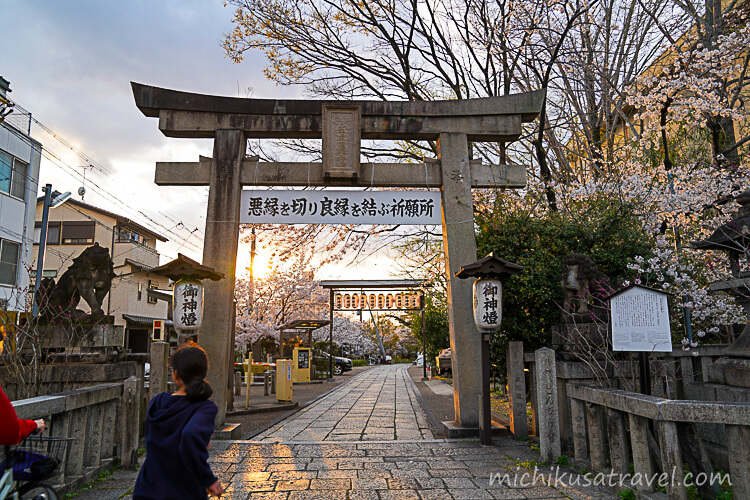 Yasui Konpiragu Shrine: Highlights, Visiting Hours, Fees and AccessThis guide covers the highlights of Yasui Konpiragu Shrine, including the Enkiri Enmusubi Stone and beliefs associated with severing harmful ties and forming beneficial ones, as well as visiting hours, fees, and access, based on official information and on-site research as of 2026 year 9 month.michikusatravel.com
-
105PlaceJishu Shrine
Located north of Kiyomizu-dera’s main hall, this shrine is dedicated to the deity of matchmaking. Its main sanctuary, worship hall, and main gate, all designated Important Cultural Properties, together with the “Love Fortune Stones,” which visitors walk between with their eyes closed, convey a faith passed down through generations.For information on Jishu Shrine’s highlights, visiting hours, and closure status, please see the article below.
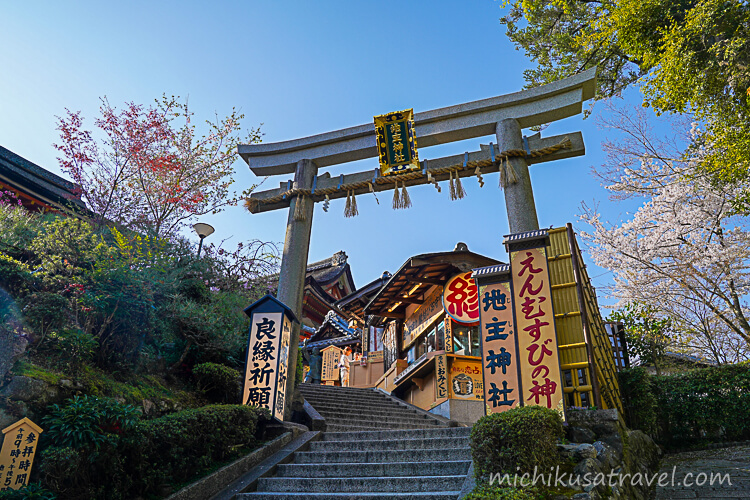 Jishu Shrine: Highlights, Closure Status, Fees, and AccessWe explain highlights including the main hall and worship hall of Jishu Shrine, a World Heritage site, the deity of matchmaking, and the love divination stones, along with closure status, fees, and access, based on official information and on-site research as of 2026 9.michikusatravel.com
-
106thKanshu-ji
This temple was founded at the imperial behest of Emperor Daigo. Stroll through the garden centered around Himuro Pond and see Kanshu-ji-style lanterns, known for their distinctive shape.
 勧修寺|【京都市公式】京都観光Navi観光スポット・サービス情報。京都にある観光情報をカテゴリ別にご用意しました。行きたいスポットへは、エリアで検索できる機能が便利です。ja.kyoto.travel
-
107placeTakamine
A historic district that preserves the memory of Kōetsu Hon’ami’s artistic village. As you stroll through the tranquil streets, you can visit Kōetsu-ji, Jōshō-ji, and Genkō-an temples in succession.
エリア別観光情報「上賀茂・北山・大徳寺」|【京都市公式】京都観光Navi京都の観光スポット「上賀茂・北山・大徳寺エリア」の紹介と観光情報を掲載。目的から上賀茂・北山・大徳寺エリアの観光情報を探したり、主要スポットからおすすめの観光コースとルートを見ることができます。ja.kyoto.travel -
108placeJōshōji Temple
This temple stands on the historic site of the former Takamine Danrin academy. Pass through the vermilion Yoshino Gate, donated by Yoshino Tayū, and visit the associated grave and tea house preserved within the grounds.
 常照寺|【京都市公式】京都観光Navi観光スポット・サービス情報。京都にある観光情報をカテゴリ別にご用意しました。行きたいスポットへは、エリアで検索できる機能が便利です。ja.kyoto.travel
-
109placeRakushisha
You can visit the remains of the thatched hermitage run by Kyorai Mukai. Matsuo Bashō stayed here and wrote The Saga Diary, making it a place that conveys Sagano’s literary history. 落柿舎|【京都市公式】京都観光Navi観光スポット・サービス情報。京都にある観光情報をカテゴリ別にご用意しました。行きたいスポットへは、エリアで検索できる機能が便利です。ja.kyoto.travel
-
110placeHosomi Museum
The Hosomi Museum is a private museum showcasing the Hosomi Collection of Japanese art. Visitors can enjoy special exhibitions on Shinto and Buddhist art, the tea ceremony, and the Rinpa school, as well as contemporary architecture in Okazaki.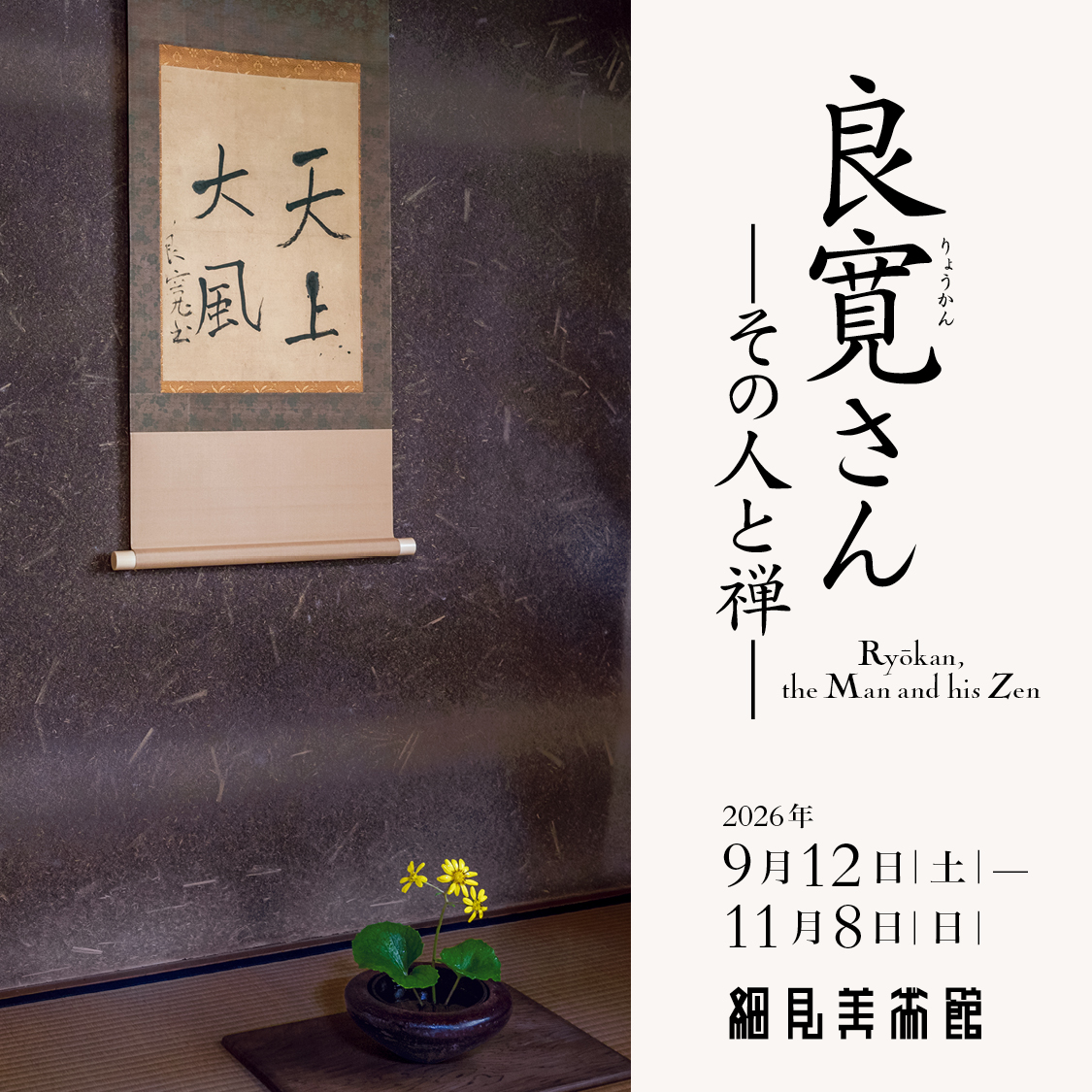 京都 細見美術館 The Hosomi Museum Kyoto財団法人細見美術財団の約1000点に及ぶ日本美術コレクションを中心に、多彩な企画展を開催している。収蔵作品は縄文・弥生時代の美術から江戸時代の諸流派の絵画まで、ほぼ全ての時代にまたがる絵画・彫刻・工芸・書の作品を網羅。中でも日本画...www.emuseum.or.jp
-
111placeKyoto Prefectural Botanical Garden
It is one of Japan's oldest public botanical gardens. The spacious grounds feature plants from every season, exhibition greenhouses, and a cherry grove, offering different scenery throughout the year.
 京都府立植物園 The Kyoto Botanical Gardenwww.pref.kyoto.jp
-
112placeToyokuni Shrine
This shrine is dedicated to Toyotomi Hideyoshi. You can view the Karamon Gate, a National Treasure believed to be a remnant of Fushimi Castle, up close, and see objects associated with Hideyoshi in the treasure hall.
Check the official Toyokuni Shrine website for visiting hours and information about the treasure hall.
豊国神社豊臣秀吉公を祀る豊国神社の総本社。北政所おね様を祀る貞照神社も鎮座し、出世開運・良縁成就の神様として崇敬されています。神社正面には伏見城の遺構と伝わる国宝唐門がそびえ、重要文化財「豊国祭礼図屏風」「名物骨喰藤四郎」等多数の宝物を所...toyokuni-kyoto.jp -
113thKeibunsha Ichijoji
This bookstore is known for its distinctive selection of books, lifestyle goods, and exhibitions. Visitors come not only to buy books but also to experience Kyoto’s publishing and design culture.https://www.keibunsha-store.com/www.keibunsha-store.com -
114placeNishiki Tenmangu Shrine
Nishiki Tenmangu Shrine stands at the eastern end of Nishiki Market. It is known for its spring water and shrine buildings amid the bustling commercial district, as well as its distinctive streetscape, where both ends of the torii gate extend into the surrounding buildings.宗教法人 錦天満神社**************nishikitenmangu.or.jp -
115placeFujinomori Shrine
This ancient shrine is revered as a deity of victory and horses. It is known for its spectacular Kakeuma horseback ritual; visitors can see weapons and armor on the grounds and enjoy the hydrangea garden in season.
Visitor information is available on the official Fujinomori Shrine website.
 藤森神社fujinomorijinjya.or.jp
-
116thYoshida Shrine
Yoshida Shrine was founded as the guardian shrine of Heian-kyō. Its grounds include Saijōba Daigengū, known for its distinctive architecture, and the shrine is also famous for its large Setsubun Festival, which draws many worshippers.
Visitor information is available on the official Yoshida Shrine website.
吉田神社京都市左京区に鎮座し、節分祭や厄除詣発祥の社としてご崇敬いただいております。www.yoshidajinja.com -
117placeImamiya Shrine
This shrine originated in prayers to quell epidemics. It is known for the Yasurai Festival and beliefs associated with marrying into wealth; before or after your visit, you can enjoy aburimochi at the shrine entrance.
Visitor information is available on the official Imamiya Shrine website.
紫野 今宮神社京都北区の今宮神社公式ウェブサイトです。平安建都以前より、疫神を祀る社があったといわれます。正暦五年、都の悪疫退散を祈り御輿を造営し紫野御霊会を営んだのが「今宮神社」の起こりです。www.imamiyajinja.org -
118placeHirano Shrine
This ancient shrine features a main hall in the style known as Hirano-zukuri. Its grounds are planted with many varieties of cherry trees, offering a spectacular springtime landscape alongside the Cherry Blossom Festival.
Visitor information is available on the official Hirano Shrine website.
 平野神社 HIRANO-JINJA Official web site魁(さきがけ)桜平野神社発祥の桜で早咲きの品種であることから、この桜が咲き出すと都のお花見が始まると言われています。www.hiranojinja.com
-
119placeSeimei Shrine
This shrine is dedicated to Abe no Seimei, an onmyoji from the Heian period. The five-pointed stars used as sacred crests and the Seimei Well, seen throughout the grounds, continue to convey the onmyodo tradition of Heian-kyo today.
Visiting hours and information about the grounds are available on the official Seimei Shrine website.
 晴明神社 〜陰陽師 安倍晴明公をお祀りする晴明神社〜京都・一條戻橋。平安時代の陰陽師「安倍晴明公」をお祀りする神社。魔除け、厄除けにご利益がある。境内に社紋である五芒星がいたるところに施されている。www.seimeijinja.jp
-
120thShogoin
Shogoin is the head temple of Honzan Shugenshu and a monzeki temple associated with the Imperial family. Visit historic sites that tell of its former role as a temporary imperial residence, and view a shoin reception hall originating from the Imperial Palace.
Viewing hours and information about the temple grounds are available on the official Shogoin Monzeki website.
聖護院門跡門跡(もんぜき)寺院とは、皇族や摂家の方が出家して住職を務める寺院のことをいい、古くより皇室と関わりの深い格式高い寺院とされています。帝が住まわれた「仮皇居」で国指定の史跡地では聖護院が唯一となっています。www.shogoin.or.jp -
121placeTatsumi Shrine
This small shrine stands in part of Gion Shirakawa and is revered by people involved in traditional arts. It can be visited together with Tatsumibashi Bridge and the streetscapes along the Shirakawa River.エリア別観光情報「祇園・清水寺」|【京都市公式】京都観光Navi京都の観光スポット「祇園・清水寺エリア」の紹介と観光情報を掲載。目的から祇園・清水寺エリアの観光情報を探したり、主要スポットからおすすめの観光コースとルートを見ることができます。ja.kyoto.travel -
122placeTōji-in Temple
This temple has a long history as the Ashikaga shogun family's memorial temple. You can view wooden statues of successive shoguns and stroll through its pond-centered landscape garden.
Check the official Tōji-in Temple website for visiting hours and information about the temple grounds.
臨済宗 天龍寺派 等持院京都府京都市北区にある臨済宗天龍寺派の寺院。山号は萬年山。足利氏の菩提寺であり、足利尊氏の墓所としても知られる。toujiin.jp -
123placeKyoto Aquarium
Located in Umekoji Park, this aquarium explores the ecosystems of Kyoto’s rivers, sea, and satoyama landscapes. Its large exhibit of Japanese giant salamanders native to Kyoto and “Kyoto’s River,” which recreates the Yura River from its upper to lower reaches, trace the connection between the inland city of Kyoto and water.
 梅小路京都西駅からすぐ「京都水族館」【公式サイト】京都の梅小路公園にある「京都水族館」。水のいきものたちと親しむ豊富なプログラムやイベントが体験でき、観光や子連れのお出かけにも最適。京の川の展示エリアは、特別天然記念物のオオサンショウウオのリアルな生態をお楽しみいただけます。JR...www.kyoto-aquarium.com
-
124placeKyoto City Zoo
Opened in 1903, it is the second-oldest zoo in the country. In addition to observing a variety of animals, visitors can see exhibits about Kyoto’s satoyama landscapes.
Opening hours and visitor information are available on the official Kyoto City Zoo website.
京都市動物園京都市動物園ウェブサイトです。各種イベントのご紹介や、どうぶつ図鑑、野生鳥獣救護センターなど京都市動物園に関する情報を配信しています。またオリジナル壁紙やどうぶつ紙芝居、壁新聞などのコンテンツもご覧いただけます。zoo.city.kyoto.lg.jp -
125placeTorokko Saga Station
This is the starting station of the Sagano Scenic Railway and the gateway to the trolley train running along the Hozu River. Together with the station exhibits, it is a place to begin a railway journey through the gorge scenery.For detailed information about highlights, visiting guidance, and access, see the article about Torokko Saga Station.
 Torokko Saga Station: Highlights, Visitor Information, Time Required, and AccessThis guide covers attractions such as Diorama Kyoto JAPAN and 19 Century Hall at Torokko Saga Station, practical information, time required, and access, based on official information and on-site research as of 10 2026.michikusatravel.com
-
126PlaceKenkun Shrine
Located on Mount Funaokayama, this shrine is dedicated to Oda Nobunaga. On the grounds, you can discover cultural properties connected with Nobunaga and enjoy views of Kyoto’s cityscape from the hilltop.
Visit the official Kenkun Shrine website for information about visiting the shrine.
建勲神社kenkun-jinja.org -
127thShiramine Jingu
This shrine enshrines Emperor Sutoku and Emperor Junnin. It is revered as a guardian deity of kemari and ball games, and visitors can experience its connection with ball games that have been passed down here since ancient times.
Visit information is available on the official Shiramine Jingu website.
 スポーツの守護神 白峯神宮スポーツの守護神・武道上達の神・上昇気運氣運の神shiraminejingu.or.jp
-
128placeUmekōji Park
This urban park includes the Suzaku Garden and Inochi no Mori forest. In addition to strolling through the park, visitors can explore Kyoto Aquarium and the Kyoto Railway Museum, making it possible to visit a variety of attractions in the area.
Information about the park’s facilities and visitor guidance is available on the official Umekōji Park website.
梅小路公園| 京都市都市緑化協会京都市にある梅小路公園についてのご紹介。園内マップや梅小路の歴史、ご利用案内や使用申請書のダウンロードなども。公園内には、芝生広場、朱雀の庭、いのちの森、チンチン電車、緑の館などがあります。www.kyoto-ga.jp -
129placeMo-an
Mo-an is a place where you can look out over Kyoto from a building among the trees on Mount Yoshida. The climb along the mountain path from the residential area is also part of the experience, offering a quiet landscape unlike the city center.
From the window, you can look through the trees on Mount Yoshida toward Kyoto in the evening.茂庵 - 京都 神楽岡(吉田山)山頂のカフェ&お茶室京都の吉田山山頂にあるカフェとお茶室「茂庵」のWEBサイトです。イベント情報、カフェ空席情報などをご覧頂けます。www.mo-an.com


 Head west from the city center and use this area as a base for a full day exploring the waterfront, temples, shrines, and Sagano. The scenery changes as you move from the bustle around Togetsukyō Bridge toward the quiet northern paths, allowing you to include time in nature during your Kyoto stay.


 For more information about the highlights, visitor information, and access, see the article about Kyoto Railway Museum.


 A kabuki theater at the eastern end of Shijo Bridge, it symbolizes Kyoto’s theater culture. In addition to seeing a performance, the combination of its facade with the raised tower and Gion’s streetscape is especially striking.
 This river flows north to south through central Kyoto and is popular for its stepping stones and riverside promenades. Walking along it, you can enjoy the changing scenery at each bridge and take in the mountain ranges and the city's expanse.

 The Kyoto International Manga Museum uses a former elementary school building to collect and exhibit manga materials from Japan and around the world. Visitors can take manga from shelves covering an entire wall and experience Kyoto’s manga research and cultural outreach.

 This roughly four hundred-meter shopping street brings together shops selling Kyoto vegetables, pickles, dried foods, fresh fish, sweets and more. Known as “Kyoto’s kitchen,” it lets you compare the city’s food culture during a short stroll.


Kyoto Cuisine
The information below was checked against official sources on September 16, 2026. Please also check the latest information on the official website when planning your trip.
Kyoto Specialties
- Kyoto cuisineKyoto’s distinctive cuisine, which brings out the character of seasonal ingredients and dashi stock.
- obanzaiKyoto home cooking made with Kyoto vegetables and dried ingredients.
- Kyoto vegetablesPopular cooking ingredients such as kamo eggplant, kujō green onions, and mibuna.
- yubaYuba made from soybeans is often used in Buddhist vegetarian cuisine and Kyoto cuisine.
- Kyoto picklesExamples include suguki, shibazuke, and senmaizuke.
The Kyoto City Tourism Association’s guide introduces Kyoto cuisine, along with the food culture and ingredients cultivated in Kyoto.

Kyoto’s finest establishments
Kikunoi Honten
This traditional restaurant near Higashiyama and Kodaiji was founded in 1912. It serves Kyoto cuisine prepared with seasonal ingredients.
Kyoto Cuisine Toriyone
A Kyoto-style restaurant in the Arashiyama area, near Matsuo Taisha Shrine, founded in 1888. Enjoy Kyoto cuisine centered on chicken dishes alongside views of the Katsura River.

Transportation in Kyoto
The information below was checked against official sources on September 16, 2026. Please also check the latest information on the official website when planning your trip.
Railways and Subway
Kyoto Station
 Kyoto Station is Kyoto’s gateway, bringing together the shinkansen, conventional rail lines, the subway, and the Kintetsu Railway. Designed by Hiroshi Hara, the station building features a Grand Stairway and an elevated walkway, allowing you to enjoy contemporary architecture before or after your train journey.
For details about Kyoto Station’s highlights, visitor information, and the time needed, please see the article below.
In Kyoto, where destinations such as Higashiyama, Arashiyama, and Kinkaku-ji are spread out, you can more easily avoid road congestion by first taking a train or subway to the nearest station and transferring to a bus if needed. Kyoto City’s official guide also introduces using JR stations other than Kyoto, such as Nijō, Enmachi, Tōfukuji, and Yamashina, according to your destination.
Transportation options in the city, routes for avoiding crowds at each attraction, and available IC cards can be found in the official Kyoto City guide “Kyoto Tourism Navi.”
Bus
Local buses are convenient for reaching attractions away from the stations, but during the holiday season, traffic congestion can lengthen travel times. Check the latest information from the Kyoto City Transportation Bureau for conditions of use, including the routes covered by the 1-day subway and bus pass and the sightseeing express buses serving Kiyomizudera, Gion, and Ginkakuji.

Kyoto Itinerary
This is a 4-day sample itinerary covering Kyoto’s main attractions. Major sightseeing areas, including Higashiyama and Arashiyama–Sagano, are organized by day.
Kyoto – Day 1
Start by getting up early and heading toFushimi Inari Taisha.
Since Fushimi Inari Taisha has no set visiting hours, it is recommended to visit early in the morning. There are also relatively few tourists at that time, making it easier to take photos of the mystical Senbon Torii. It is close to JR Inari Station and Keihan Fushimi-Inari Station, so planning the rest of your itinerary is easy.
Another option is to travel farther south from Fushimi Inari Taisha and combine the visit with sightseeing in the Uji area.
After visiting Fushimi Inari Taisha, take the Keihan train from Fushimi-Inari Station to Shichijō Station. You will then explore Higashiyama, the center of sightseeing in Kyoto.
Open the same route in Google Maps
This walking route leads from Shichijo Station through Higashiyama. The main route from Sanjusangendo Temple to Shijo Ohashi Bridge is about 4 km and takes approximately 58 minutes on foot. Walk through the slopes and stone-paved lanes around Kiyomizu-dera, taking breaks for sightseeing and rest along the way.
Loading the map.
- ①Sanjusangendo Temple → ②Kiyomizu-deraCalculating the route in Google Maps
Walk east from Shichijo Station for about 5 minutes to reach Sanjusangendo Temple. However, photography is prohibited inside the hall, including the thousand-armed Kannon statues, so if taking photos is your main purpose, you may want to skip it. Continue north from Sanjusangendo along Shichijo Street and Higashioji Street to Kiyomizu-dera. Some of the road before reaching Gojozaka is rather plain, but the walk from Sanjusangendo to the entrance to Gojozaka takes only about 10 minutes, so it is not far enough to warrant taking a bus.
- ②Kiyomizu-dera → ③Sannenzaka (San’nenzaka)Calculating the route in Google Maps
Take Matsubara Street to Sannenzaka. After visiting Kiyomizu-dera, the route continues to Yasaka Pagoda, but take your time here and enjoy a leisurely stroll through Sannenzaka (San’nenzaka), Ninenzaka (Nin’enzaka), and the surrounding area, perhaps stopping for lunch or a café break.
- ③Sannenzaka (San’nenzaka) → ④Ninenzaka (Nin’enzaka)Calculating the route in Google Maps
Continue north along Ishin-no-michi. Since this is a short section, you can walk slowly while enjoying the storefronts and stone-paved scenery.
- ④Ninenzaka (Nin’enzaka) → ⑤Hokan-ji Temple (Yasaka Pagoda)Calculating the route in Google Maps
Continue south from Ninenzaka to Hokan-ji Temple, where Yasaka Pagoda stands.
- ⑤Hokan-ji Temple (Yasaka Pagoda) → ⑥Kodaiji Temple and Ishibe-koji LaneCalculating the route in Google Maps
Continue west from Hokan-ji Temple along Kodaiji Minamimon Street and Nene-no-michi. Near Kodaiji Temple, you will findIshibe-koji Lane—be sure not to miss it.
- ⑥Kodaiji Temple and Ishibe-koji Lane → ⑦Maruyama ParkCalculating the route in Google Maps
Follow Nene-no-michi north to Maruyama Park. The route from in front of Kodaiji Temple to Maruyama Park also offers atmospheric scenery typical of Kyoto.
- ⑦Maruyama Park → ⑧Yasaka ShrineCalculating the route in Google Maps
By the time you reach Yasaka Shrine, it may be evening. The shrine stands at the end of Shijo Street, close to central Kyoto, making it easy to plan dinner as well.
- ⑧Yasaka Shrine → ⑨Shijo Ohashi Bridge (Kamo River)Calculating the route in Google Maps
Continue southwest along Shijo Street. When crossing Shijo Ohashi Bridge, you will see theKamo River. In summer, traditional riverside dining platforms are set up. The Kamo River has a different character in each area, so if you have time, be sure to take a leisurely stroll along it.
Kyoto – Day 2
Open the same route in Google Maps
This is a mainly walking route from Ginkaku-ji to Heian Shrine, connecting the Philosopher’s Path and Nanzen-ji. The main route is about 3.4 km and takes approximately 45 minutes; between Eikan-dō and Nanzen-ji, there are sections with stairs up and down.
Loading the map.
- ①Ginkaku-ji → ②Ginkakuji BridgeCalculating the route in Google Maps
First, visit Ginkaku-ji. Taking a bus is the usual way to get there. Walk west from Ginkaku-ji toward Ginkakuji Bridge.
- ②Ginkakuji Bridge → ③Philosopher’s PathCalculating the route in Google Maps
Continue southeast from Ginkakuji Bridge to enter the Philosopher’s Path. Because the path follows the Lake Biwa Canal, it sits slightly higher and has a pleasant atmosphere. Cherry blossom season is best, but you can enjoy the ambiance at other times too. Continue south along the Philosopher’s Path.
- ③Philosopher’s Path → ④Eikan-dōCalculating the route in Google Maps
If it is autumn, be sure to visit Eikan-dō surrounded by autumn leaves. You cross the road several times, then climb paths and stairs within the grounds toward Eikan-dō near the end.
- ④Eikan-dō → ⑤Nanzen-jiCalculating the route in Google Maps
Head to nearby Nanzen-ji. One section descends stairs within the grounds. Nanzen-ji is known for its historic buildings, dragon ceiling painting, and gardens. Even if you are getting a little tired of temples,Suirokaku Aqueductbe sure to see this one. It is highly photogenic, and there is no admission fee. The Lake Biwa Canal you have been following along the Philosopher’s Path is connected to this aqueduct.
- ⑤Nanzen-ji → ⑥Heian ShrineCalculating the route in Google Maps
From Nanzen-ji, head southwest to Heian Shrine and enter the Okazaki area. Okazaki has spacious grounds lined with large museums and galleries in an orderly arrangement, giving it an unusual atmosphere within Kyoto. There is also a zoo, so you may hear the animals.
Kyoto – Day 3
On day 3, head all the way west to explore the Arashiyama and Sagano areas.
Open the same route in Google Maps
This is a walking route from Horin-ji Temple to Adashino Nenbutsu-ji Temple through Arashiyama and Sagano. The main route is approximately 3.6 km on foot and takes about 51 minutes. Around Tenryu-ji Temple and the bamboo forest, some sections use paths within temple grounds and stairs.
Loading the map.
- ①Horin-ji Temple → ②Togetsukyo BridgeCalculating the route in Google Maps
Start at Horin-ji Temple, where a rare deity of electricity and telecommunications is enshrined. Follow Prefectural Route 29 to Togetsukyo Bridge. Couples should be careful not to look back here.
- ②Togetsukyo Bridge → ③Tenryu-ji TempleCalculating the route in Google Maps
Cross Togetsukyo Bridge and head north, climbing paths and stairs within the temple grounds to Tenryu-ji Temple. Highlights include historic buildings, the dragon ceiling painting (Unryu-zu), gardens, and Daruma paintings. Since its character overlaps somewhat with Nanzen-ji Temple on Day 2, visitors who are not especially interested in temples may want to choose just one.
- ③Tenryu-ji Temple → ④Nonomiya ShrineCalculating the route in Google Maps
Follow the paths within Tenryu-ji Temple northeast, going down and up stairs on the way to Nonomiya Shrine. Arashiyama is a major tourist destination, so it should be enjoyable for those who like busy, lively places. Those who do not may prefer the Sagano area.
- ④Nonomiya Shrine → ⑤Bamboo ForestCalculating the route in Google Maps
Nonomiya Shrine is famous as a shrine associated with matchmaking. Continue to the nearby bamboo forest, another of Kyoto’s signature landscapes.
- ⑤Bamboo Forest → ⑥Saga ToriimotoCalculating the route in Google Maps
Head west from the bamboo forest and take Prefectural Route 50 to Saga Toriimoto. The area opens up a little again once you reach Saga Toriimoto. Unlike Arashiyama, however, it is peaceful and calm rather than bustling. It may also be fun to look at the tamagaki fence posts donated by companies such as Reve 21 and Art Nature. Seeing everything may be difficult given the time available.
- ⑥Saga Toriimoto → ⑦Adashino Nenbutsu-ji TempleCalculating the route in Google Maps
Head south from Saga Toriimoto and descend the stairs to Adashino Nenbutsu-ji Temple. Depending on the season, the road to Adashino Nenbutsu-ji can be truly quiet. The temple may already have closed for the day, but enjoy the scenery of Saga Toriimoto.
The boundary between Arashiyama and Sagano is unclear. Officially, the area south of Togetsukyo Bridge in Nishikyo Ward is called Arashiyama, while the area north of the bridge in Ukyo Ward is called Saga. In common usage, however, the area north of Togetsukyo Bridge is also collectively referred to as Arashiyama. The bamboo grove path is sometimes called the Sagano Bamboo Grove and sometimes the Arashiyama Bamboo Grove.
Kyoto – Day 4
Day 4 is a complete change of pace, with sightseeing in the city center. Rather than taking in the atmosphere of the streets, the plan is to visit a series of famous tourist attractions.
FirstNijō Castlewe’ll visit. Nijōjō-mae subway station is convenient for reaching Nijō Castle, but depending on where your accommodation is located, the bus may be more convenient.
Open the same route in Google Maps
This is a primarily walking route connecting Nijo Castle, Kinkaku-ji, and Kitano Tenmangu Shrine. The main route is about 5.4 km on foot and takes approximately 1 hour 16 minutes. Since the section from Nijo Castle to Kinkaku-ji is long, you can also take a bus depending on your time and energy.
Loading the map.
- ①Nijo Castle → ②Kinkaku-jiCalculating the route in Google Maps
This is a long walking section passing along Imadegawa Street, Kitano-Hakubaicho, Nishioji Street, and Kagamishi Street. You can also take a bus from Nijo Castle to Kinkaku-ji. Bus route 101 from the Nijojo-mae bus stop is convenient, as it goes to Kinkaku-ji without transfers.
- ②Kinkaku-ji → ③Kitano Tenmangu ShrineCalculating the route in Google Maps
The route passes along Kagamishi Street and Nishioji Street, with stairs along the way to Kitano Tenmangu Shrine. Taking a bus is another option.
A Kyoto detour
We introduce scenes we happened to encounter in Kyoto and landscapes that suddenly caught our eye.
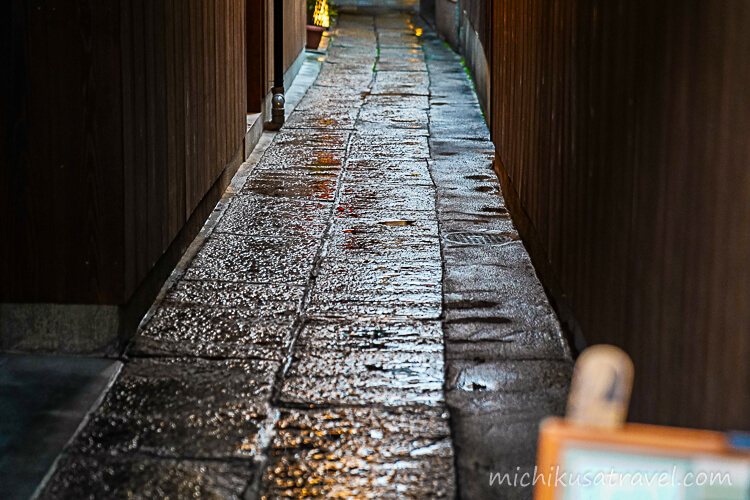
Rain-soaked cobblestones continue deep into the narrow alley.
 A Sagawa Express distribution center designed with consideration for the surrounding landscape.
 It is a maneki-neko cat with a luxurious look.

It is right on the line of what could be considered disrespectful.

A yamabushi waits for the bus.

A rickshaw is traveling down Ninenzaka.

A Japanese umbrella reflected on the back of a smartphone.
Manhole cover

It features Kyoto’s city emblem, designed as a pattern based on the wheel of a gosho-guruma carriage.