
About Milan

Milan is both the capital of the Province of Milan and the capital of Lombardy. Italy’s capital is Rome, which is also Italy’s largest city, while Lombardy is Italy’s largest region and the Milan metropolitan area is Italy’s largest metropolitan area. Milan is regarded asItaly’s most international city.
It was the capital of the ancient Western Roman Empire and reached a golden age as the Duchy of Milan during the Renaissance. Even when the Transpadane Republic, Cisalpine Republic, Italian Republic, and northern Italy were under Napoleon’s influence, Milan was their capital. The Habsburgs regained effective power, and the Kingdom of Lombardy–Venetia was established, but Milan once again flourished alongside Venice as its capital.
Milan is also famous as the host city of Milan Fashion Week. Alongside the fashion weeks in Paris, London, and New York, Milan Fashion Week is considered one of the four major fashion weeks in the world. Famous brands such as Prada, Armani, Dolce & Gabbana, and Versace also have their headquarters in Milan.
Milan is also famous as the host city of Salone del Mobile, one of the world's largest furniture fairs. During this period, Milan Design Week is held at the same time, featuring large-scale exhibitions covering a wide range of design fields. The city is also known as the host of Triennale Milano, an international art exhibition.
History of Milan
Ancient times
In ancient times, Milan was called Mediolanum in Latin. In 286, Diocletian began the divided rule of the Roman Empire, and the capital of the Western Roman Empire was moved from Rome to Milan, then known as Mediolanum.
Medieval period
During the Middle Ages, the area was ruled by the Ostrogothic Kingdom, the Eastern Roman Empire, and the Kingdom of the Lombards. The Kingdom of the Lombards was also known as the Kingdom of Lombardy and gave its name to the Lombardy region.
Early modern period
During the Renaissance, Milan became the Duchy of Milan, ruled by the Visconti and Sforza families as tyrants. It was during this period that Ludovico Sforza commissioned Leonardo da Vinci to paint The Last Supper, and it is known as Milan’s golden age.
Modern era
After the Italian Wars, it came under the rule of the Holy Roman Empire and the House of Habsburg. In 1796, Napoleon Bonaparte liberated several cities in northern Italy from the Austrian army and established the Cispadane Republic and the Transpadane Republic as French satellite states. The two countries were united the following year and became the Cisalpine Republic. In 1802, the Cisalpine Republic was renamed the Italian Republic, and in 1805 it became the Kingdom of Italy, with Napoleon as king. Napoleon was welcomed by the people of northern Italy, who had suffered under Habsburg oppression. Milan was the capital of the Transpadane Republic, the Cisalpine Republic, the Italian Republic, and the Kingdom of Italy under Napoleon as king.
Incidentally, the present Italian flag, the green-white-red tricolor, was modeled on the flag of the Cispadane Republic. The Cispadane flag was influenced by the French Republic’s blue-white-red tricolor, making the French and Italian flags something like sister flags.
In 1812, Napoleon failed in his invasion of Russia, weakening France. In 1815, Milan once again fell under the control of the Austrian Empire, ruled by the Habsburg dynasty as emperors, and the Kingdom of Lombardy–Venetia was established as its dependent state. Milan became its capital together with Venice.
During the Italian Wars of Independence, the Kingdom of Sardinia, supported by France under the Second Empire, succeeded in driving Austrian forces out of Lombardy, and Milan became part of the Kingdom of Sardinia. The king of the Kingdom of Sardinia at that time was Victor Emmanuel 2. In 1861, Victor Emmanuel 2 finally unified Italy and founded the Kingdom of Italy. Milan's landmark, the Galleria Vittorio Emanuele 2, also bears his name.
Milan's tourist attractions
Here are the recommended attractions in Milan, presented as a ranking.
October 3, 2026 We checked each attraction’s official information.
-
1placeMilan Cathedral / Duomo

Facing Piazza del Duomo in the heart of Milan’s historic center, its façade covered with countless spires and statues is a city landmark. From the square, a street runs through Galleria Vittorio Emanuele 2 toward La Scala, making it a starting point for sightseeing in Milan.The cathedral’s highlights, visiting hours, ticket types including the rooftop terraces and museum, and access are explained in detail in the independent article below.
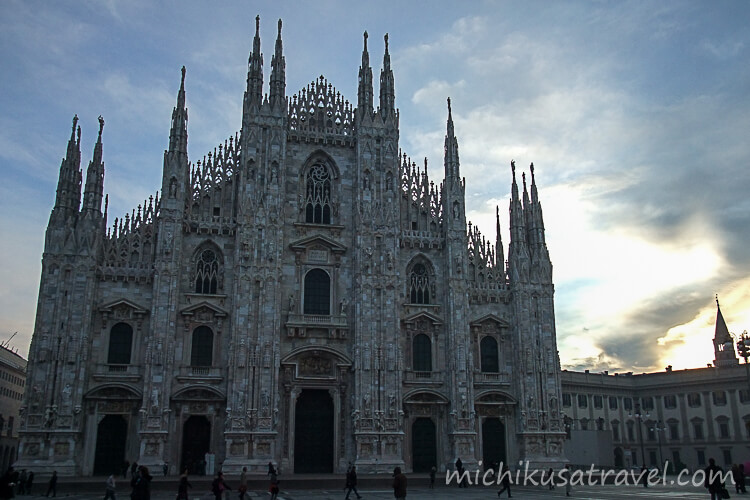 Milan Cathedral / Duomo: Highlights, Visiting Hours, Tickets, and How to Get ThereThis guide explains the highlights of Milan Cathedral / the Duomo, including its Gothic architecture covered with spires and statues and the stained glass at the high altar, along with visiting hours, tickets, and access, based on official information and local reporting as of 2026 10.michikusatravel.com
-
2placeMuseum of the Last Supper

In the former refectory of the monastery at Santa Maria delle Grazie, you can view Leonardo da Vinci’s mural The Last Supper. Visitors enter through a separate entrance from the church itself, with advance reservations required and visits arranged in 15-minute rotations.The mural’s highlights, opening hours, reservation-only tickets, and access are explained in detail in the independent article below.
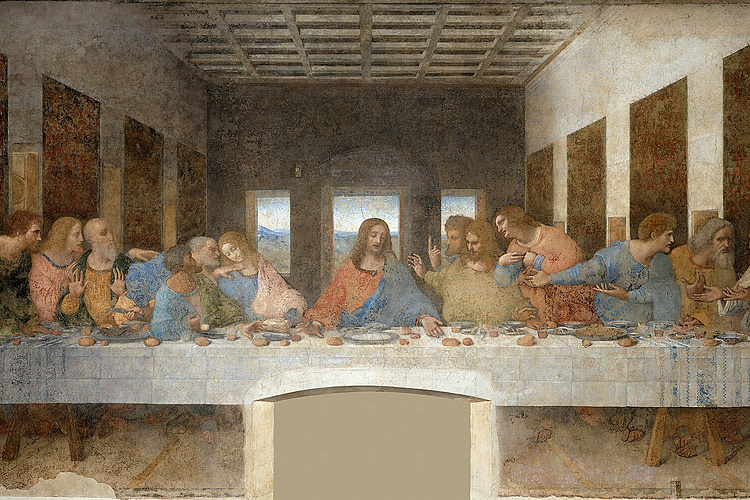 Last Supper Museum: highlights, opening hours, tickets, and accessThis guide explains the highlights of the Last Supper Museum, a World Heritage site, including the mural “The Last Supper,” as well as opening hours, tickets, and directions, based on official information as of October 2026.michikusatravel.com
-
3placeGalleria Vittorio Emanuele 2

This arcade connects Piazza del Duomo with the area around La Scala. Walk through the large space covered by iron and glass, taking in the floor decorations and the dome at the intersection.The gallery you can pass through when walking from Piazza del Duomo to La Scala, along with its architectural highlights and visitor information, is explained in detail in the article below.
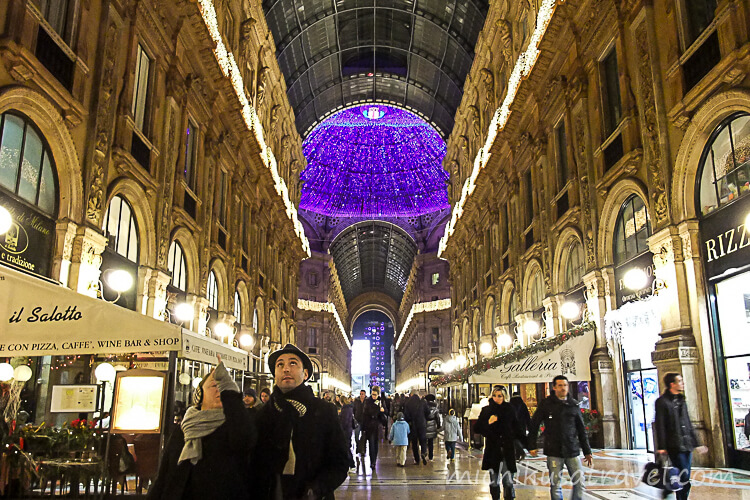 Galleria Vittorio Emanuele 2: Highlights, Admission, Visit Duration, and AccessA guide to the history of Galleria Vittorio Emanuele 2, its architecture, scenery and exhibitions, as well as other attractions, opening hours, prices and access, based on official information and on-site reporting as of 2026 10.michikusatravel.com
-
4placeLa Scala

It is one of Italy’s leading opera houses. Madame Butterfly and Turandot premiered here, and the theater continues to convey the history of opera.The name La Scala comes from the Church of Santa Maria alla Scala that once stood on the site. The church was built to commemorate the marriage of the daughter of the Scala family, rulers of Verona, to the Milanese tyrant Bernabò Visconti.
Teatro alla Scala of Milan - Opera, ballet, concertsWelcome to the website of the Teatro alla Scala in Milan, where you can book tickets online, view the season progra...www.teatroallascala.org -
5placeSforza Castle

Sforza Castle, with its red-brick walls and towers, was the residence of the Visconti and Sforza families who ruled the Duchy of Milan. It stands on the route from the historic center toward Parco Sempione, and its museums display works connected with Milan’s history and art.The castle’s highlights, opening hours, tickets, and how to tour its museums are explained in detail in the independent article about Sforza Castle.
 Sforza Castle: Highlights, Opening Hours, Tickets, and How to Get ThereThis guide covers the fortifications of Sforza Castle, the Sala delle Asse, the Rondanini Pietà and other highlights, as well as opening hours, tickets and access, based on official information and local research as of October 2026.michikusatravel.com
-
6placePinacoteca di Brera
This art museum is located inside Palazzo Brera. You can view masterpieces by leading Italian painters such as Raphael, Mantegna, and Caravaggio.
https://pinacotecabrera.org/pinacotecabrera.org -
7placePiazza del Duomo

This is the equestrian statue of Vittorio Emanuele 2 standing in the square. You can view the statue up close and notice similarities with comparable equestrian statues found throughout Italy.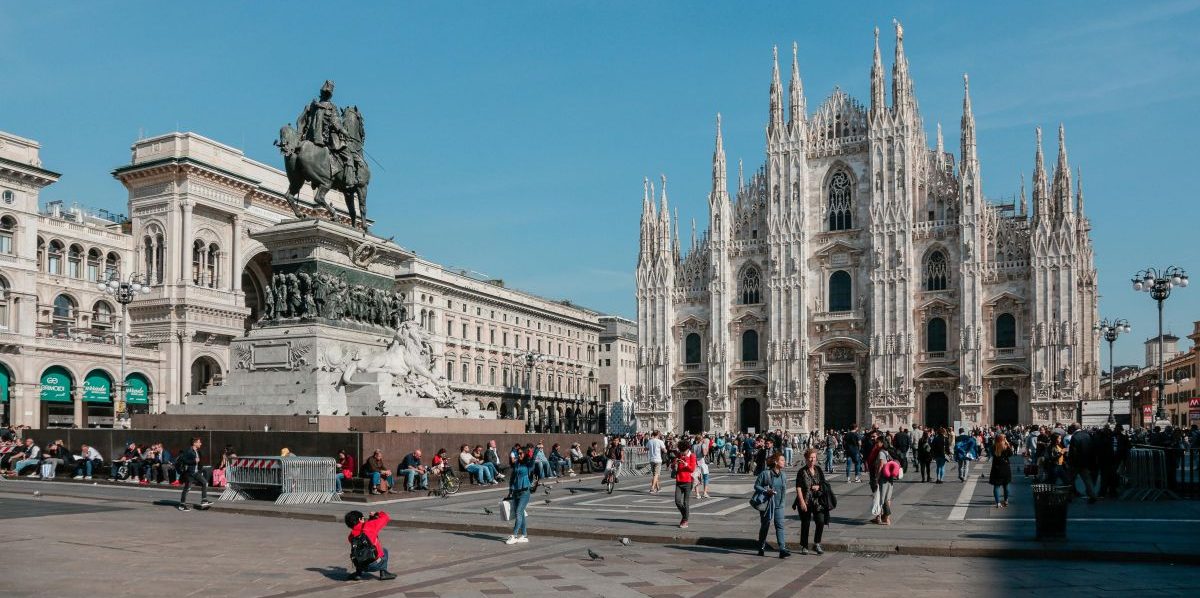 Piazza Duomo, crocevia di Milano - VisitMilanoPalcoscenico quotidiano della vita milanese, Piazza Duomo accoglie ogni giorno una folla di passanti, turisti e cit...visitmilano.org
-
8placeBasilica of Sant’Ambrogio
This is one of Milan’s oldest basilicas and is associated with the city’s patron saint. Walking through its historic spaces offers a sense of the connection between Milan and its patron saint.
Basilica di Sant'AmbrogioComplesso Monumentalewww.basilicasantambrogio.it -
9placeChurch of Santa Maria delle Grazie

Santa Maria delle Grazie is a complex consisting of a church and monastery. The monastery’s former refectory contains Leonardo da Vinci’s The Last Supper, which is visited separately from the church as the Museum of the Last Supper.Chiesa di Santa Maria delle Grazie - Basilica nel Cuore di MilanoÈ una delle massime testimonianze dell’arte rinascimentale legata al nome di Leonardo da Vinci: la Chiesa di Santa ...legraziemilano.it -
10placeMuseo del Novecento
This museum facing the square focuses on 20th-century art. Stop by as part of a walk around the square and experience modern art through works from the 20th century.
Home - Museo del 900 - Comune di Milanowww.museodelnovecento.org -
11placePinacoteca Ambrosiana
This picture gallery is attached to a historic library. In addition to works by Caravaggio, it holds Leonardo da Vinci’s Codex Atlanticus.
Pinacoteca | Veneranda Biblioteca AmbrosianaPinacoteca | Veneranda Biblioteca Ambrosiana | Veneranda Biblioteca Ambrosiana |www.ambrosiana.it -
12placeNavigli district

This district is traversed by the Navigli canals. Milan was once crisscrossed by many canals, and this area preserves traces of that past. Today, shops aimed at young people, cafés, and restaurants line the canals, making the waterfront streets enjoyable to explore on foot.A Walk on the Navigli | YesMilano.itIf Milano had a bohemian postcard, Navigli would be it: a characterful tangle of waterways, bars, boutiques and cur...www.yesmilano.it -
13placeChurch of San Maurizio
This church is covered with Renaissance frescoes. Its interior is divided into an area for nuns and an area for worshippers, with murals spreading across both spaces.
La chiesa S. Maurizio al Monastero Maggiore - Museo Archeologico di Milano - Comune di MilanoTutti gli aggiornamenti sulle modalità di accesso alla Chiesa di San Maurizio.www.museoarcheologicomilano.it -
14placeBrera district
Apart from the Pinacoteca di Brera, the district itself is a place to enjoy on foot. Wandering through its historic streets lets you experience Brera’s atmosphere, where art is woven into everyday surroundings.
Brera: the red-light past of Milan’s bohemian district - VisitMilanoIf Brera were a person, it would be the bohemian friend: elegant yet a little rebellious, cultured but always ready...visitmilano.org -
15placeMonumental Cemetery of Milan
This cemetery is lined with architecture and sculpture. At the center of the façade stands a Famedio commemorating notable Milanese citizens, distinguished by its two-colored marble and eye-catching octagonal dome. Along the paths through the tombs are monuments and chapels created by artists.
リンク先を開く(monumentale.comune.milano.it)monumentale.comune.milano.it -
16placeParco Sempione

A park spreads north of Sforza Castle. If you have time, why not take a walk and imagine yourself as a Milanese resident?

For information about Parco Sempione, see the City of Milan’s official park guide.
Sempione Park - Municipality of Milanwww.comune.milano.it -
17placeSan Siro Stadium
This large stadium is known as the home ground of AC Milan and Inter Milan. In addition to watching a match, visitors can tour the inside of the stadium.
San Siro Stadium | La Scala del Calcio - Sito Ufficialesansirostadium.com -
18placeDialogo nel Buio
This immersive facility lets visitors move through complete darkness with a visually impaired guide. In a space without visual information, they navigate familiar everyday surroundings using sound and touch.
Dialogo nel BuioDialogo nel buio ciechi mostra cene aperitivi guide non vedenti ipovedenti teatro formazioni aziendaliwww.dialogonelbuio.org


Milanese cuisine
The information below was checked against official sources on October 11, 2026. Please also check the latest information on the official website when planning your trip.
Milanese specialties

Milanese veal cutlet (Cotoletta alla milanese) was served at the café and restaurant "Galleria Cafe Restaurant & Pizza" inside the Galleria. It is characterized by pounding and flattening veal before frying it in a broad, flat shape.
- Risotto alla Milanese: Milan's signature rice dish, finished with saffron to give it a golden color.
- Ossobuco: A dish of veal shank braised with the bone marrow, sometimes served with risotto alla Milanese.
- Panettone: A Christmas cake originating in Milan, baked in a dome shape.
From rice dishes made with butter or saffron to veal dishes and sweets, you'll find flavors characteristic of northern Italy.
Milan’s renowned restaurants
Ratanà
Located at 28 Via Gaetano de Castillia in the Garibaldi, Porta Nuova, and Isola districts, it offers contemporary Milanese and Lombard cuisine. A reservation is confirmed only after you receive a confirmation email.
Official website

Trattoria Milanese 23 Risotti
Trattoria Casa Fontana 23 risotti is a trattoria specializing in rice and risotto, opened by Sergio Fontana in 1979. Outdoor seating is available by reservation when weather permits.
Official website
Transportation in Milan
The information below was checked against official sources on October 11, 2026. Please also check the latest information on the official website when planning your trip.
Milan is a major city where railways, the metro, trams, and buses form an interconnected network. For sightseeing in the historic center, combine the metro with walking, and choose your airport transportation according to which airport you are using.
Railway

Milan Central Station is one of Europe's leading railway terminals and Italy's second-busiest station by passenger numbers after Roma Termini. Long-distance and regional trains depart for destinations throughout the country.

The station building’s scale and decoration are also worth seeing. Architect Frank Lloyd Wright called Milan Central Station the most beautiful railway station in the world.

We recommend this station as a sightseeing attraction not only to railway enthusiasts, but to everyone. On Trenitalia's official website, you can search for trains and tickets.
Subway, trams, and buses
ATM provides information about tickets for the metro, trams, buses, and trolleybuses. A standard ticket for the Mi1–Mi3 zones costs 2,20 EUR and is valid for 90 minutes from the first validation. It allows multiple entries to the metro. On the M2 toward Gessate, it cannot be used beyond Cascina Burrona.

Airport access
The Malpensa Express connects Malpensa Airport with Milano Centrale and Milano Cadorna stations via 2 routes. You can check the routes, stops, and timetables on the official website.

Suggested Milan itinerary
Open the same route in Google Maps
Milan’s main attractions are concentrated in a relatively small area.
Loading the map.
- ①Santa Maria delle Grazie Church → ②Sforza CastleCalculating the route in Google Maps
First, see Leonardo da Vinci’s The Last Supper at Santa Maria delle Grazie Church. Be sure to book in advance. The route assumes an early reservation, but adjust it according to the time, such as by visiting the Duomo first. It takes about 15 minutes to walk from Santa Maria delle Grazie Church to Sforza Castle.
- ②Sforza Castle → ③La ScalaCalculating the route in Google Maps
The interior houses a museum with many exhibits, but do not miss Michelangelo’s Rondanini Pietà and Leonardo da Vinci’s ceiling painting in the Sala delle Asse. It takes about 15 minutes to walk from Sforza Castle to La Scala.
- ③La Scala → ④Galleria Vittorio Emanuele IICalculating the route in Google Maps
Attending an opera may seem daunting, but you can view the theater interior from the adjacent museum. The entrance to the gallery should be visible from the front of La Scala. It is only a short walk to Galleria Vittorio Emanuele II.
- ④Galleria Vittorio Emanuele II → ⑤Milan Cathedral (Duomo)Calculating the route in Google Maps
Enjoy the monumental texture and scale. Passing through the gallery brings you to Piazza del Duomo. Milan Cathedral (Duomo) is immediately on your left. If you are not afraid of heights, you can pay an additional fee to go up to the Duomo’s rooftop terraces.
Milan Detours
We introduce scenes we happened to come across in Milan and views that suddenly caught our attention.

This is a statue of the Italian poet Giuseppe Parini standing in Piazza Cordusio. He probably never imagined that he would be dressed in such a shiny outfit.

The words “BUON NATALE,” meaning “Merry Christmas” in Italian, are illuminated by the lights in the windows of high-rise buildings.

The city of Milan is under attack by mysterious giant pink snails.

In Milan, even an ordinary dented March somehow looks like a work of art. Incidentally, this car is called the Micra in Europe.

It is a nerve-racking sight to watch.

This is a FIAT 500 (Cinquecento).

This is a FIAT 500 (Cinquecento) with a tree growing out of it.

A situation that makes you want to read more into it.


You're the culprit! (Way to go, Dad)


Emergency vehicles

This is an Alfa Romeo 159 belonging to the Carabinieri. The Carabinieri are the military police under the Ministry of Defence, and the dark blue paintwork, reminiscent of the “Batmobile,” looks fantastic.

A Carabinieri Alfa Romeo 156. It is the previous “Batmobile,” but this one has its own understated charm and a different kind of cool.

Shown here are a Land Rover Defender and the 4th generation of the Iveco Daily. Iveco is one of Italy’s leading companies, manufacturing and selling commercial vehicles such as trucks and buses, construction vehicles such as dump trucks, emergency vehicles such as fire engines, and military vehicles such as armored vehicles.

An Alfa Romeo 159 of the Polizia. The Polizia is the national police force under the Ministry of the Interior.

A 3rd-generation Fiat Punto belonging to the Polizia. Perhaps it's taking a break?

An Alfa Romeo 159 belonging to Milan’s municipal police (Polizia Locale Comune di Milano). Alfa Romeo 159s from the military police, national police, and municipal police are gathered here. Alfa Romeo is headquartered in Milan, and its emblem combines the Cross of Saint George (the red cross), Milan’s coat of arms, with the biscione (the great serpent devouring a person), the coat of arms of the Visconti family, which ruled Milan. No car could be better suited to protect Milan.

This is a Milan city police vehicle.

This is a Moto Guzzi Norge used by the city police. Moto Guzzi is Italy’s oldest motorcycle manufacturer, headquartered in Mandello del Lario in Lecco Province, Lombardy. Milan is the capital of Lombardy, so it is interesting to see the regional character reflected here as well.

The blond man is handsome.

The Polizia Penitenziaria is the prison police under the Ministry of Justice. It may be transporting prisoners.

The traffic signs look like the Japanese flag.
Tram

This is an ATM 1500-series tram running through Milan. The city’s streets are served by a remarkably varied range of vehicles, depending on their year of manufacture and maker. In particular, the retro 1500 series blends beautifully with Milan’s historic streetscape. A “tram-filled landscape” can also be considered one of Milan’s attractions.

The 1500 series is also known as “Ventotto.” Ventotto means “28” in Italian and derives from the start of commercial service in 1928.

Records show that many Ventotto trams were sent across the Atlantic to San Francisco after they were retired. In San Francisco, as in Milan, you can still see Ventotto trams in service.

During the Christmas season, trams decorated with lights also run. Sponsored by Coca-Cola.

This is an ATM 4700-series tram.

This is an ATM 4900 series tram.

An ATM 4900-series tram runs through the street.

This is an ATM 4900 series tram.

This is an ATM 4900-series tram.

This is an ATM 4900-series tram.

This is the ATM 7000 series. From here on, the vehicles look noticeably more modern. It is a low-floor tram manufactured by Bombardier Transportation.

This is an ATM 7000-series tram.

This is an ATM 7000-series tram.

This is an ATM 7100-series tram. The 7100 and 7500 series are manufactured by Hitachi Rail Italy.

This is an ATM 7100 series tram. Hitachi Rail Italy is also the manufacturer of the ETR500 trains for the Italian State Railways.

This is an ATM 7100-series tram.

This is an ATM 7500-series tram.

This is an ATM 7500-series tram.
Railway Carriages

The word Frecciarossa can be seen on a train that appears to be an ETR 500.

This is an E464-class locomotive of the Italian State Railways that was stopped at Milano Centrale. It is a typical electric locomotive used for medium-distance trains.
This is an E402-class locomotive of the Italian State Railways that was stopped at Milano Centrale. It has a top speed of 200km/h and is used for FS InterCity express trains.
This is an ETR500-class train of the Italian State Railways that was stopped at Milano Centrale. It is used on Italy’s Frecciarossa high-speed railway, the equivalent of Japan’s Shinkansen; Frecciarossa means “red arrow.” It is manufactured by Hitachi Rail Italy.

This is an ETR500 bearing the former Eurostar Italia logo. Italy’s high-speed trains were formerly operated under the name Eurostar Italia and were widely recognized after 15 years of service. Following the timetable revision on December 9, 2012, they were divided into the 2 grades Frecciarossa (Red Arrow) and Frecciargento (Silver Arrow).