Highlights of Hoonji Temple
Hoon-ji is an ancient temple of the Soto school located in northern Morioka.
The temple was founded in Mito in the first year of the Ōei era (1394 year) by Moriyuki Nanbu, the 13th head of the Nanbu clan, and was moved to its present location during the Keichō era 6 (1601 year) by Toshinao Nanbu, the 27th head of the Nanbu clan (the 2th head of the Morioka Nanbu family). Throughout the Edo period, it received strong patronage as a place of prayer for the lord of the Morioka domain and the Nanbu family.
The main highlight is the five hundred Rakan statues. They were created by Buddhist sculptors from Kyoto over 16 years, from the year 1731 of the Kyōhō era to 3. The surviving 499 wooden statues are full of individuality, each displaying a different expression and gesture.
Sanmon Gate
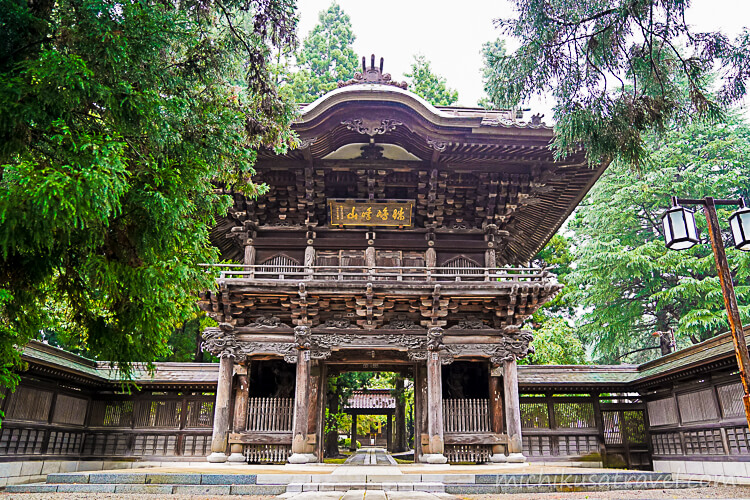
This temple gate was built during the Shōwa era, in 53(1978). The temple’s mountain name, “Zuihōzan,” is inscribed on the plaque.
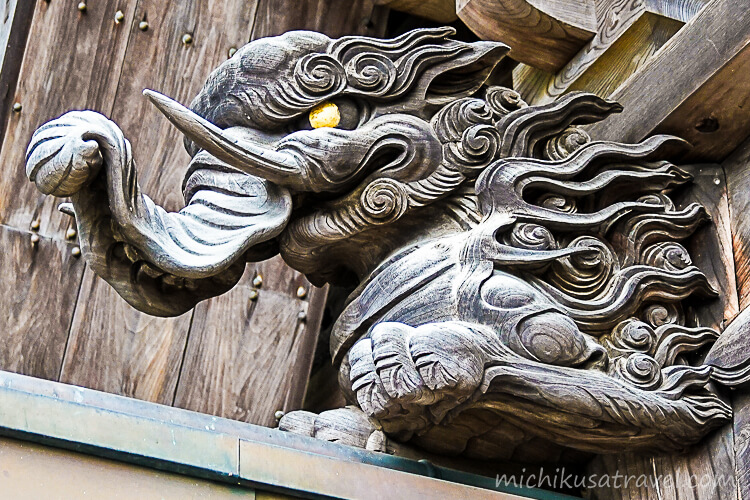
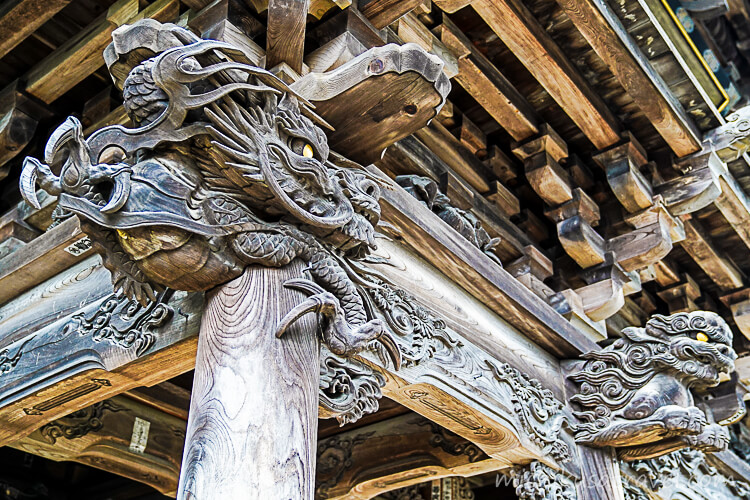
The carvings on the main gate, including the decorations on the wooden projections, are all intricate and impressive.
Arhat Hall
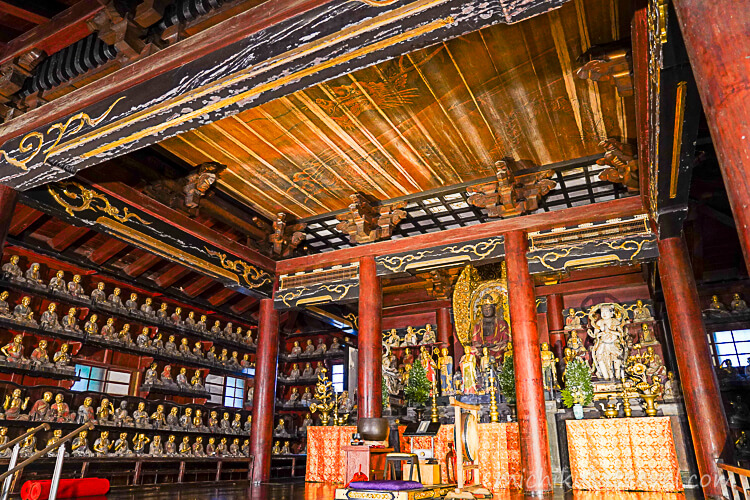
five hundred rakan statues are enshrined here. Rakan are disciples of the Buddha—high-ranking monks who have attained enlightenment. Yet the five hundred rakan statues are depicted with a rich range of emotions, and sometimes even in worldly forms.
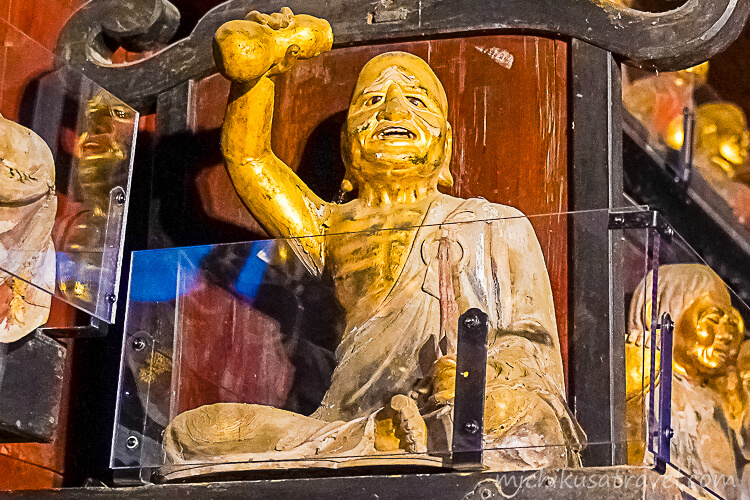
Alcohol is supposed to be prohibited in Buddhism as one of the five precepts, but this figure looks exactly like that.
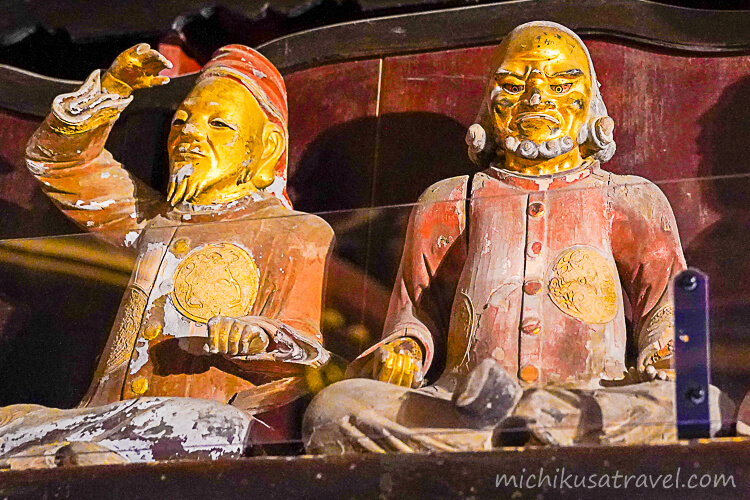
The statue on the left is Marco Polo, and the one on the right is Kublai Khan.
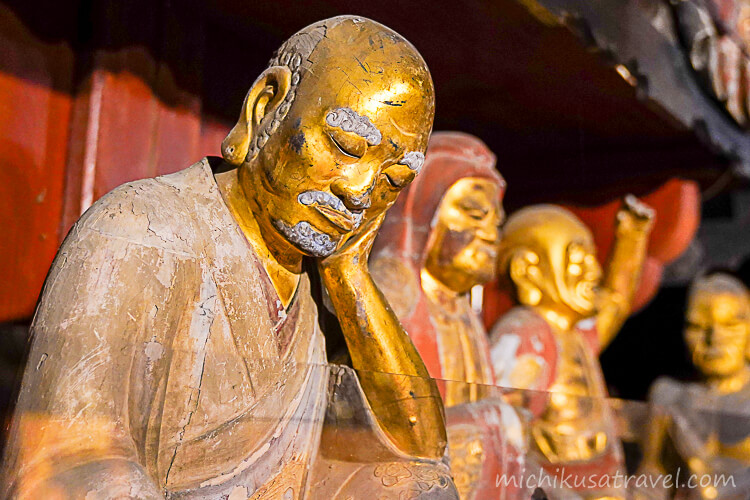
It looks as though it is lost in thought—or simply dozing.
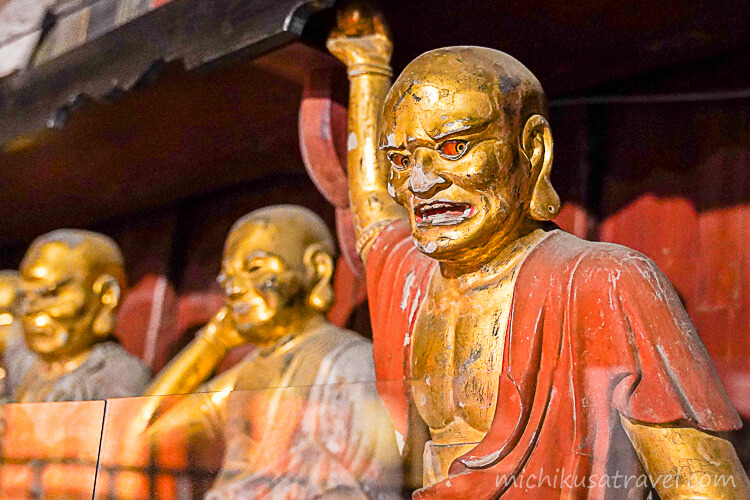
His eyes are bloodshot. “You wanna go, huh?!”
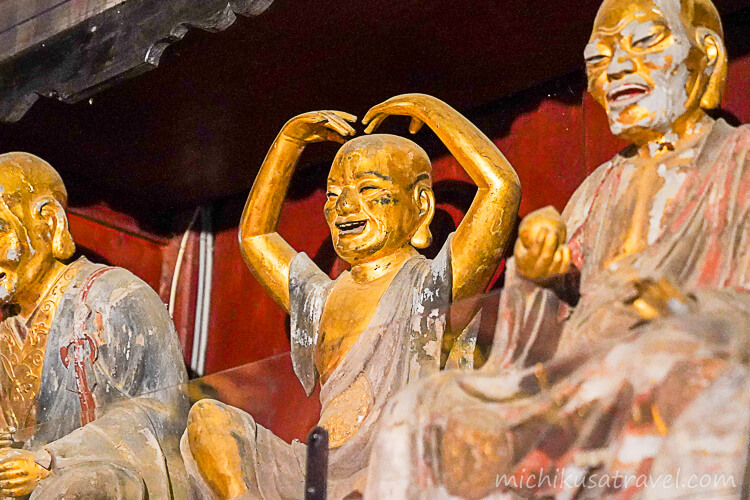
“Eek-eek-eek”
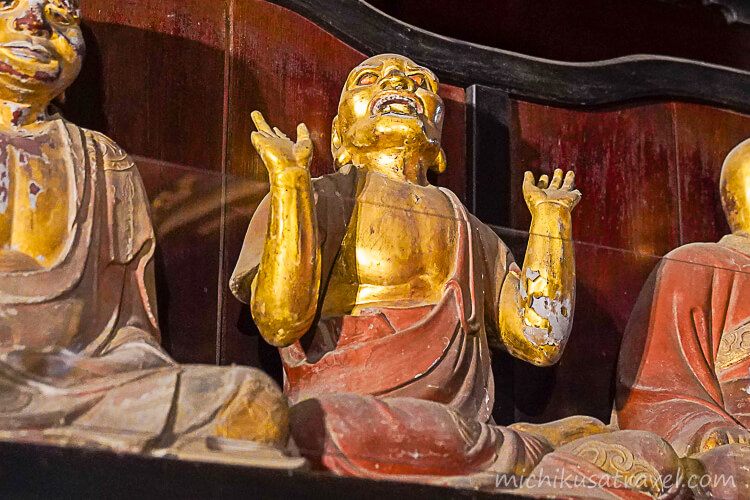
“What a day!”
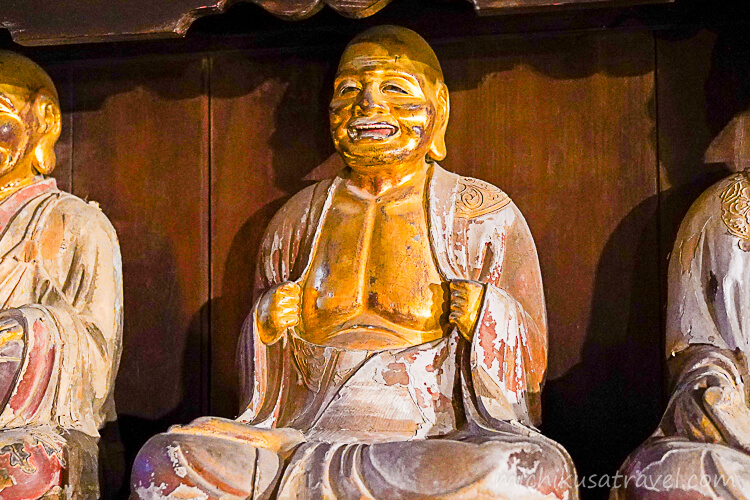
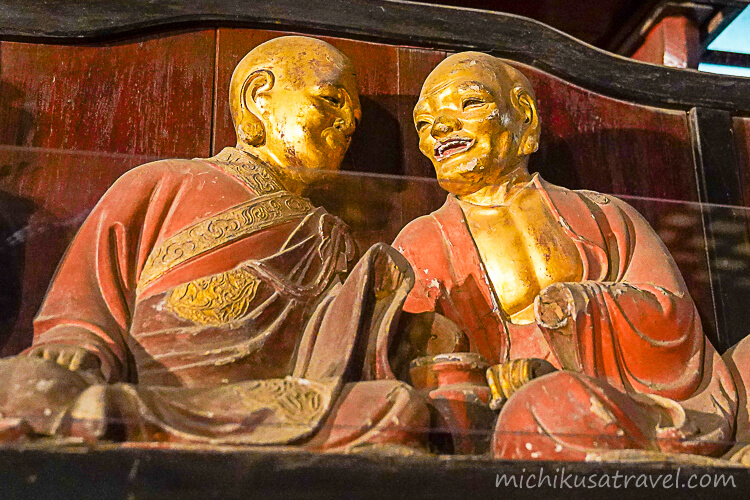
I’ll leave that to your imagination.
Essential Information about Hoonji Temple
The information below was checked against official sources on September 16, 2026. Please also check the latest information on the official website when planning your trip.
- 🔗 Official information
- The five hundred Rakan statues499 and Rakan Hall at Hoonji Temple are tangible cultural properties designated by Morioka City.
 盛岡市指定文化財 報恩寺の五百羅漢・羅漢堂盛岡市公式ホームページwww.city.morioka.iwate.jp
 盛岡ふるさとガイド「盛岡ふるさとガイド」の紹介ページ。盛岡ならではのおもてなしの心で観光のお手伝いをいたします。先人・文化人ゆかりの名所・旧跡を地元に伝わるエピソードを交えながら楽しくご案内いたします。hellomorioka.jp
- 📍 Location
- Namizukawa-chō, Morioka City, Iwate Prefecture
- 🕒 Visiting hours
- Check the temple’s visiting hours and closure days before your visit.⚠️ Visiting conditions may change due to ceremonies and other events.
- 💶 Admission to the five hundred Rakan statues
- According to information from the Morioka Tourism and Convention Association, admission for adults is 500 yen.
- ⏱️ Time required
- Allow approximately 30 to 60 minutes to see the temple grounds and Rakan Hall.⚠️ If you wish to examine each of the five hundred Rakan statues in detail, allow extra time.
Getting to Hoon-ji Temple
Hoon-ji Temple is northeast of central Morioka and is conveniently accessible from Kamimorioka Station. The journey between Morioka Station and Kamimorioka Station on the JR Yamada Line covers 1 stations and takes 4 minutes.
Walk east for about 10 minutes from Kamimorioka Station to reach Hoon-ji Temple. For reference, it is about 19 minutes on foot from Sakurayama Shrine in central Morioka.
The related guide “【盛岡】観光スポット・グルメ・交通・モデルコースを解説” is currently available only in Japanese.