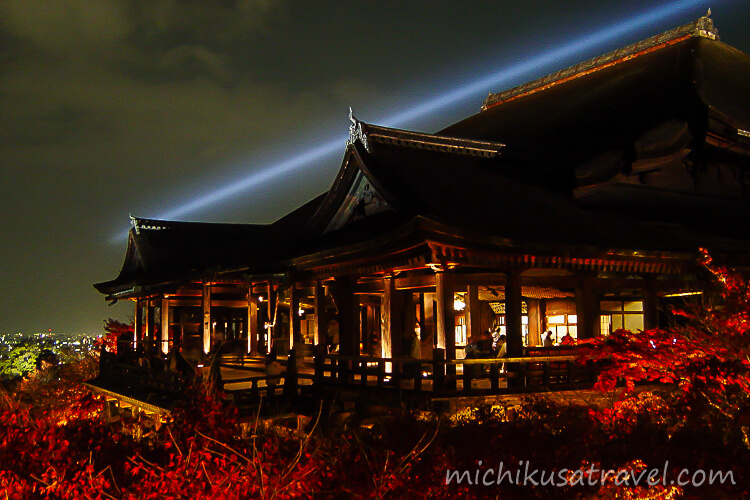
Highlights of Myōshin-ji Temple
Myoshinji is the head temple of the Myoshinji school of Rinzai Zen, founded in 1337 by Emperor Hanazono, later the retired Emperor Hanazono, who converted his detached palace at Hanazono into a Zen temple. Its spacious grounds contain the sanmon gate, Buddha hall, Dharma hall, other temple buildings, and numerous subtemples, all of which can be explored on foot.
Sanmon Gate and the Seven-Hall Monastic Compound

The striking vermilion Sanmon Gate in the temple grounds was built in the early 1600s and is designated an Important Cultural Property. The Sanmon Gate, Buddha Hall, and Dharma Hall are aligned along a north–south axis, forming the typical layout of a Zen temple complex.
The Cloud Dragon painting in the Dharma Hall and the temple bell designated a National Treasure
The flat ceiling of the Hatto Hall features a Dragon in the Clouds painting that Kanō Tan’yū spent 8 years creating. The dragon’s expression and movement seem to change depending on where it is viewed from. The hall also houses a temple bell designated a National Treasure, said to have been cast in 698.
Great Kitchen

The Daikuri is an Edo-period building with a wood-shingled gabled roof and its main entrance on the gable end. Its large roof has two smoke vents, while the interior is divided into an earthen-floored area, a large kitchen, and a small kitchen that supported the preparation of meals for the temple.
Subtemples across the temple grounds

The temple grounds are home to numerous subtemples, and seasonal flowers can be seen along the paths.
Essential information about Myōshin-ji Temple
The information below was checked against official sources on September 30, 2026. Please also check the latest information on the official website when planning your trip.
- 🔗 Official website
- Check the Dharma Hall’s visiting hours, admission fees, and information about closures or changes here.
 参拝・拝観 | 妙心寺www.myoshinji.or.jp
- 📍 Location
- Hanazono Myoshinji-chō 1, Ukyo Ward, Kyoto, Kyoto Prefecture
- 🕐 Visiting hours
- The Dharma Hall is open from 9:00 to 16:00 (ticket sales end at 15:30). Roads within the temple grounds are accessible 24 hours a day. Visiting hours for the subtemples vary by temple.
- 💴 Admission
-
- Dharma Hall: adults 500 yen, elementary and junior high school students 200 yen
- Subtemples: separate admission fee for each temple
- ⏱ Time required
- Allow about 1 hour to visit the Dharma Hall and main temple buildings, or about 2 hours to half a day when combining them with open subtemples. ⚠️ Visiting time varies depending on crowds and the number of subtemples visited.
Access to Myoshinji Temple
JR
The south gate is about a 5-minute walk from Hanazono Station on the JR Sagano Line.
Randen
From Myoshinji Station on the Keifuku Electric Railroad Kitano Line, you can walk toward the North Gate.
Bus
It is about a 4-minute walk from the Myoshinji-mae bus stop to the South Gate and about a 2-minute walk from the Myoshinji Kitamon-mae bus stop to the North Gate.
By car
Parking lots No. 1 and No. 2 are located on the east side of Myoshinji Temple. The fee for private vehicles is 700 yen, and the information states that parking is free for temple visitors. Please check the terms of use on site.
For attractions, transport and suggested itineraries, see “Kyoto: A guide to attractions, food, transportation, and suggested itineraries”.