Highlights of Wakakusayama
Mount Wakakusayama is a 342-meter-high mountain located on the eastern side of Nara Park in Nara City.
It is a hiking spot within walking distance of central Nara and also a viewpoint offering panoramic views of the city and the Nara Basin.
Because its shape resembles three hats stacked on top of one another, it is also known as Mount Mikasa. From west to east, its tiers are called the first, second, and third.
Near the summit of the third level is a keyhole-shaped kofun built from the late 4th to the early 5th century, called Uguisuzuka Kofun.
Every January, the traditional Wakakusa Yamayaki mountain burning takes place, enveloping the entire mountain in flames. It is a beloved seasonal tradition heralding early spring in the historic city of Nara.
South and North Gates and the Foothills

At the foot of Mount Wakakusa are the South Gate and North Gate. The South Gate is closer to Kasuga-taisha, while the North Gate is closer to Tōdaiji.

The entire mountain is covered with noshiba, a type of grass native to Japan. Noshiba is the deer’s staple food. Deer crackers are more like a snack for the deer.
The trail to the summit and the views

A well-maintained hiking trail leads to the summit, taking about 35 minutes each way.

Along the way and from the viewpoints, you can look out over Buddhist temples and Shinto shrines, including Tōdai-ji, as well as the cityscape of Nara.
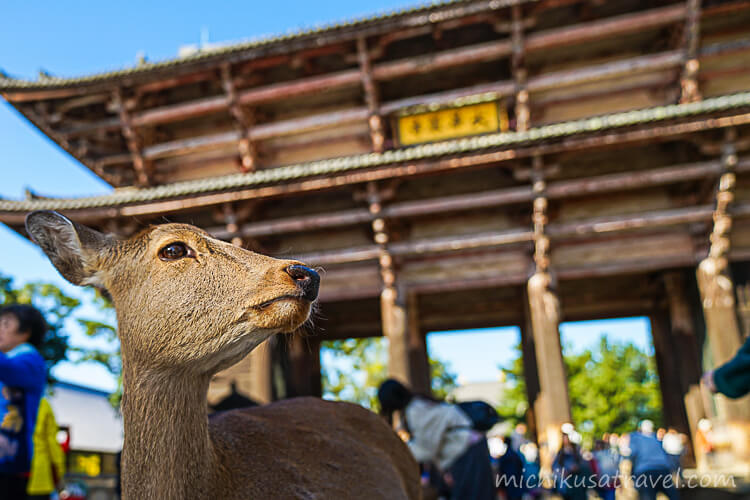
Tōdai-ji’s temple complex and visitor information are introduced in detail in the article below.

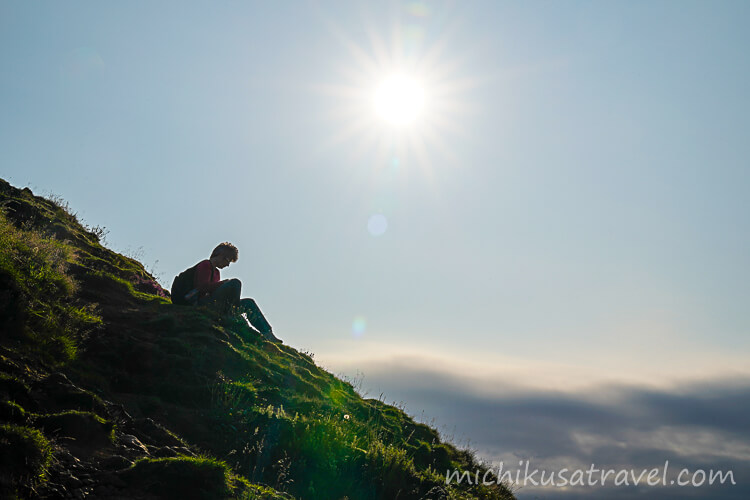
Like Arthur’s Seat in Edinburgh, it is a hiking spot located right next to a city.
The hilly landscape of Arthur’s Seat and walking routes are introduced in the article below.

You can enjoy distant views of the Ikoma Mountains and the cityscape of Ikoma spreading at their foot.

The Kongō Mountains stretch to the southwest. Together with the Ikoma Mountains, they separate the Nara Basin from the Osaka Plain.

View from the summit (third level)

This is the gate at the summit. You may pass through it freely when going from the second level to the third.

From the third tier, you can take in a panoramic view of the Nara Basin beyond the second tier. Looking in the same direction, you can see the first and second tiers you crossed from the foot of the mountain, as well as the city spreading out beyond them.

Uguisuzuka Kofun and the Summit Area

Near the summit of the third level is the Uguisuzuka Kofun. It is a keyhole-shaped burial mound built in the latter part of the early Kofun period (from the end of the 4th century to the beginning of the 5th century), but the person buried there is unknown.

It is believed to be the “Uguisu no Misasagi” (Nightingale Mausoleum) described by Sei Shōnagon in The Pillow Book.

A triangulation point is located at the summit.
Basic Information about Mount Wakakusayama
The information below was checked against official sources on September 20, 2026. Please also check the latest information on the official website when planning your trip.
- 🔗 Official website
- You can check Wakakusayama’s open season, visiting hours, admission fees, the south and north gates, and access by car.
奈良公園クイックガイド ≫ 若草山(わかくさやま)www.pref.nara.lg.jp
- 📍 Location
- Zōshichō, Nara, Nara Prefecture
- 🕒 Opening hours
- The open season for the south and north gates is from the 3rd Saturday of March to the 2nd Sunday of December, from 9:00 to 17:00. Check the official information for any temporary openings.
- 🚫 Closed season
- As a rule, from the day after the 2nd Sunday of December until the day before the 3rd Saturday of March. Events such as the Wakakusayama Yamayaki fire festival and temporary openings are announced separately.
- 💶 Admission fees
-
- Adults (junior high school students and older) 150 yen
- Elementary school students 80 yen
- Groups of 30 or more Adults: 120 yen; elementary school students: 60 yen
⚠️ This is the admission fee for entering the paid areas of the first and second levels through the south or north gate. Different arrangements apply when making a round trip to the summit via the Kasugayama Walking Trail or when driving to the summit parking lot via the Nara Okuyama Driveway.
- ⏱️ Time required
- According to the official information, it takes about 30–40 minutes on foot from the mountain-base entrance gate to the summit. Allow 1 hour 30 minutes to 2 hours 30 minutes for a round trip from the south or north gate to the summit, including the viewpoints and Uguisuzuka Kofun.⚠️ The time varies depending on the condition of the grassy slopes, breaks, photography, and crowd levels.

Access to Mount Wakakusa
Mountain trail

(Source: Wakakusayama Preservation Society, “Wakakusayama Guide Map”)
There are 3 main ways to reach the summit of Wakakusayama (third level).
There are three ways to reach the summit: enter through the South Gate or North Gate at the foot of the mountain and proceed through the first, second, and third levels in order; walk directly to the summit via the Kasugayama Walking Trail; or use the Nara Okuyama Driveway and drive directly to the summit.
How to climb from the South and North Gates
If you enter through the South or North Gate, pay the mountain entrance fee here. Be careful not to lose your ticket, as you will need it to re-enter.
The admission fee system for Wakakusayama is a little complicated: only the first and second levels are paid areas.
There is a summit gate between the second and third levels, but passing through it means leaving the paid area once. If you return to the second level after visiting the summit of Mount Wakakusayama (the third level), you will be re-entering the paid area, so you must show your ticket.
Free route via the Kasugayama Forest Trail
If you access the summit directly on foot via the Kasugayama Trail, no admission fee is required. If you return via the Kasugayama Trail, you can visit the summit of Mount Wakakusa (the third level) completely free of charge.
After visiting the summit of Wakakusayama (third level), pay the admission fee at the summit gate if you also want to visit the second and first levels.
How to use the Nara Okuyama Driveway
If you drive directly to the summit via the Nara Okuyama Driveway, you must pay the road toll, but parking at the summit and admission to the mountain are free.
After visiting the summit of Wakakusayama (third level), pay the admission fee at the summit gate if you also want to visit the second and first levels.
On foot
From Kasuga-taisha Main Shrine, walk north for about 7 minutes to reach the South Gate. From Mizutani Teahouse, walk east for about 2 minutes to reach the entrance to the Kasugayama Promenade.
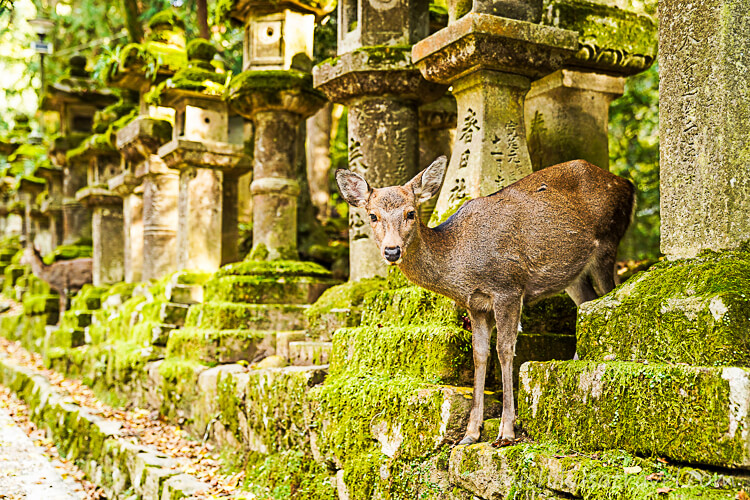
The buildings of Kasuga-taisha and visitor information are introduced in detail in the article below.
Kintetsu Nara Station is about a 25-minute walk from both the south gate and the entrance to the Kasugayama trail.
From Nara Park, you can head to the north gate from the Todai-ji side and to the south gate from the Kasuga Taisha side.
Wakakusayama Summit Parking Lot for Cars
The Mount Wakakusa summit parking lot can also be reached by car via the Nara Okuyama Driveway.
The Shin-Wakakusayama Course of the Nara Okuyama Driveway is a 7.4km round trip from the Shin-Wakakusayama toll booth to the summit of Wakakusayama. The fee for standard cars, small cars, and kei cars is 700 yen, and the operating hours are 5:00〜23:00. Parking at the summit is free, and the walk from the parking lot to the summit takes about 5 minutes.
Toll fees and opening hours for the Nara Okuyama Driveway are available on the official website.

Direct bus to the summit
Since April 2026, the “Wakakusa Hilltop Bus” has operated daily, running directly from JR Nara Station and Kintetsu Nara Station to the summit of Mount Wakakusa. After getting off at the summit, you can walk downhill and visit the area around Nara Park.
Check the Nara Kotsu information for operating days, schedules, and reservation requirements.
A Detour to Mount Wakakusayama

This is a large-billed crow. Along with the carrion crow, it is one of the most common crow species in Japan. By the way, there were western jackdaws on Arthur’s Seat.
The hilly landscape of Arthur’s Seat and walking routes are introduced in the article below.
The related guide “【奈良】観光スポット・グルメ・交通・モデルコースを解説” is currently available only in Japanese.
