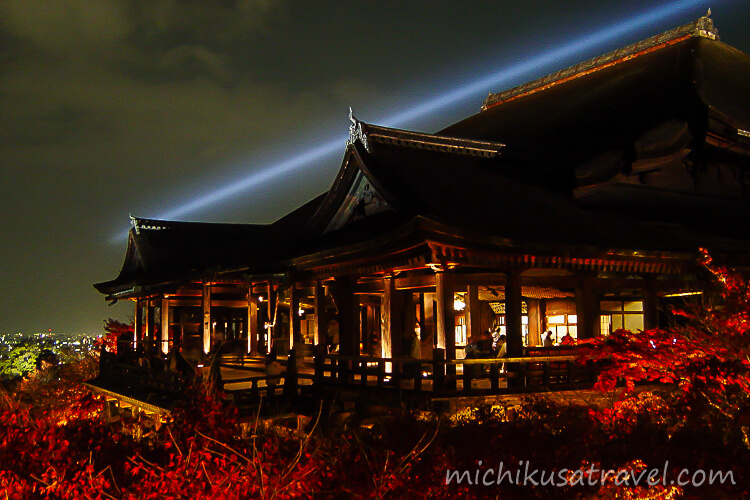
Highlights of Kiyomizudera
Kiyomizu-dera is a temple of the Hossō school, founded in 778. Temple buildings, including the main hall designated as a National Treasure, spread across the slopes of Mount Otowa. The temple is registered as a World Cultural Heritage site as part of the “Historic Monuments of Ancient Kyoto”.
Niōmon Gate, Sai Gate, and Three-Story Pagoda
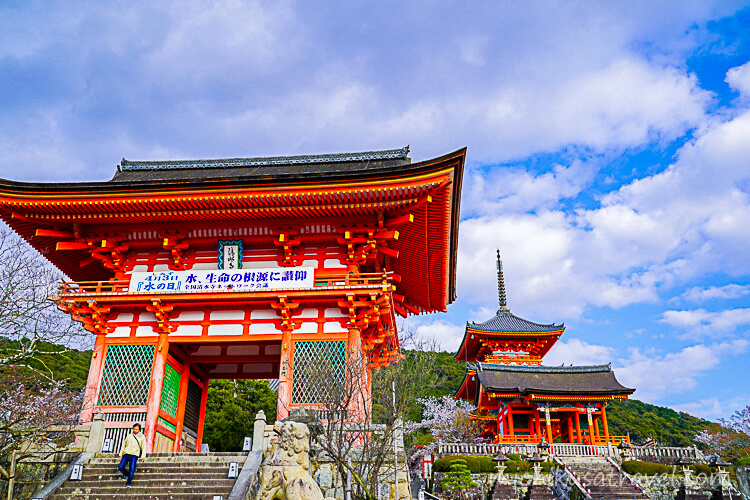
Beyond Kiyomizuzaka, the vermilion-painted Niōmon Gate, Sai-mon Gate, and three-story pagoda overlap in view. Niōmon Gate is the main gate of Kiyomizudera Temple, rebuilt around 1500 after the Ōnin War.
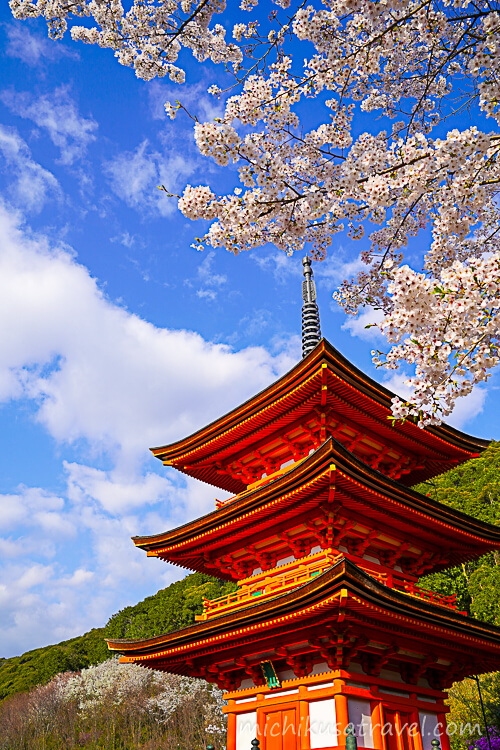 The approximately 30 m-tall three-story pagoda is one of the largest in Japan, and the current building was reconstructed in 1632.
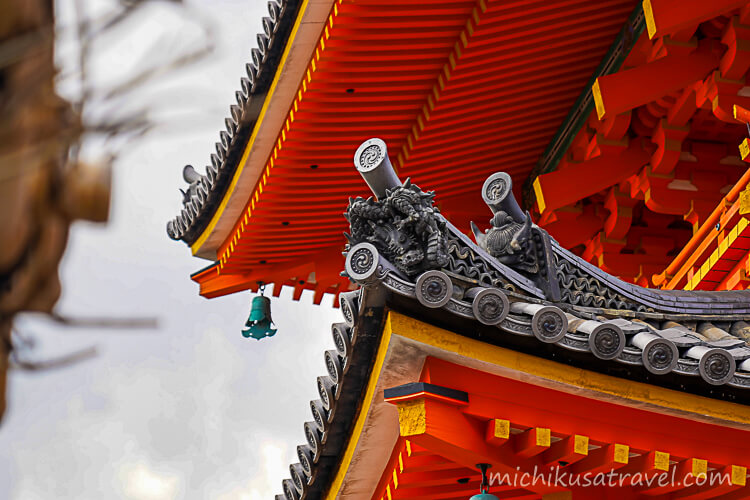
Zuigudō Hall
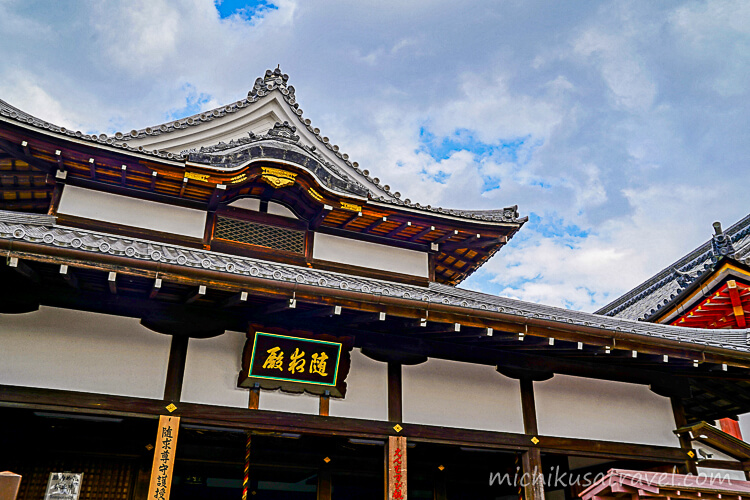
Built in 1735, Zuigudō Hall enshrines Dai Zuigu Bodhisattva as its principal image and is also known for the “tainai meguri,” or womb passage. Visitors descend below the hall and make their way through a lightless corridor, guided by prayer beads. As you feel your way through the darkness, a stillness unlike that of the bright temple grounds lets you experience the visit at a slower pace.
Shusse Daikokuten
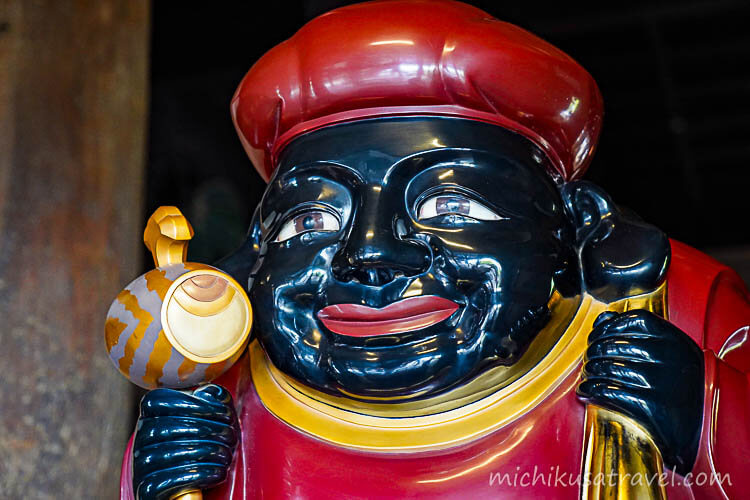
Daikokuten of Success, holding a magic mallet, is revered as a deity of good fortune, business prosperity, and career success and luck. It is enshrined on the west side of the outer area of the Main Hall, immediately after entering.
Main Hall and Kiyomizu Stage

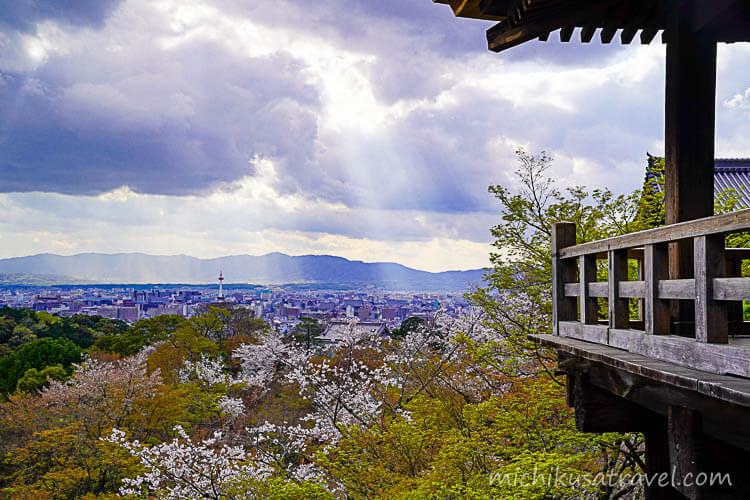
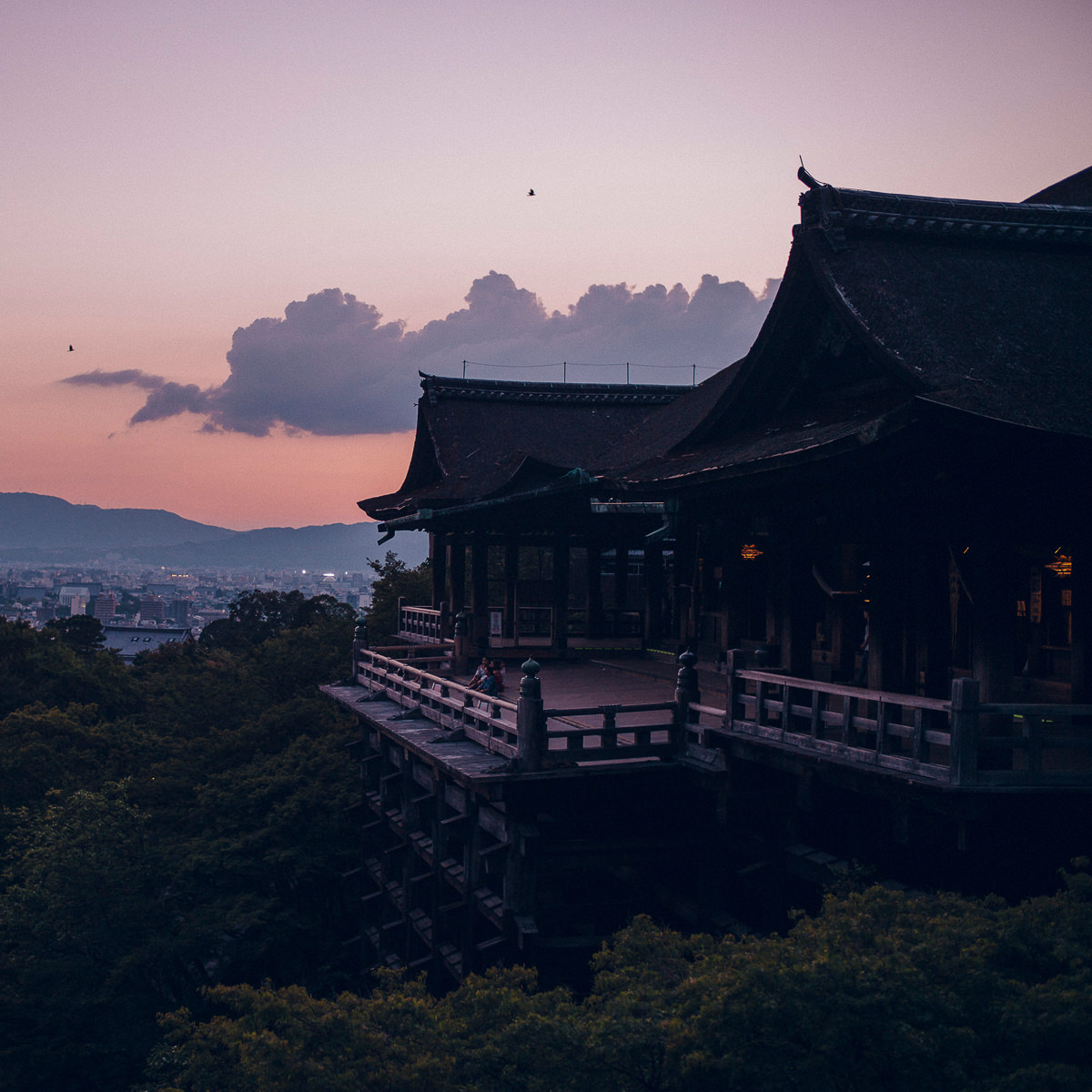
The National Treasure Main Hall was rebuilt in 1633. The Kyoto cityscape forms a striking backdrop to the Kiyomizu-dera Stage projecting over the steep slope.
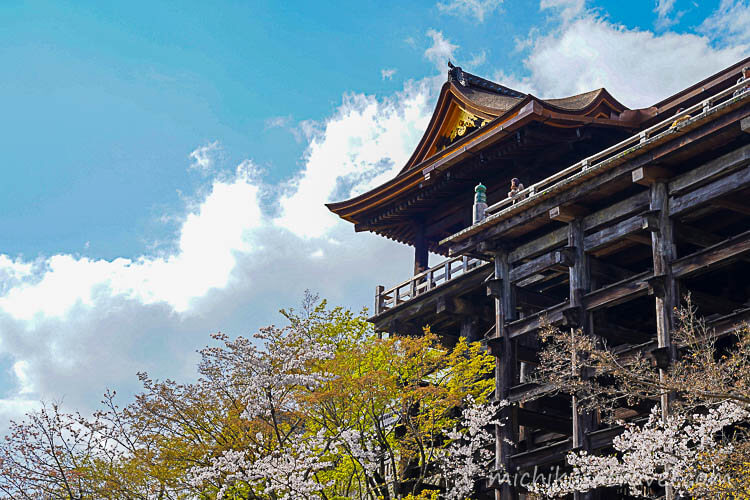
The stage is supported by a kakezukuri structure assembled from long pillars. The Kiyomizudera Jojuin Diary records 234 incidents of jumping or attempted jumping, with 200 survivors.
Special nighttime viewing

Special nighttime viewings are held during certain periods in spring, summer, and autumn. The dates vary from year to year. The main hall, stage, and surrounding temple buildings emerge in the lighting, offering a view of the grounds unlike the daytime scene.
Otowa Waterfall
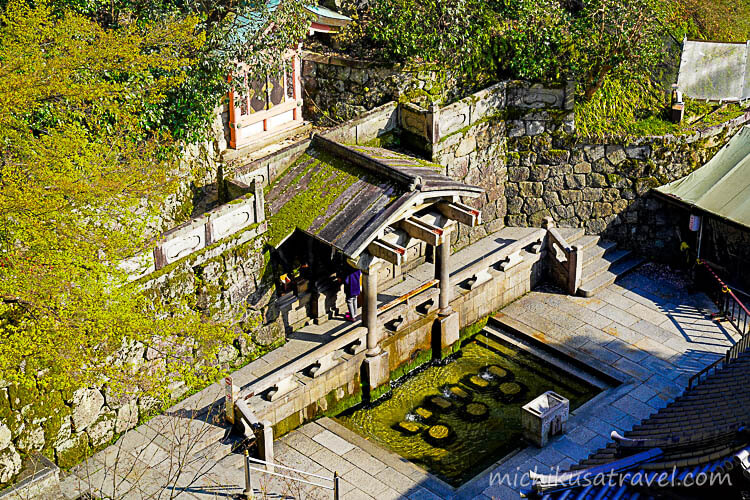
Otowa Waterfall is where Kiyomizu-dera was founded, and its clear spring water gave the temple its name.
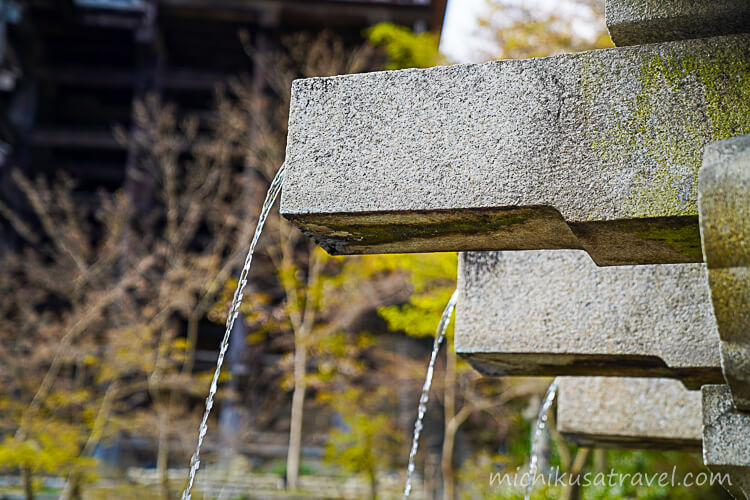
All three streams branch from the same spring. A well-known story associates each one with blessings for “academic success,” “health,” and “love.”
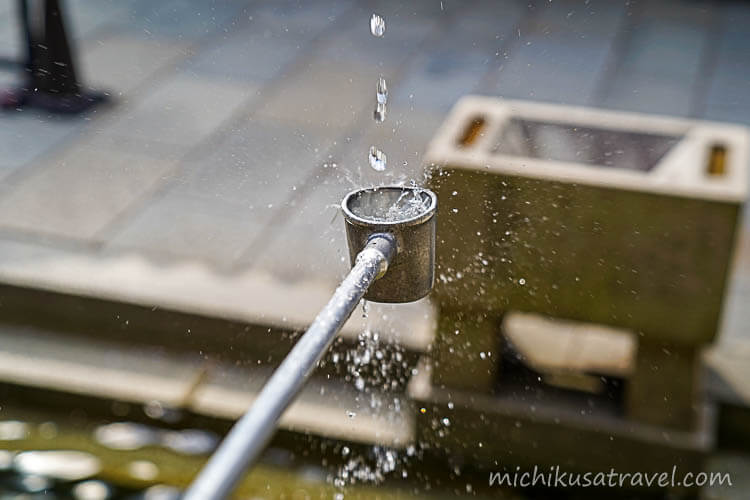
Since it is often crowded, allow plenty of time so you can visit the temple at a relaxed pace.
Hōjōchi Pond
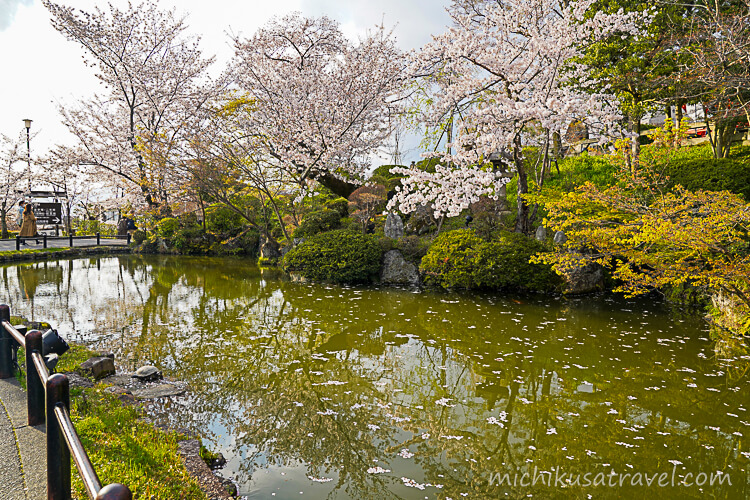
In spring, Hōjōike Pond near Niōmon Gate is framed by cherry blossoms along its banks. As you make your way among the temple halls and pagodas along the approach, it is a place to take in the water, flowers, and vermilion-painted buildings together.
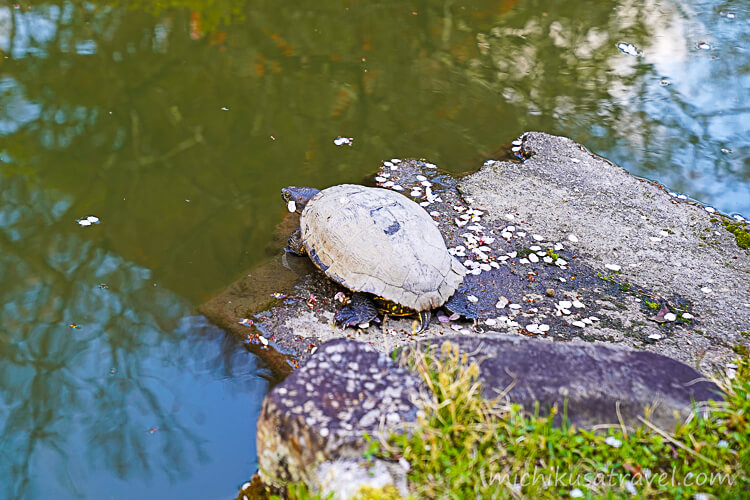
Turtles are basking in the sun by the pond.
Jishu Shrine

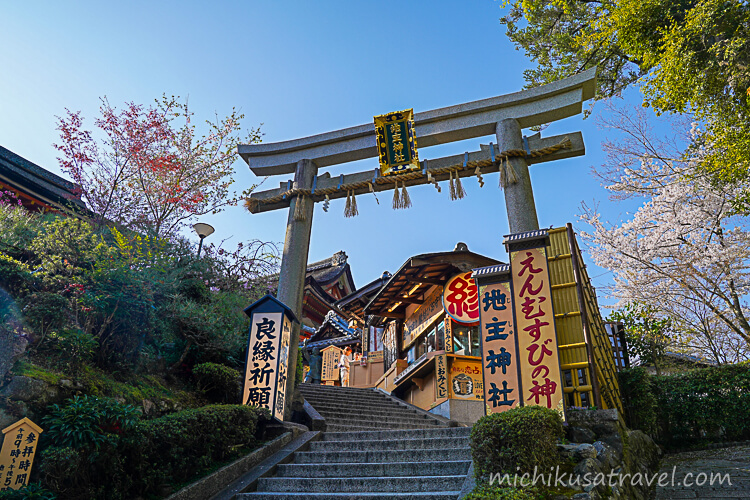
Jishu Shrine, adjacent to the north side of Kiyomizudera’s main hall, is known as a shrine for love and matchmaking. Its principal deity is Ōkuninushi, the god of romantic bonds.
The article below covers the current status of Jishu Shrine and provides a detailed guide to its grounds.
Basic information about Kiyomizu-dera Temple
The information below was checked against official sources on September 28, 2026. Please also check the latest information on the official website when planning your trip.
- 🔗 Official website
- Check visiting hours, admission fees, and dates for special evening visits here.
 交通 | 音羽山 清水寺京都府京都市。「清水の舞台」で知られる寺院。北法相宗の本山(一寺一宗)。縁起、年中行事、境内案内。www.kiyomizudera.or.jp
- 📍 Address
- 1-294 Kiyomizu, Higashiyama Ward, Kyoto
- 🕒 Visiting hours
- Usually 6:00–18:00. On some summer days, it is open until 18:30, while special evening visits continue until 21:30 (last admission at 21:00). ⚠️ Dates change each year.
- 💴 Admission fees
-
- Adults and high school students: 500 yen
- Elementary and junior high school students: 200 yen
- ⏱ Recommended visit time
- Allow approximately 1 hour and 30 minutes to 2 hours to see the main highlights. ⚠️ Visit times vary depending on crowd levels and the area visited.
Getting to Kiyomizu-dera
Local bus from Kyoto Station
From Kyoto Station, take city bus route 206 or 100 to Gojozaka; after getting off, it is about a 10-minute walk.
From a Keihan Railway station
From Gion-Shijō Station, take city bus route 207 to Kiyomizudō; after getting off, it is about a 10-minute walk. From Kiyomizugojō Station, it is about a 25-minute walk.
By car
There is no dedicated parking lot on the premises. As the roads nearby can also be congested during the tourist season, public transportation or a taxi is recommended.
Detailed access information is available on Kiyomizu-dera Temple’s official website.
For attractions, transport and suggested itineraries, see “Kyoto: A guide to attractions, food, transportation, and suggested itineraries”.