Highlights of Notre-Dame Cathedral
Construction began in the 12 century, and the Gothic landmark representing Paris took shape over approximately 2 centuries. After suffering damage during the French Revolution, it underwent extensive restoration in the 19 century, creating the form now widely known, including the spire and the chimeras on the towers. Following the fire in 2019, restoration of the roof, spire, and interior progressed, and it reopened in 2024 year 12 month.
Notre-Dame Cathedral is one of the buildings that make up the World Heritage site “Paris, Banks of the Seine.”
West façade and rose window

The west façade features three portals, the Gallery of Kings, a large central rose window, and twin towers on either side, arranged in overlapping vertical tiers. Its balanced composition combines horizontal and vertical lines in an orderly design and, together with the many sculptures, forms the majestic façade that symbolizes Notre-Dame Cathedral.
The apse and flying buttresses
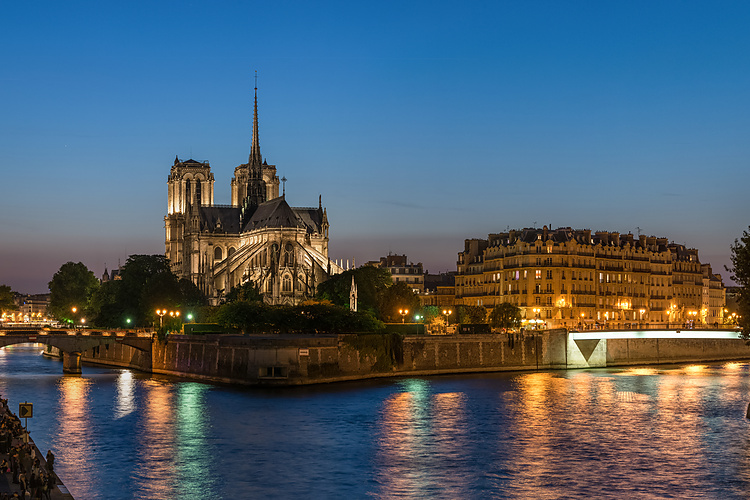
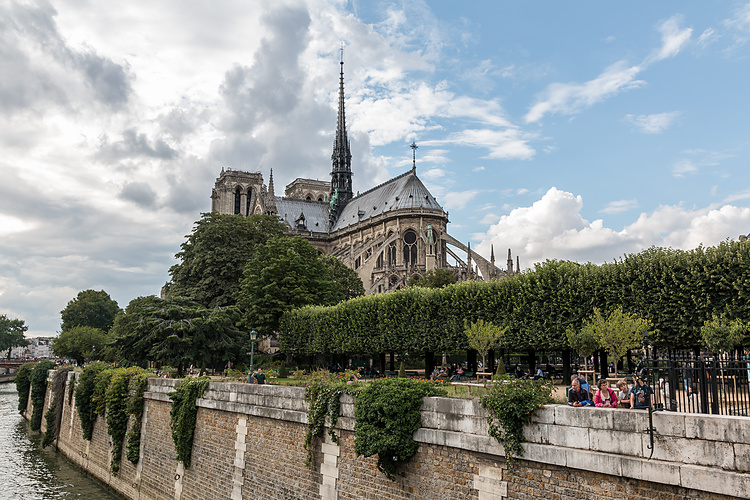 Image: Dietmar Rabich / Wikimedia Commons (CC BY-SA 4.0, cropped, resized, and sharpened)Viewed from the east, the apse surrounding the choir and the flying buttresses supporting the outer walls are clearly visible. The structure admits light through large windows in the high walls while transmitting the vault’s lateral forces to the external buttresses, showcasing the integration of Gothic architectural technique and form.
Chimeras atop the towers
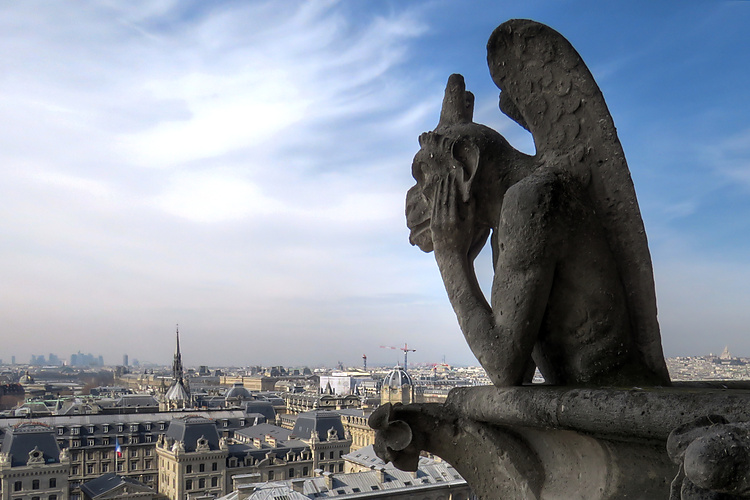 Image: Prosthetic Head / Wikimedia Commons (CC BY-SA 4.0, cropped, resized, and sharpened)The sculptures shaped like monsters and animals that decorate Notre-Dame Cathedral include gargoyles (gargouille) and chimeras (chimère). Gargoyles channel rainwater from the roof outside the building through their mouths or other openings, while chimeras are decorative sculptures without a drainage function. The group of chimeras on the towers, including the figure in the photograph, has not remained unchanged since the Middle Ages; it was added during the 19-century restoration led in part by Eugène Viollet-le-Duc. Known for their view over Paris, they are now among the cathedral’s iconic decorations.
History from the Middle Ages to the present
Construction of the present Notre-Dame Cathedral began around 1163 under Maurice de Sully, Bishop of Paris. Work progressed from the choir first, and by the 13 century the main sections—including the western façade and its twin towers, the nave, and the transept—had been completed. The chapels along the aisles and the area around the apse were subsequently extended and remodelled, with the form that led to the present building taking shape over approximately 2 centuries. Another distinctive feature is that the transition from Early Gothic to High Gothic can be seen within a single building.
The cathedral is both a place of worship and an important setting in French history. In 1431, the English King Henry 6 was crowned King of France there, and in 1804, Napoleon 1 was crowned. During the French Revolution, however, the statues in the Gallery of Kings were destroyed, and the cathedral temporarily lost its role as a religious institution and was used as a warehouse.
Interest in the dilapidated cathedral was revived by Victor Hugo’s novel The Hunchback of Notre-Dame, published in 1831. Against a backdrop of growing public support, Jean-Baptiste Lassus and Eugène Viollet-le-Duc undertook an extensive restoration beginning in the 1840s. The 19-century spire and chimeras were added during this restoration, so they date from a different period than the parts that retain their medieval form.
In the fire of 2019, 4 15, the wooden roof and the 19-century spire were destroyed, and part of the stone vault collapsed. The west façade with its twin towers, the main structure, and the rose window survived. After the fire, work proceeded to stabilize the building, clean the stonework, rebuild the roof and spire, and restore the interior decoration. The cathedral reopened in 2024, 12, allowing visitors to see a building where medieval architecture, 19-century restoration, and 21-century reconstruction overlap.
Île de la Cité
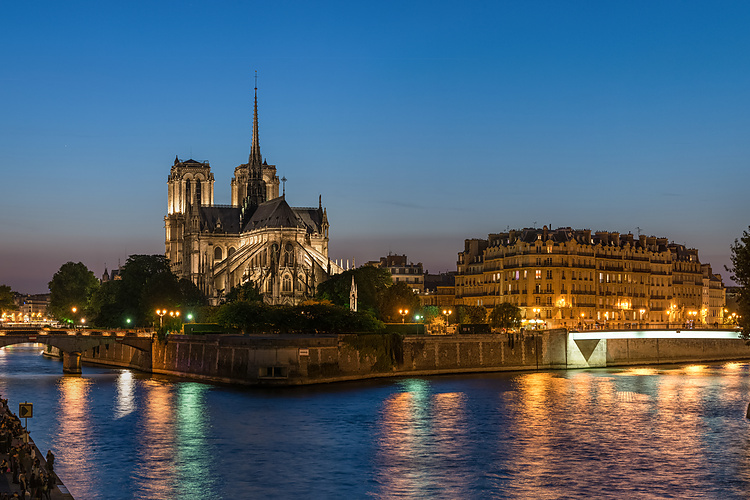 Image: DXR / Wikimedia Commons (CC BY-SA 3.0, cropped, resized, and sharpened)Notre-Dame Cathedral stands on the eastern side of the Île de la Cité, an island in the River Seine. The island has developed as the centre of Paris since ancient times, and in the Middle Ages it was home to both a religious centre focused on the cathedral and a political centre focused on the royal palace. Visiting the cathedral and the island together reveals how the historic sites that tell the story of Paris’s origins and development are concentrated within a compact area.
For more about the history and sights of the Île de la Cité, see the article about the island.
Essential information about Notre-Dame Cathedral
The information below was checked against official sources on October 11, 2026. Please also check the latest information on the official website when planning your trip.
- 🔗 Official website
- Check the cathedral’s opening hours and reservation conditions here.
リンク先を開く(notredamedeparis.fr)www.notredamedeparis.fr
- 📍 Address
- 6 Parvis Notre-Dame – Place Jean-Paul II, 75004 Paris
- 🕒 Visiting hours
-
- Monday–Wednesday and Friday: 7:50–19:00. Last admission is 30 minutes before closing.
- Thursday: 7:50–22:00. Last admission is 30 minutes before closing.
- Saturday and Sunday: 8:15–19:30. Last admission is 30 minutes before closing.
- 🚫 Closed days
- The cathedral is normally open every day. It is announced that it will be closed 12. On 24, it will close at 18:00.
- 💶 Admission
- Admission to the cathedral is free.
- 🎫 Reservations
- Reservations for individual visits are free, and admission is also possible without a reservation. Official guidance recommends reserving a same-day time slot several hours before your visit to reduce waiting time during busy periods. Slots may be released for the same day, the previous day, or 2 days in advance, so check the official reservation page if you have a preferred time.
- ⏱ Recommended time
- Allow approximately 30–60 minutes to visit the interior. ⚠️ The length of your visit may vary depending on the wait for security screening and whether you attend a service.

Getting to Notre-Dame Cathedral
Metro and RER
You can get there from Cité station on Métro line 4 or Saint-Michel – Notre-Dame station on RER lines B and C.
On foot
Enter from the forecourt through the Portal of the Last Judgment (portail du Jugement dernier).
See the official page below for directions to Notre-Dame Cathedral.

For attractions, transport and suggested itineraries, see “Paris: A guide to attractions, food, transportation, and suggested itineraries”.