Highlights of the Louvre
The Louvre is one of Paris’s leading museums, where you can experience both the architecture of a royal palace and its vast collection spanning from antiquity to the 19 century. Because the museum is extremely large, familiarizing yourself in advance with the locations of major works and the layout of its three wings will help you tour the highlights efficiently.
Representative Works on Display
One of the Louvre’s most famous paintings is “Mona Lisa” by Leonardo da Vinci. 16Painted at the beginning of the century, this portrait is known for its gentle smile and the sfumato technique, which softly blurs the outlines.
Among the French paintings, Jacques-Louis David’s “The Coronation of Napoleon 1” and Eugène Delacroix’s “Liberty Leading the People” are also not to be missed. “The Coronation of Napoleon 1” is a monumental work depicting the coronation held at Notre-Dame Cathedral in 1804, with Emperor Napoleon, Empress Joséphine, Pope Pius 7, and others portrayed on its vast canvas. Meanwhile, “Liberty Leading the People” takes the July Revolution of 1830 as its subject and symbolically represents freedom through the figure of a woman advancing with the tricolor held aloft, making it a defining work of Romanticism.
The ancient Greek sculptures Winged Victory of Samothrace and Venus de Milo are also iconic works at the Louvre. The Winged Victory of Samothrace dates from around the 2 century BCE and depicts Nike, the goddess of victory, landing on the prow of a ship; the rendering of her windblown drapery is particularly striking. The Venus de Milo also dates from around the 2 century BCE and was discovered on the Aegean island of Milos in 1820. Although both arms are missing, it is widely known for its balanced proportions and serene presence.
The Three Wings and How to Explore the Masterpieces
The interior is divided into the Denon, Sully, and Richelieu wings. The Mona Lisa, the Winged Victory of Samothrace, The Coronation of Napoleon 1, and Liberty Leading the People are in the Denon Wing, while the Venus de Milo and ancient Egyptian art are in the Sully Wing. In particular, the Denon Wing contains many of the museum’s masterpieces, so first-time visitors will find it easier to plan a route centered on the Denon Wing.
From Fortress and Royal Palace to Museum

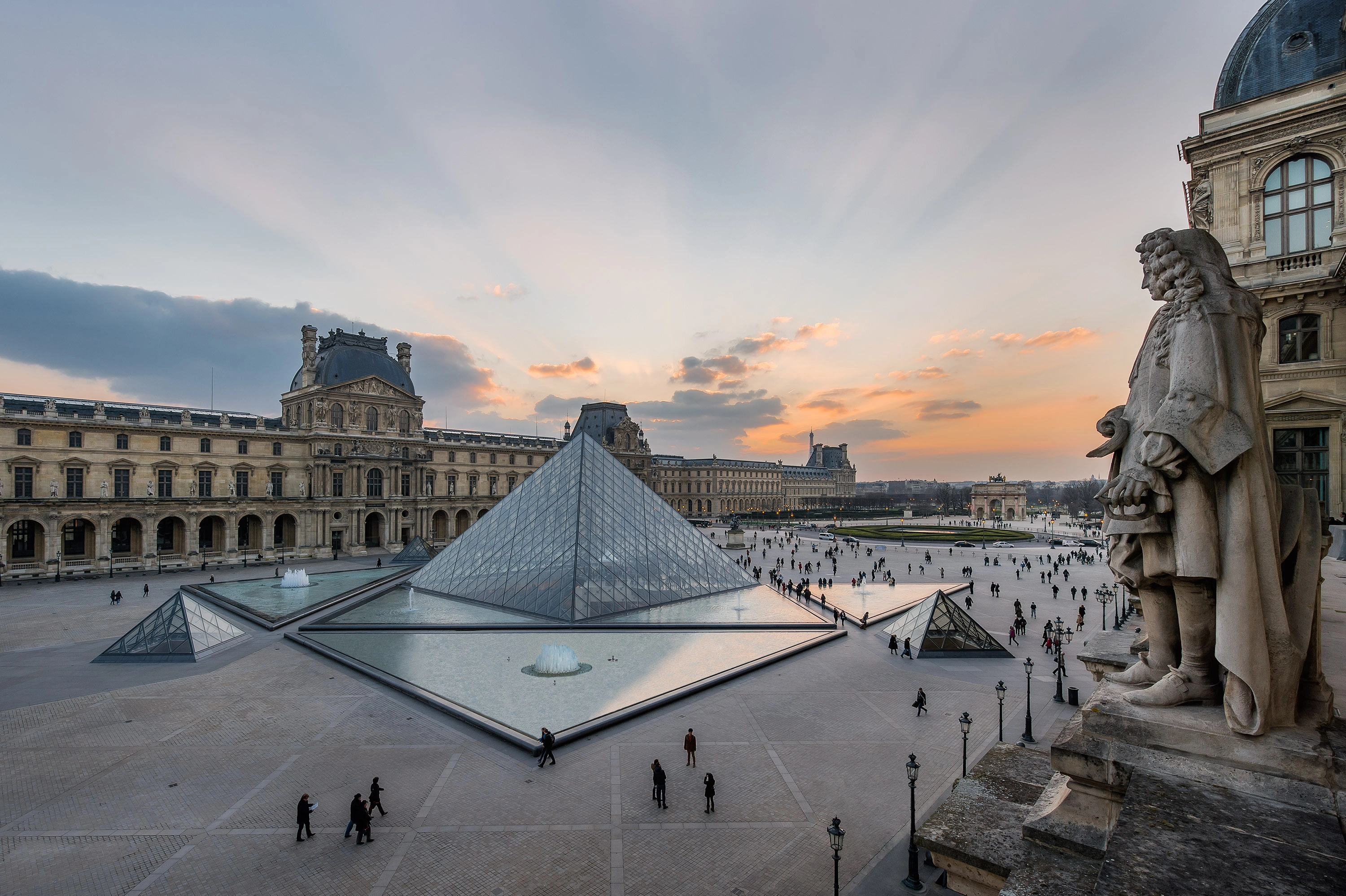
The history of the Louvre begins with a fortress built at the end of the 12 century by Philip 2. It was later expanded and rebuilt as a palace for successive kings, and after the center of the royal court moved to Versailles, it also became a place where artists worked. During the French Revolution, it opened as a museum in 1793, and today its underground levels still reveal the moat and remains of the medieval fortress walls. The Louvre is one of the buildings that make up the World Heritage site “Paris, Banks of the Seine.”

When you leave through the gate on the Pont des Arts side, you can see the dome of the Institut de France on the opposite bank.
Essential information about the Louvre Museum
The information below was checked against official sources on October 11, 2026. Please also check the latest information on the official website when planning your trip.
- 🔗 Official website
-
Official information on opening hours, closure days, admission fees, and free-admission conditions.
 Horaires & tarifs - Planifiez et réservez votre visiteLes horaires du musée du Louvre, du jardin des Tuileries et du musée Eugène-Delacroix, les tarifs, les conditions d...www.louvre.fr
- 📍 Address
- Musée du Louvre, 75001 Paris
- 🕒 Opening hours
-
- Monday, Thursday, Saturday, and Sunday:9:00〜18:00
- Wednesday and Friday:9:00〜21:00
Last admission is 1 hours before closing, and visitors must leave the exhibition rooms 30 minutes before closing.
- 🚫 Closure days
- Tuesday, 1 1, 5 1, and 12 25. ⚠️ Exhibition rooms may be temporarily closed even on days when the museum is open. Check the notices inside the museum on the day of your visit as well.
- 💶 Admission
- Nationals or residents of European Economic Area (EEA) countries pay 22 euros; the price for visitors from outside the EEA is 32 euros. Free-admission conditions also apply. Ticket types, prices, and purchasing methods are explained in detail in the following section, “Louvre Museum Tickets.”
- ⏱ Time required
- Even if you focus on the major works, allow approximately 2〜3 hours; if you want to explore several departments thoroughly, plan on at least half a day. ⚠️ The time required varies depending on crowd levels and the departments and works you visit.
Louvre Museum Tickets
The price category is determined by nationality and place of residence. Do not determine it solely by the country from which you are departing for your trip.
Admission fees and what the ticket includes
- EEA nationals or residents: 22 euros.
- Fee for visitors from outside the EEA: 32 euros.
- Under 18 years old: free regardless of nationality.
- EEA nationals or residents aged 18 to 25: free upon presentation of proof.
The admission ticket includes the Louvre’s permanent and temporary exhibitions, as well as admission to the Musée national Eugène-Delacroix on the day of your Louvre visit or the next day the museum is open. Some temporary exhibitions require a reservation for a specific time slot. Guided tours, workshops, and audio guides are charged separately.
Free Admission and Supporting Documentation
Free admission is also available to people with disabilities and 1 accompanying person, ICOM members, designated teachers, journalists with press cards and others. In addition, admission is free for all visitors on 7 month 14 day and from 18:00 onward on the 1 Friday of every month, except in 7 month and 8 month. Please present valid documentation confirming your eligibility.
From Reservation to Admission
- Open the official ticket website: Choose the type of admission ticket, then select your visit date and time slot.
- Check the pricing category: If selecting EEA pricing or free admission, check the eligibility requirements concerning factors such as nationality, residence, and age, as well as the required documents.
- Save your booking confirmation: Have the issued ticket ready to present on the day of your visit.
- Arrive with plenty of time: Security screening takes place at the entrance. Priority admission is not guaranteed if you are late for your reserved time, so arrive early.
Tickets generally cannot be changed, exchanged, or refunded. However, refunds may be available in certain cases, such as cancellation or changes to the service by the museum. Box-office sales depend on visitor volume and remaining availability. Re-entry is not permitted after leaving the museum. Avoid websites that imitate the official sales site and street vendors.
Getting to the Louvre
Metro
Get off at Palais-Royal / Musée du Louvre station on lines 1 and 7. The Carrousel entrance is located at 99, rue de Rivoli, 75001 Paris.
On foot
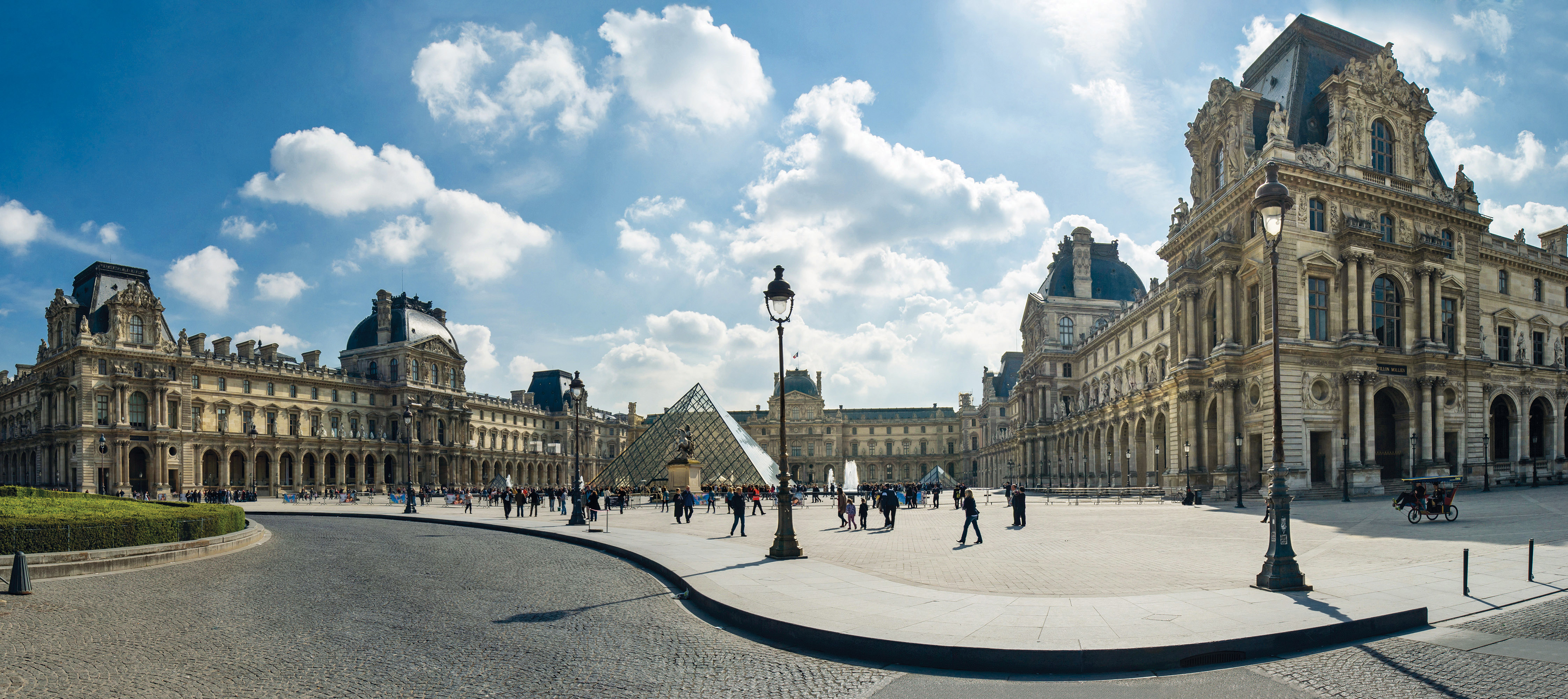
It can be combined with a stroll through the Tuileries Garden or along the right bank of the Seine. The main entrance is by the Pyramid, and visitors with admission tickets can also use the Carrousel entrance. Check the official map for the opening status of the entrance you plan to use. All visitors must undergo a security check.
For directions to the Louvre Museum, see the official page below.
For attractions, transport and suggested itineraries, see “Paris: A guide to attractions, food, transportation, and suggested itineraries”.