Highlights of Yasui Konpiragū Shrine
Yasui Konpiragū is a Shinto shrine known as a place to pray for severing harmful ties and forming good relationships. Its enshrined deities are Emperor Sutoku, Minamoto no Yorimasa, and Ōmononushi, and it is also known as “Yasui’s Konpira-san.”

The torii gate facing Higashioji Street bears a sign reading “A place of prayer for severing bad ties and forming good ones.” The shrine grounds are an easy stop on foot from the streets of Gion and Higashiyama.
Stone for Severing Bad Ties and Forming Good Ties
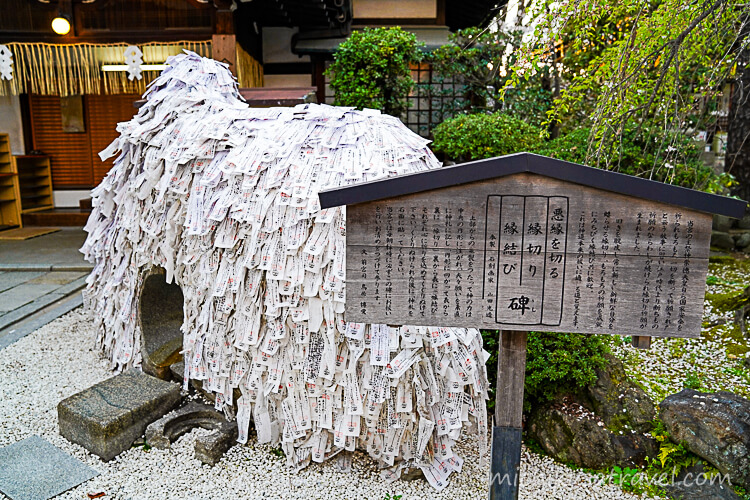
The Stone for Severing Bad Ties and Forming Good Ones is a massive ema-shaped stone measuring 1.5m high and 3m wide. Katashiro paper charms bearing written wishes have been affixed in layer upon layer, giving the covered stone its distinctive appearance.
First, pray at the main sanctuary and write the ties you wish to sever and those you wish to form on a katashiro paper talisman. Holding the talisman and focusing on your wish, pass through the stone from front to back to sever bad ties, then from back to front to form good ties, and finally attach the talisman to the stone. This is the officially recommended procedure.
History and the Belief in Severing Harmful Ties
The origins of Yasui Konpiragu Shrine date back to the reign of Emperor Tenji, when Fujiwara no Kamatari built a hall and planted wisteria, leading it to be called “Fujidera,” or Wisteria Temple. Emperor Sutoku is said to have admired the wisteria and had the temple buildings restored in 1146.
Komyoin Kanshoji Temple was later established. After being devastated during the Onin War, Rengekoin was moved to its present location in 1695. Its guardian shrine enshrined Emperor Sutoku, the deity Omononushi invited from Kotohiragu Shrine in Sanuki, and Lord Minamoto no Yorimasa, leading it to become known as “Yasui’s Konpira-san.”
The shrine is revered as a place for severing not only harmful romantic ties but also harmful connections to illness, alcohol, tobacco, and gambling. This belief stems from a tradition that the principal deity, Emperor Sutoku, renounced worldly desires while staying in retreat at Kotohira-gū Shrine in Sanuki. The deity Ōmononushi is worshipped as a guide who opens the way and as a protector of safety at sea and on the road.
Basic Information About Yasui Konpiragu Shrine
The information below was checked against official sources on September 29, 2026. Please also check the latest information on the official website when planning your trip.
- 🔗 Official website
- You can check how to pray at the Enkiri Enmusubi Stone, visiting hours, reception hours at the amulet counter, and transportation information.
 京都市 悪縁切り・良縁祈願 縁切り縁結び碑 宗教法人安井金比羅宮京都市東山区の悪縁切り・良縁祈願の神社、宗教法人安井金比羅宮です。願い事を形代に書いていただき、境内の縁切り縁結び碑の穴をくぐって祈願していただくことで悪縁を切り、良縁を結びます。神様のお力をいただき、新しい一歩を踏み出して下さい...www.yasui-konpiragu.com
- 📍 Address
- 70 Shimobentencho, Higashioji Matsubara Agaru, Higashiyama, Kyoto
- 🕒 Visiting hours
- The shrine grounds and Enkiri Enmusubi Stone are accessible all day. The amulet counter and shrine office are open from 9:00 to 17:30.
- 💶 Admission
- Admission to the shrine grounds is free. The paper figure used at the Enkiri Enmusubi Stone is available for a voluntary offering of at least 100 yen.
- ⏱ Suggested visit length
- Allow approximately 30 minutes to 1 hour to visit the main sanctuary and Enkiri Enmusubi Stone. ⚠️ The time required varies depending on the queue to crawl through the stone and congestion within the grounds.
Getting to Yasui Konpiragu Shrine
Railway
It is about a 10-minute walk from Gion-Shijo Station on the Keihan Main Line and about a 15-minute walk from Kyoto-Kawaramachi Station on the Hankyu Kyoto Line.
Route buses
From Kyoto Station, take Kyoto City Bus route 206 and get off at the Higashiyama Yasui stop. From there, it is about a 1-minute walk south.
For attractions, transport and suggested itineraries, see “Kyoto: A guide to attractions, food, transportation, and suggested itineraries”.