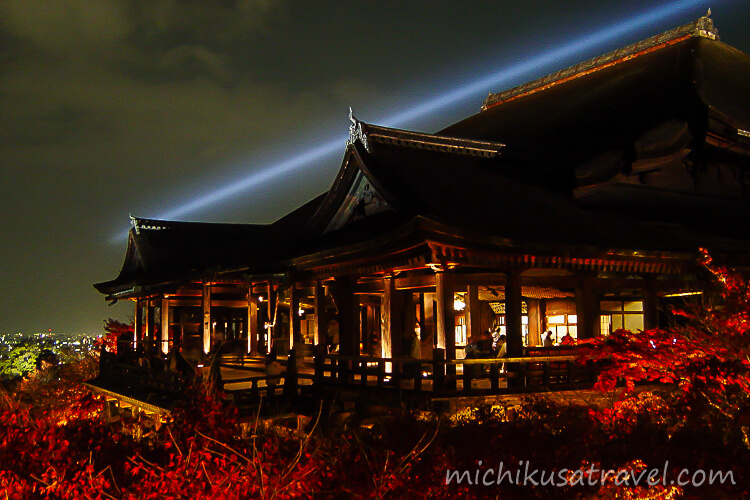
Highlights of Kitano Tenmangu
Kitano Tenmangu is the head shrine of the approximately 1 ten thousand 2000 Tenmangu and Tenjin shrines throughout Japan that enshrine Sugawara no Michizane. In addition to being revered as the god of learning, it offers opportunities to enjoy history and the changing seasons through its Momoyama-style shrine buildings, plum blossoms associated with Michizane, the Odoi earthworks built by Toyotomi Hideyoshi, and the Tenjin market held on the 25 day of every month.
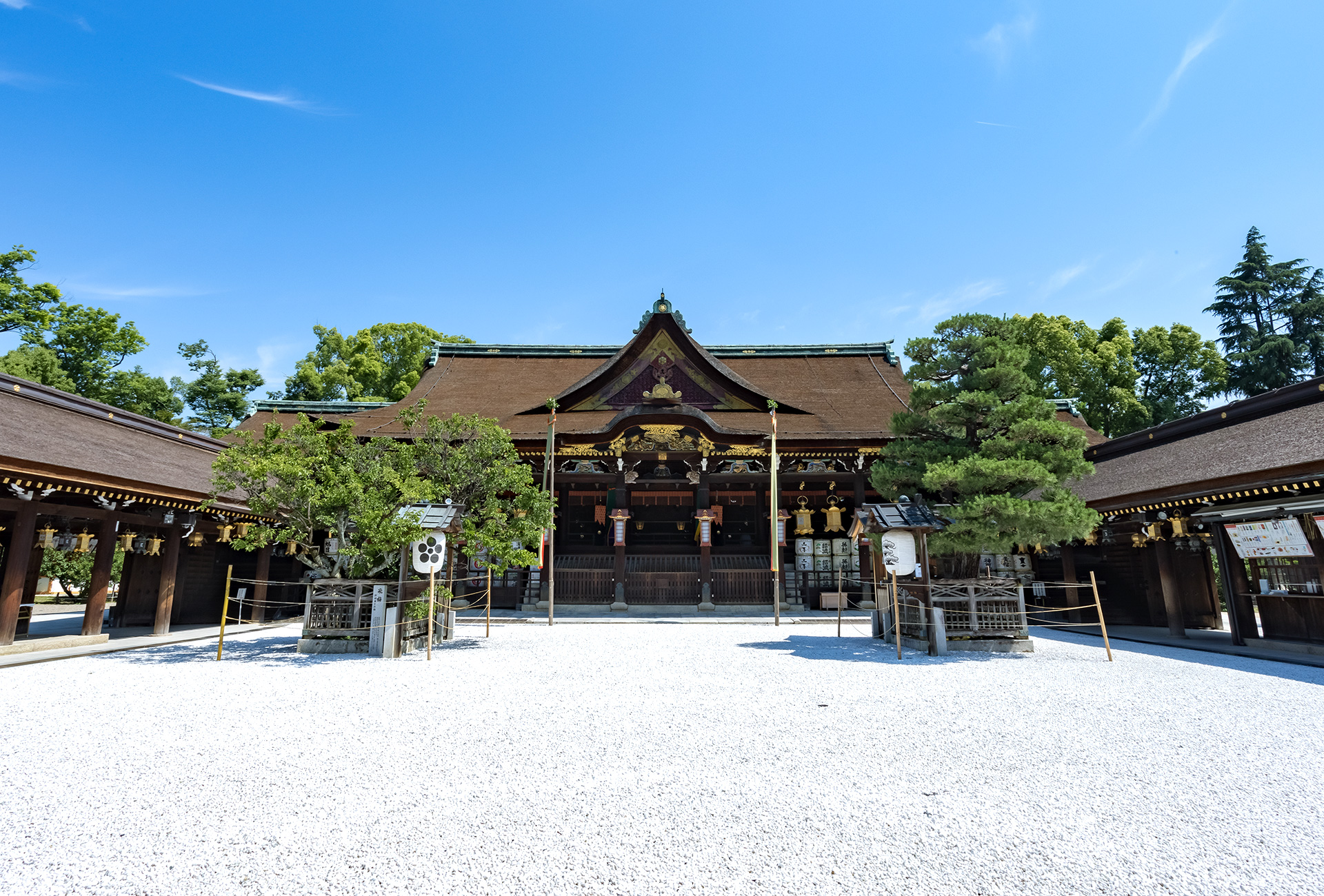
The Sankōmon Gate and the Main Sanctuary, a National Treasure

At the center of Sankōmon Gate hangs an imperial plaque bearing the inscription “Tenmangū,” written by Emperor Go-Sai. The carvings beneath the eaves convey the gate’s dignity.
The Sankōmon Gate is named after carvings of the sun, moon, and star, but because the star carving cannot be found, it is known as the “Sankōmon without a Star” and is counted among the Seven Mysteries of Kitano Tenmangū.

The National Treasure Main Hall displays the gohei of the Emperor and the Crown Prince.
The current main sanctuary was built by Toyotomi Hideyori in1607 and is an eight-building structure linking the main sanctuary, worship hall, stone chamber, and music hall. Visitors can also see the first torii gate at the entrance to the approach, the tower gate, and the ox statues scattered around the grounds.
Plum Garden

Red plum blossoms bloom across the snow-covered shrine grounds, adding color to the stone komainu.
Sugawara no Michizane was known for his love of plum blossoms, and many plum trees have been planted on the shrine grounds. Each year, the plum garden “Hana no Niwa” opens to visitors during the flowering season.
Odoi Maple Garden

The vermilion Uguisubashi Bridge spans the Kamiya River as it flows through the historic Odoi embankment, while autumn foliage colors the surroundings.

At Odoi, you can also see a landscape where green bamboo groves overlap with maples turned bright red.
Odoi is an earthen embankment built by Toyotomi Hideyoshi to enclose Kyoto, and part of it remains on the western side of the grounds. In autumn, it opens to visitors as a maple garden.
Tenjin Market on the 25 of every month

Every month, on the 25 day, the Tenjin market fills the shrine grounds and approach with stalls selling antiques, clothing, food, and a wide variety of other goods.
On the 25 day of each month, a festival market known as “Tenjin-san” is held in connection with Lord Michizane’s birthday and death anniversary. Whether it is held and the number of stalls may vary depending on the weather and other factors.
Essential information about Kitano Tenmangū Shrine
The information below was checked against official sources on September 30, 2026. Please also check the latest information on the official website when planning your trip.
- 🔗 Official website
- Provides opening hours for the shrine grounds, shrine office, and amulet office, as well as access information by train, bus, and car.
 参拝時間・アクセス - 北野天満宮kitanotenmangu.or.jp
- 📍 Location
- Bakurōchō, Kamigyō-ku, Kyoto, Kyoto Prefecture
- 🕐 Visiting hours
-
- Shrine grounds: usually 7:00–17:00
- Shrine office and amulet office: 9:00–16:30
⚠️ Sankōmon Gate closes 30 minutes before the end of visiting hours. Hours differ during the New Year period and events.
- 💴 Admission
-
- Shrine grounds: free
- Plum Garden, Maple Garden, and Treasure Hall: an additional fee is required when open to visitors
- ⏱ Recommended time
- Allow about 45 minutes to 1 hour to visit the main sanctuary and principal buildings, or about 1 hours 30 minutes including the Plum Garden and other areas.⚠️ The time required varies depending on crowds and the extent of your visit.
Getting to Kitano Tenmangū
Public transportation
If you take a city bus, such as from the Kyoto Station area, get off at the “Kitano Tenmangu-mae” stop and enter the grounds through the large torii along Imadegawa Street. From “Kitano-Hakubaicho” Station on the Randen Kitano Line, you can walk east along Imadegawa Street. If you plan to visit not only the main hall but also Odoi and the plum and maple gardens, allow time for the paths and changes in elevation around the grounds.
For attractions, transport and suggested itineraries, see “Kyoto: A guide to attractions, food, transportation, and suggested itineraries”.