Highlights of Konkai Kōmyō-ji
Konkai Kōmyō-ji Temple, fondly known as “Kurodani-san”, is the head temple of the Jōdo school. It is considered the birthplace of the nembutsu tradition, where Hōnen descended from Mount Hiei and established his first hermitage. Toward the end of the shogunate, the Aizu domain established its headquarters here while serving as Kyoto’s protector.
Katamori Matsudaira, lord of the Aizu domain, made Konkai Kōmyō-ji his headquarters, and the Shinsengumi was organized from the group of rōnin placed under the Aizu domain’s charge. The cemetery in the northeastern part of the grounds contains the graves of those who died serving the Aizu domain.
Kōrai Gate

A Kōraimon Gate stands beside a stone pillar engraved with “Kurodani.” It has a gabled roof and support posts behind the main pillars, features characteristic of the Kōraimon style. As you proceed along the approach from the Kōraimon Gate, a two-story main gate comes into view at the foot of the stone steps.
Sanmon Gate

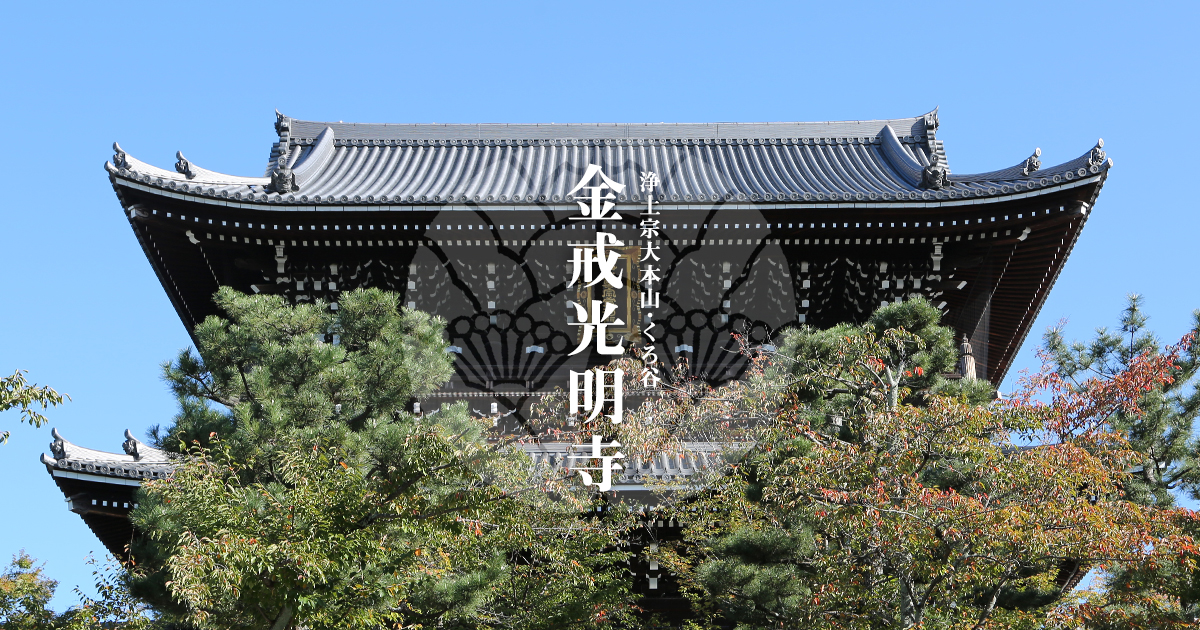
The Sanmon Gate has two tiled roofs arranged one above the other, with a balustrade at the front of the upper level. A temple plaque hangs in the central section, which is formed by dark-colored pillars and beams.

The Sanmon Gate stands at the top of the stone steps, creating a landscape that makes use of the differences in elevation across the temple grounds.
Miei-dō Hall

The Miei-dō Hall, which enshrines a statue of the priest Hōnen, stands among the pine trees. It is the central hall of the temple grounds. A stone-paved approach extends in front, and the building’s facade, with its broad staircase and balustrade, can be viewed through the pines on either side.
Amida Buddha in Five Kalpas of Contemplation
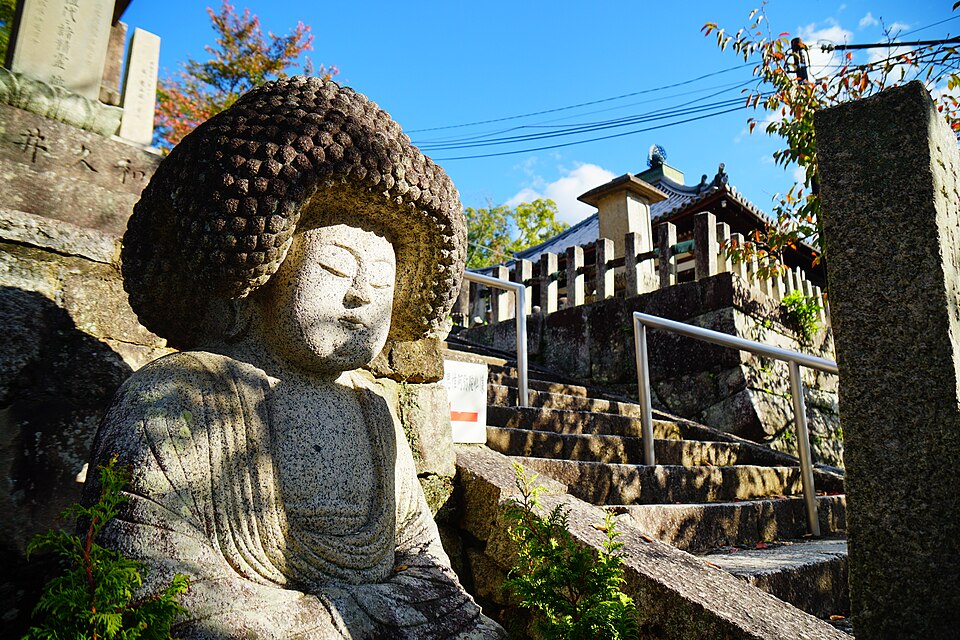 Image: Wildgun / Wikimedia Commons (CC BY-SA 4.0, resized)This stone statue depicts Amitabha after five kalpas of meditation, with large, prominent coils of hair covering his head.
The statue at Konkai Kōmyō-ji is especially unusual because it is made of stone, and is believed to have been created in the middle of the Edo period. “Five kalpas” refers to an unimaginably long span of time. The Five-Kalpa Thinking Amitabha Buddha is depicted with hair that grew and piled high on his head because he spent that long period continually thinking about how to save people.
Three-Story Pagoda and Cemetery of the Aizu Domain Martyrs

A three-story pagoda stands on a hill above the cemetery. From the stone steps leading to the pagoda, you can look out over the temple grounds and Kyoto city.
The three-story pagoda is said to enshrine the remains of the priest Hōnen and is designated as an Important Cultural Property. Together with the cemetery for victims from the Aizu domain within the temple grounds, it offers a place to trace the religious history of Konkai Kōmyō-ji and the history of the late Edo period. During special autumn openings, the Great Abbot’s Hall and the strolling garden Shiun are also open to visitors in some years.
Basic Information about Konkai Kōmyō-ji Temple
The information below was checked against official sources on September 30, 2026. Please also check the latest information on the official website when planning your trip.
- 🔗 Official website
- Check the latest published information and conditions for worship and sightseeing here.
 浄土宗大本山・くろ谷 金戒光明寺新選組発祥の寺、本陣を置いた事でも有名な金戒光明寺。2www.kurodani.jp
- 📍 Location
- Kuromiya-chō, Sakyo Ward, Kyoto, Kyoto Prefecture121
- 🕐 Visiting hours
- The grounds are freely open for worship. Miei-dō is normally open from 9:00 to 16:00. The dates and admission hours for special openings are set separately. The interior of the upper level of the mountain gate is normally closed to the public, but may sometimes be viewed during limited-time special openings.
- 💴 Admission
- Regular visits to the grounds are free. Special openings of the Great Abbot’s Quarters, gardens, mountain gate, and other areas require admission.
- ⏱ Time required
- Allow about 1 hour to tour the main buildings, or about 1 hours and 30 minutes to walk to the Aizu Domain Cemetery.
The time required varies depending on crowds and the scope of your visit.
Access to Konkai Kōmyō-ji
Public transportation
Walk from the Kyoto City Bus stop Okazaki-michi. The temple grounds have changes in elevation and stone steps.
For detailed route information, please check the transportation guide on the official website.
For attractions, transport and suggested itineraries, see “Kyoto: A guide to attractions, food, transportation, and suggested itineraries”.