Highlights of Kyoto Station

Kyoto Station, located in the southern part of Kyoto City, is the city’s largest railway terminal. Tokaido Shinkansen trains stop here, making the station a gateway to the extensive rail network connecting Kyoto with Tokyo and Nagoya, as well as Shin-Osaka, Okayama, Hiroshima, and Hakata.

The current Kyoto Station building was designed by architect Hiroshi Hara and opened in 1997. Its exterior is a large-scale work of contemporary architecture, making extensive use of glass and steel framing, with a linear, geometric design that immediately catches the eye.
Although it is the gateway to the ancient capital, the station itself is a highlight of modern architecture. In addition to using the trains, walk through the central concourse, along the Grand Staircase, and across the elevated passageways to experience the vast atrium and the station complex extending from east to west.
Central concourse and atrium

A large open space extends through the central concourse. Kyoto Station is particularly recognized by foreign tourists as one of Kyoto’s major tourist attractions.


In the central concourse, looking up at the walkways and escalators spanning both sides, along with the glass roof, makes a striking composition. The scenery changes between the north and south sides and between the east and west sides of the station, making it enjoyable to admire the architecture as you move around.
Grand Staircase

In addition to being used as a venue for events such as concerts, it also serves as the setting for the JR Kyoto Station Building Grand Staircase Race, held every year in2.

The Grand Staircase has 171 steps and spans an elevation difference of 35 m, extending from Muromachi Koji Plaza to Sky Plaza. LED displays are sometimes used at night, giving it a different appearance from the daytime.
Elevated Passageway and Station Building Plaza
10at the station building is an elevated passageway connecting east and west, with a total length of 185 m and a height of 45 m. Besides offering views of the urban area to the north, it leads from the grand staircase to the rooftop Sky Plaza, where you can take in the Kyoto Basin and the surrounding mountain ranges.
Basic Information about Kyoto Station
The information below was checked against official sources on September 20, 2026. Please also check the latest information on the official website when planning your trip.
- 🔗 Official website
- This practical guide lets you check timetables, the station map, platforms, accessibility information, connecting transport, and the opening hours of ticket offices and ticket machines.
 京都駅 | 駅情報 :JRおでかけネットJR西日本の各駅についての情報ページ。各駅の営業情報、時刻表、構内図、バリアフリー情報、接続交通機関などをご案内いたします。eki.jr-odekake.net
The locations and opening hours of the Grand Stairway, Skyway, and individual plazas in the Kyoto Station Building can be checked on the official Kyoto Station Building website.
 各広場のご案内 | 京都駅ビル京都駅ビルの各広場についてご紹介しています。観光客や地元の人々が集まり交流ができる場です。www.kyoto-station-building.co.jp
- 📍 Location
- Higashishiokoji-cho, Shimogyo-ku, Kyoto, Kyoto Prefecture
- 🕒 Hours
- The main JR West entrances and ticket offices are as follows.
- Central Entrance, West Entrance, and Underground East Entrance: 4:35– last train
- Midori no Madoguchi ticket office: 6:30– 21:00
- Midori no Kenbaiki and Midori no Kenbaiki Plus ticket machines: 5:30– 23:00
The hours for the Shinkansen, Kintetsu, subway, commercial facilities, and plazas inside the station building vary.
- 💶 Fees
- The station building’s shared areas outside the ticket gates, including the central concourse, Grand Stairway, and Skyway, can be viewed without taking a train. A train ticket or admission ticket is required to enter the platforms.
- ⏱️ Time required
- If you mainly want to see the central concourse, Grand Stairway, and Skyway, allow approximately 45–90 minutes. If you are only transferring trains, consider the station’s size and the distances between ticket gates, and allow plenty of time. ⚠️ The time required varies depending on crowds, events, and visits to commercial facilities.
Getting to Kyoto Station
Central Kyoto is the area stretching from Shijo-Karasuma to Kawaramachi-Oike. Shijo Subway Station or Hankyu Karasuma Station is approximately 2 kilometers south of Kyoto Station, which is about 30 minutes away on foot. In recent years, the area around Kyoto Station has also developed as a district where commercial facilities and offices are concentrated. As Kyoto’s gateway, Kyoto Station is also gaining prominence as a new urban hub.
Kintetsu
The conventional lines serving the station include the JR Kyoto Line, Biwako Line, Kosei Line, Nara Line, and Sagano Line. Limited express services include the Haruka to the Kansai Airport area and the Kinosaki, Maizuru, and Hashidate to northern Kansai and the San'in region. The Kintetsu Kyoto Line also serves the station, making it a key access point for destinations throughout Kyoto and toward Nara.
Subway and City Buses
From the Shijō–Karasuma area, you can reach Kyoto Station on foot or take the Karasuma Subway Line directly without changing trains. Kyoto Subway Station is K11, with clear transfer guidance for JR, the shinkansen, Kintetsu, and city buses. If you are taking a city bus, it is easiest to find your way by starting at the Kyoto-ekimae bus stop on the Central Exit side of JR Kyoto Station.
Timetables and platforms may change, so please check them again before departure.

A Detour at Kyoto Station
Railway Carriages
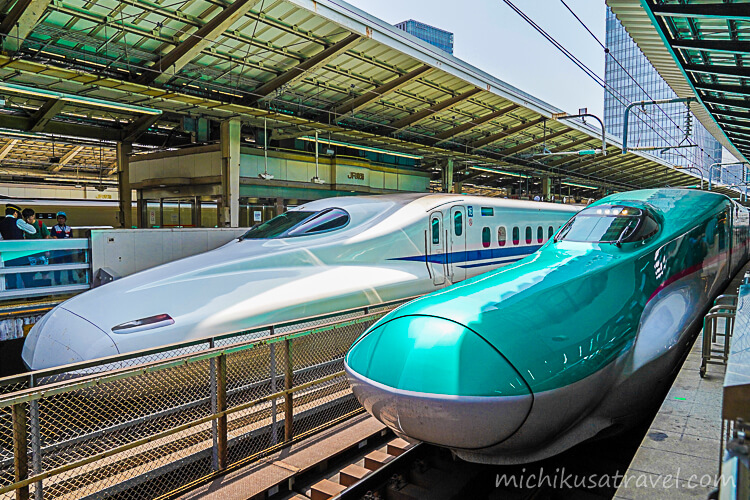
Kyoto Station has platforms for conventional rail services and the Tokaido Shinkansen, with a wide range of trains arriving and departing, from commuter trains and limited express services to the shinkansen.
JR West321 series trains

JR West’s 321-series electric commuter trains are direct-current commuter trains that entered commercial service in 2005. They are used mainly for local and rapid services on the JR Kyoto Line, JR Kobe Line, JR Takarazuka Line, Gakkentoshi Line, and JR Tozai Line.
Shinkansen N 700 S-series train
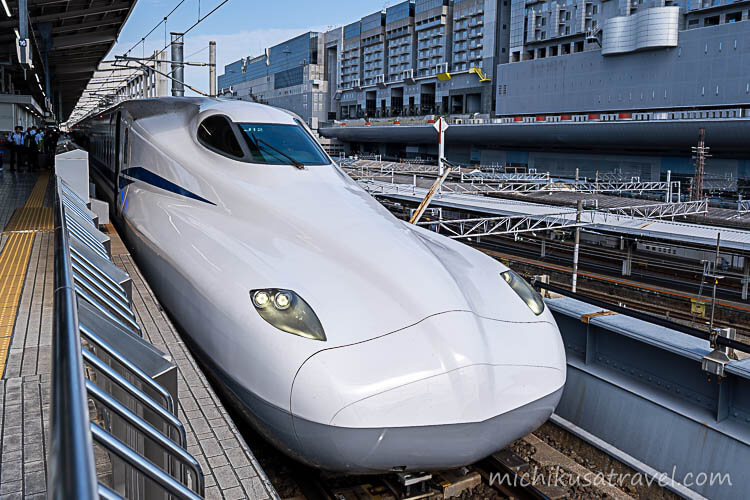
N 700 S-series Shinkansen trains began commercial service in 2020 as successors to the 700 series. They are also used on the Nishi-Kyushu Shinkansen's Kamome service.
For more information about the trains and history of the Tokaido and Sanyo shinkansen, see the article about the shinkansen.
For attractions, transport and suggested itineraries, see “Kyoto: A guide to attractions, food, transportation, and suggested itineraries”.