
About Okayama
Okayama is the capital of Okayama Prefecture and one of Japan's cities designated by government ordinance.
There was once a country called Kibi, which ruled over a vast region that included all of present-day Okayama Prefecture, eastern Hiroshima Prefecture, Kagawa Prefecture, and parts of Hyogo Prefecture.
The Kita Ward of Okayama and neighboring Sōja are said to have been the center of Kibi Province, and in Okayama’s Kita WardKibitsu Shrine, the chief guardian shrine of Kibi Provincestill stands.
The Yamato court, wary of Kibi’s growing power, divided Kibi into three provinces: Bizen, Bicchu, and Bingo. Mimasaka was subsequently separated from Bizen. The provincial government headquarters of Bizen was established in Okayama.
It wasUkita Naoie and his son, Hideiewho developed Okayama Castle during the Sengoku period and laid the foundation for the modern city of Okayama. The name “Okayama” itself also comes from the name of the low hill on which the castle was built.
Hideie's son Hidetaka sided with the Western Army in the Battle of Sekigahara but was defeated, and the Ukita family declined. Kobayakawa Hideaki then took over in Okayama, but he died of illness after just 1 year and 10 months without leaving an heir. The next lord of Okayama Domain wasIkeda Tadatsugu, son of Ikeda Terumasa, the first lord of Himeji Domain.
Until the Meiji reforms abolished the domains and established prefectures, the Ikeda family ruled the Okayama domain and also served as lords of Okayama Castle. Through these reforms, most of the divided province of Kibi was reunited, giving rise to Okayama Prefecture.
Tourist attractions in Okayama
Here are the recommended attractions in Okayama, presented as a ranking.
October 3, 2026 We checked each attraction’s official information.
-
1placeOkayama Korakuen Garden
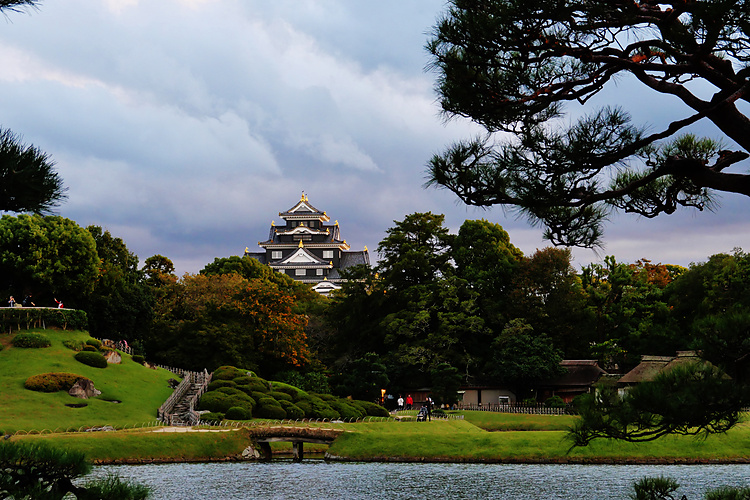
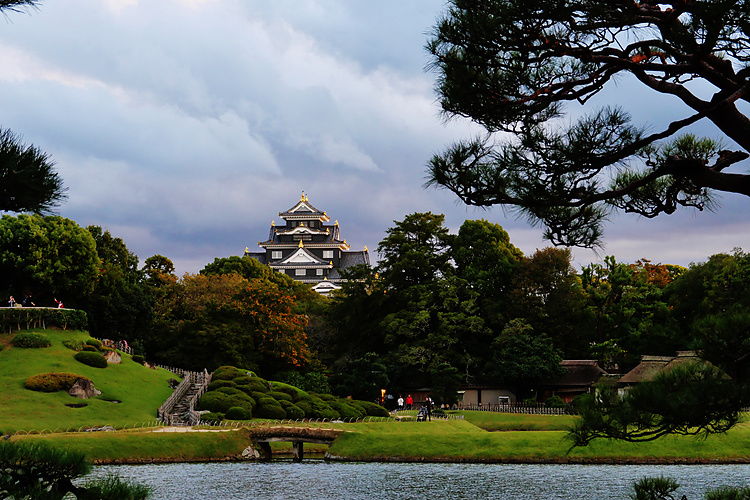 Image: Zairon / Wikimedia Commons (CC BY 4.0, cropped, resized, and sharpened)Okayama Korakuen Garden is one of Japan’s three most famous gardens, alongside Kenrokuen Garden in Kanazawa and Kairakuen Garden in Mito. Broad lawns, ponds, meandering streams, and landscaped hills unfold across the grounds, with views of Okayama Castle beyond the Asahi River.

Sawa-no-ike Pond at the center of the garden and Yushinzan, which offers a three-dimensional view over the grounds, are also major highlights. Since the garden was first created, its landscape has been shaped according to the preferences of successive feudal lords.For more details about Okayama Korakuen Garden’s history, highlights, admission fees, and suggested time, please see the article below.
 Okayama Korakuen: Highlights, opening hours, admission fees, and accessWe explain highlights such as Yūshin Hill, Sawa-no-ike Pond, and the view of Okayama Castle in Okayama Korakuen, along with opening hours, prices, and access, based on official information and on-site research as of 2026 9.michikusatravel.com
-
2placeOkayama Castle

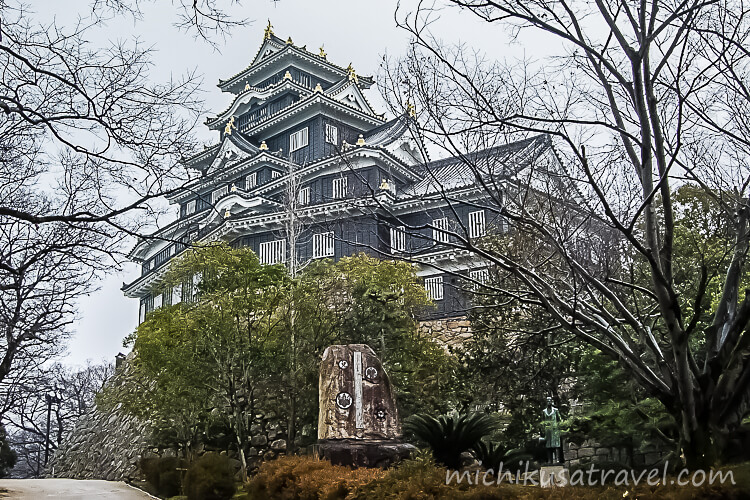
Built by Ukita Hideie, Okayama Castle is also known as “Ujo,” or Crow Castle, because of its black-lacquered siding. The current keep was reconstructed after wartime damage, and its interior introduces the history of the successive lords from the Ukita, Kobayakawa, and Ikeda families. The stone walls built in different periods and the view of the keep from along the Asahi River are also worth noting.For more details about Okayama Castle’s keep, exhibits, stone walls, and tickets, please see the article below.
 Okayama Castle: Highlights, Tickets, Visit Duration, and AccessThis guide covers the highlights of Okayama Castle, including its jet-black keep, stone walls, and scenery along the Asahi River, as well as opening hours, tickets, and access, based on official information and on-site reporting from 2026 9.michikusatravel.com
-
3placeKibitsu Shrine

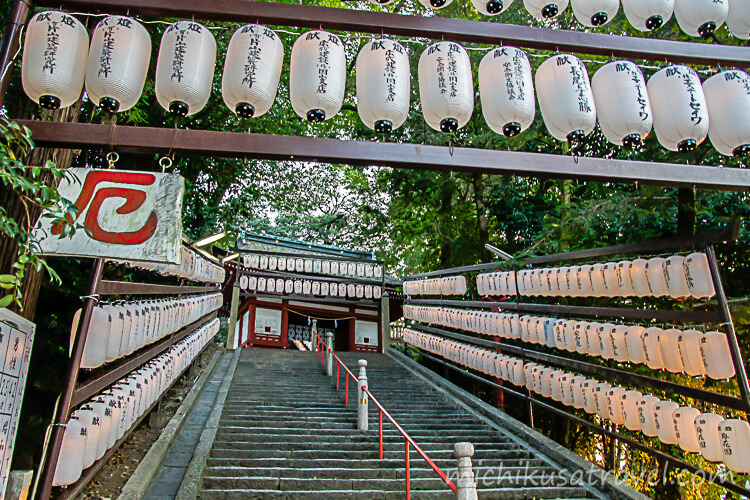
Kibitsu Shrine is the Ichinomiya of the former province of Bitchu. The legend of its principal deity, Ōkibitsuhiko-no-Mikoto, and Ura is considered one of the prototypes of Momotaro’s demon-slaying tale. Its National Treasure main hall and worship hall feature a distinctive architectural style also known as “Kibitsu-zukuri.”
The long corridor extending along the slope connects the area around the main hall with the Okamaden Hall, where the Narukama ritual is performed.For more details about Kibitsu Shrine’s Momotaro legend, its National Treasure shrine buildings, corridor, and Narukama ritual, please see the article below.
 Kibitsu Shrine: Highlights, time required, parking and accessWe explain the highlights of Kibitsu Shrine, including its National Treasure honden and haiden, Kibitsu-zukuri, and the long corridor, along with access information, based on official information and local research as of 2026 9.michikusatravel.com
-
4placeInujima
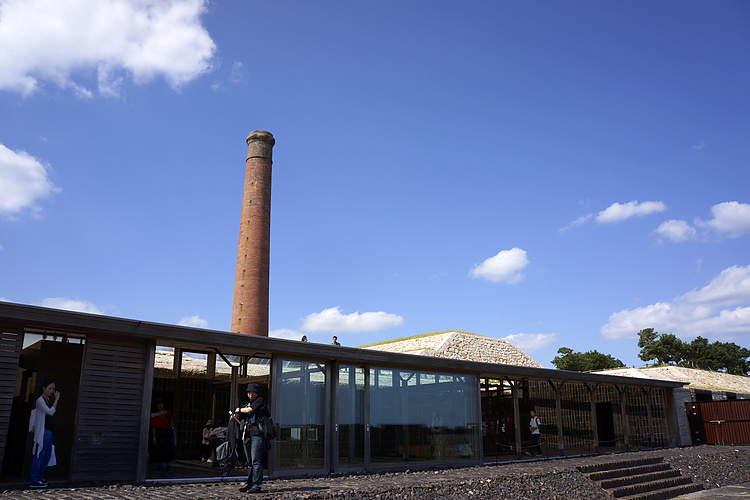 Image: Kentaro Ohno / Wikimedia Commons (CC BY 2.0, cropped, resized, and sharpened)Inujima is an inhabited island in Higashi Ward, Okayama. At the Inujima Seirensho Art Museum, the remains of a copper smelter that operated for only a short period have been preserved and revitalized, then presented together with architecture and contemporary art.
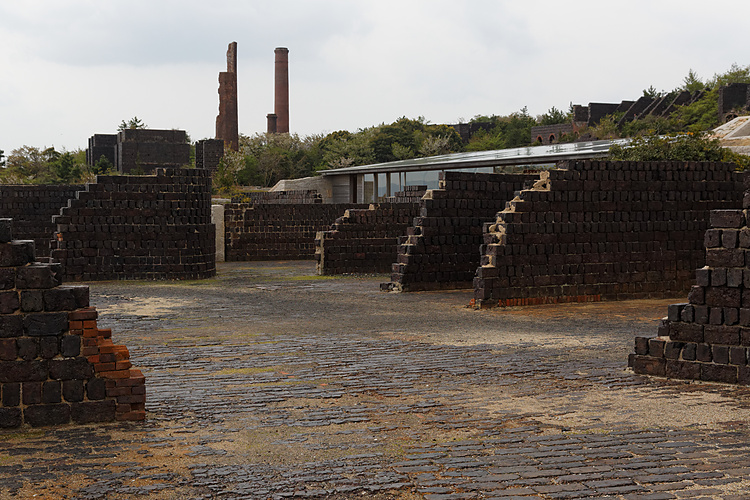 Image: KimonBerlin / Wikimedia Commons (CC BY-SA 2.0, cropped, resized, and sharpened)In addition to the industrial heritage of slag-brick walls and chimneys, you can visit the Inujima “Art House Project” installations scattered throughout the settlement.
For more details about the Inujima Seirensho Art Museum, the Inujima “Art House Project,” tickets, and scheduled ferries, please see the article below.
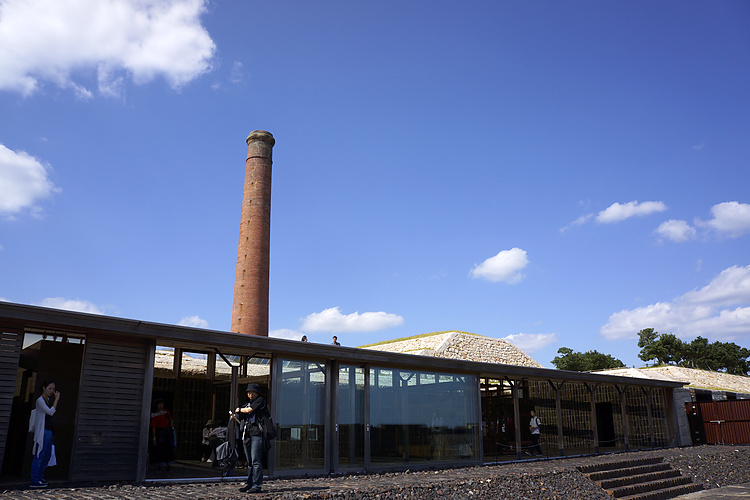 Inujima: A Guide to Highlights, Time Needed, Tickets, and AccessBased on official information as of 2026 year, 9 month, this guide covers highlights such as the Inujima Seirensho Art Museum, the remains of the karami-brick structures and contemporary art, as well as opening hours, tickets and access.michikusatravel.com
-
5placeKibiji Cycling Route
This level cycling and walking route connects Okayama with the area around Soja. It links historic sites along the Kibiji region, including Kibitsuhiko Shrine, Kibitsu Shrine, Tsukuriyama Kofun, and Bitchu Kokubunji Temple.
For information about the Kibiji landscape and cycling route, please check the official guide from Okayama Prefecture.
吉備路風土記の丘県立自然公園 - 岡山県ホームページ(自然環境課)www.pref.okayama.jp -
6placeSaidaiji Kannon-in
Saidaiji Kannon-in is a temple known for the Saidaiji Eyo, a nationally designated important intangible folk cultural property. The grounds around the main hall form the setting for the Eyo festival, allowing visitors to experience Okayama’s inherited religious and festival culture on site.
岡山市 高野山真言宗別格本山 西大寺(観音院)|ご祈祷・永代供養岡山市に鎮座する西大寺(観音院)の公式サイトです。厄難消除・病気平癒・良縁成就・子授け・安産の功徳が高く、岡山のパワースポットとして親しまれています。ご祈祷や納骨堂・永代供養・結婚などのご法事も承っております。天下の奇祭、会陽裸祭...www.saidaiji.jp -
7placeSaijo Inari

Saijo Inari, officially called Saijo Inari-san Myokyo-ji, is a Nichiren Buddhist temple that preserves the traditional blending of Shinto and Buddhism. Visitors can explore the worship area centered on the main hall, as well as the former main hall and the seventy-seven subsidiary shrines.
The stone Niomon Gate, incorporating an Indian-inspired style, has an appearance unlike the typical wooden gates of Buddhist temples. Together with the large torii visible from the approach, it creates a distinctive landscape where temple worship and Inari veneration coexist.For more details about Saijo Inari’s blending of Shinto and Buddhism, main hall, seventy-seven subsidiary shrines, and Niomon Gate, please see the article below.
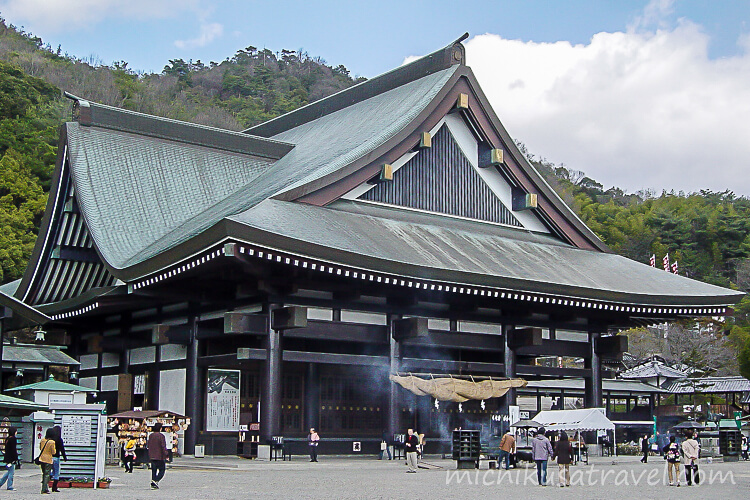 Saijo Inari Shrine: Highlights, admission fees, time required, and accessBased on official information and an on-site visit current as of 2026/9, this guide covers the grounds of Saijō Inari, which reflect the fusion of Shinto and Buddhism, as well as the Niōmon Gate, the grand torii, other highlights, and access.michikusatravel.com
-
8placeOkayama Orient Museum
The Okayama Orient Museum is a municipal museum specializing in archaeological and art materials from West Asia and North Africa, including ancient Mesopotamia, Egypt, and Persia. Through its rare specialized collection in the region, visitors can systematically explore cultural exchange between civilizations and the history of visual culture.
オリエント美術館 | 岡山市www.city.okayama.jp -
9placeKibitsuhiko Shrine

Kibitsuhiko Shrine is the Ichinomiya of the former province of Bizen. It enshrines Ōkibitsuhiko-no-Mikoto as its principal deity and worships Mount Kibi-no-Nakayama behind it as a sacred mountain. The approach and shrine buildings are aligned in a straight line, and the shrine is also called “Asahi no Miya,” or Shrine of the Morning Sun, because of its relationship with the sunrise on the summer solstice.
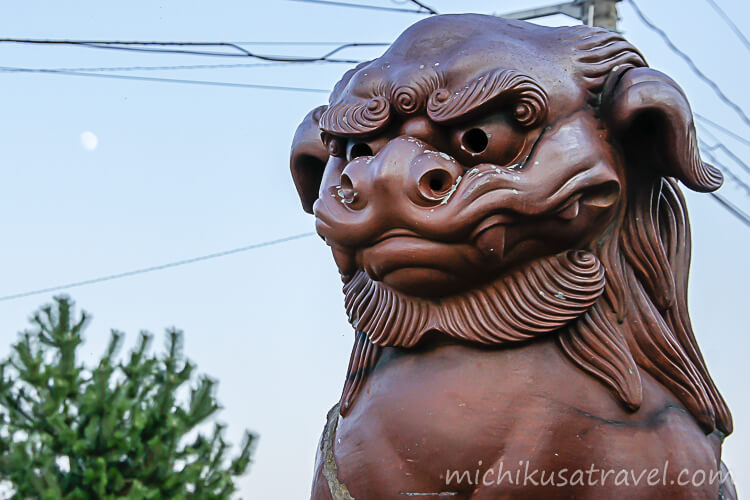
These komainu stand on the shrine grounds. Even their curls, large eyes, and open mouths are rendered in fine detail.For more details about Kibitsuhiko Shrine’s Momotaro legend, shrine buildings, Shrine of the Morning Sun, and Heian Cedar, please see the article below.
 Kibitsuhiko Shrine: Highlights, Visit Duration, Parking and AccessBased on official information and on-site reporting as of 9 2026, this guide covers the highlights of Kibitsuhiko Shrine, including its main buildings, the Heian Cedar, and the grounds at the foot of Mount Kibi-no-Nakayama, as well as opening hours and access.michikusatravel.com
-
10placeYumeji Art Museum, Main Building
This museum specializes in the works of Yumeji Takehisa, a painter, poet, and designer born in Okayama. Located in the outer garden of Okayama Korakuen Garden, it displays a collection centered on original drawings through special exhibitions.
For information about exhibitions and opening hours, please check the official website of the Yumeji Art Museum.
施設概要 | 夢二郷土美術館夢二郷土美術館 本館 竹久夢二作品を専門に収蔵した、最初の美術館。特に、優れた肉筆画を代表とするコレクションは、最大にして随一を誇ります。夢二が活躍した大正時代の風情がかおる建築は、浦辺鎮太郎氏による設計。さらに、水戸岡鋭治氏監修...yumeji-art-museum.com -
11placeMomotaro Statue
The Momotaro Statue at Okayama Station is a distinctly Okayama-style meeting spot depicting Momotaro with a dog, monkey, and pheasant. It has been moved from its former location as part of improvements to the station plaza, so please check station signage and the latest information when visiting.
For current information, please see the article on the official tourism website of Okayama Prefecture.
 JR岡山駅/新幹線改札内まるわかりガイド!【3階ホームフロア編】|おか旅|岡山観光WEB【公式】- 岡山県の観光・旅行情報ならココ!JR岡山駅の新幹線ホームの待合所はどんな感じ?発車前におみやげは買えそうかな?実は岡山グルメをギリギリまで味わえる新幹線のホーム階。車内で倉敷名物のうどんが味わえる?話題になった新幹線アイスが復活!?自販機、売店、エレベーター。ま...www.okayama-kanko.jp
-
12placeHanagurizuka

Hanagurizuka stands on the grounds of the Fukudakai headquarters between Kibitsu Shrine and Kibitsuhiko Shrine. Rings called “hanaguri,” which are fitted through cattle’s noses, have been collected from across Japan and piled up here for memorial rites.
With its distinctive appearance of numerous nose rings piled together, it is also a place to reflect on the connection between food and life.For the location, please check the official guide from Okayama City.
北区のみどころ(隠れた名所もあります!) | 岡山市www.city.okayama.jp -
13placeAeon Mall Okayama
Aeon Mall Okayama is a large shopping complex southeast of Okayama Station. In addition to shopping and dining, it has a cinema and can be used to adjust your time around the station or as a stop on rainy days.
For information about the stores and facilities, please check the official website of Aeon Mall Okayama.
 イオンモール岡山okayama.aeonmall.jp


Okayama cuisine
The information below was checked against official sources on September 16, 2026. Please also check the latest information on the official website when planning your trip.
Okayama specialties
- Okayama barazushi: a local dish from Okayama featuring sushi rice artfully topped with seafood from the Seto Inland Sea and mountain produce.
- Okayama demi-katsu don: a local Okayama rice bowl topped with tonkatsu and demi-glace sauce.
- Ebimeshi: a popular Western-style dish in Okayama, stir-fried with a distinctive sauce.
- Sawara dishes: in Okayama, the fish can be enjoyed as sashimi, tataki, salt-grilled, and in other preparations.
- Fruit parfaits: around the city, you can enjoy parfaits made with fruit from Okayama Prefecture, such as white peaches and muscat grapes.
Okayama Tourism Web introduces dishes such as barazushi, demikatsudon, ebimeshi, Spanish mackerel, and fruit parfaits.

Okayama’s best restaurants
Katsudon Castle Town
This restaurant in Ishima-Kitamachi specializes in demi-katsu don. You can enjoy an Okayama specialty here: tonkatsu topped with demi-glace sauce.

Yamato
This is a diner in Omotechō. It serves demikatsudon.
Getting around Okayama
The information below was checked against official sources on September 16, 2026. Please also check the latest information on the official website when planning your trip.
Railway
Okayama Station is the starting point for sightseeing, with the Shinkansen and regular JR lines converging there. To reach central attractions such as Okayama Korakuen Garden and Okayama Castle, it is convenient to combine the tram or bus from the station.

Trams and buses
From the area in front of Okayama Station, streetcars and buses operated by Okayama Electric Tramway connect various parts of the city. Check the company's official information for routes, timetables, and service updates.

Sample Itinerary for Okayama
Okayama’s highlights broadly fall into the central area extending from Okayama Station toward Okayama Castle and Korakuen Garden, and the Kibiji area encompassing Kibitsuhiko Shrine, Kibitsu Shrine, and Saidaiji. On Day 1, explore the center on foot and by tram; on Day 2, tour Kibiji mainly by car. If you ride the Kibiji Cycling Route, use it as an alternative to Day 2. Since visiting Inujima depends on boat schedules, leave it for another day rather than trying to fit it into these 2 days.
Okayama – Day 1
Open the same route in Google Maps
Loading the map.
- ①Okayama Station → ②Okayama CastleCalculating the route in Google Maps
Start your journey at Okayama Station. A statue of Momotaro stands in front of the station and is also a tourist attraction. Because of improvements to the station plaza, the statue has been moved inside the station, so check its current location before setting out. Walk straight east from Okayama Station for about 24 minutes to reach Okayama Castle. If the walk is too long, you can also take the tram to “Jōka” Station.
- ②Okayama Castle → ③Okayama KorakuenCalculating the route in Google Maps
Korakuen is directly adjacent to the north of Okayama Castle. You can also see Okayama Castle’s keep clearly from Korakuen. Cross the Asahi River and continue to the garden.
Okayama – Day 2
Open the same route in Google Maps
Loading the map.
- ①Kibitsuhiko Shrine → ②Kibitsu ShrineCalculating the route in Google Maps
On day 2, start your journey at Kibitsuhiko Shrine. A car is the most convenient way to explore the Kibiji area, though you can also combine the JR Kibiji Line with taxis. Kibitsu Shrine is about 4 minutes by car or 19 minutes on foot from Kibitsuhiko Shrine. It is unusual to find two Ichinomiya shrines, one from Bizen Province and one from Bitchū Province, so close together.
- ②Kibitsu Shrine → ③Mogami InariCalculating the route in Google Maps
Mogami Inari is about 11 minutes by car from Kibitsu Shrine. Kibitsuhiko Shrine and Kibitsu Shrine are near the JR Kibiji Line and within walking distance of Bizen-Ichinomiya and Kibitsu stations, respectively. Mogami Inari is slightly farther from the railway, so taking a taxi from Bitchū-Takamatsu Station is convenient; if you want to save time, you can call a taxi at Kibitsu Shrine.
Detours in Okayama
We introduce scenes we happened to come across in Okayama, along with landscapes that suddenly caught our attention.

Camellia flowers placed at regular intervals create a cheerful rhythm.

Manhole cover

When you think of Okayama, you think of Momotaro. This is a waterworks shutoff-valve cover featuring Momotaro.