Highlights of Okayama Korakuen Garden
A Daimyo Garden Spreading Across Lawns and Ponds
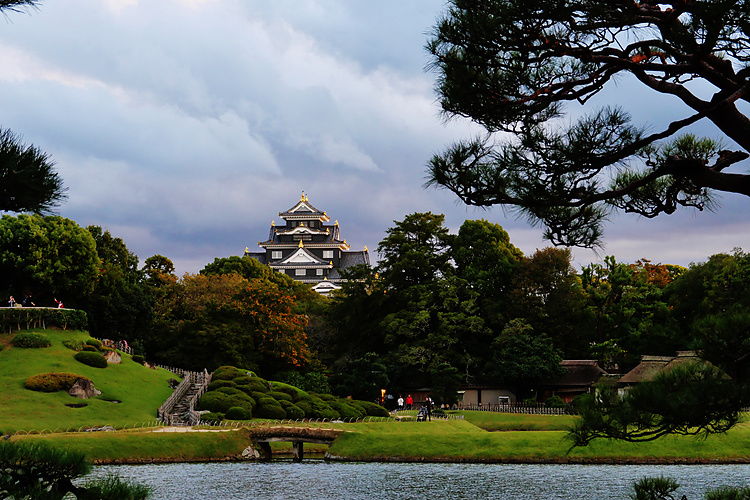 Image: Zairon / Wikimedia Commons (CC BY 4.0, cropped, resized, and sharpened)Okayama Korakuen Garden is one of the Three Great Gardens of Japan, alongside Kenrokuen Garden in Kanazawa and Kairakuen Garden in Mito. It was created at the behest of Ikeda Tsunamasa, the 2 lord of the Okayama Domain, and features expansive lawns, ponds, artificial hills, and teahouses. Another major attraction is the view of Okayama Castle’s keep across the Asahi River.
Construction of the garden began in 1687 under the overall direction of Nagatada Tsuda, a senior retainer of the domain. Even after it was essentially completed in 1700, features such as Mount Yūshin and waterways continued to be added according to the tastes of successive feudal lords. The garden did not take its present form from the outset; its landscape was shaped over time as the lords spent time there and occasionally opened it to local residents.
Kyokusui and the Enyōtei Pavilion

The meandering stream beside the garden paths stretches for about 640 m, linking lawns, ponds, waterfalls, and tea houses. Walking along the waterway, the view shifts from open lawns to wooded areas and then to Okayama Castle beyond the pond, giving you a clear sense of how the strolling garden is arranged.
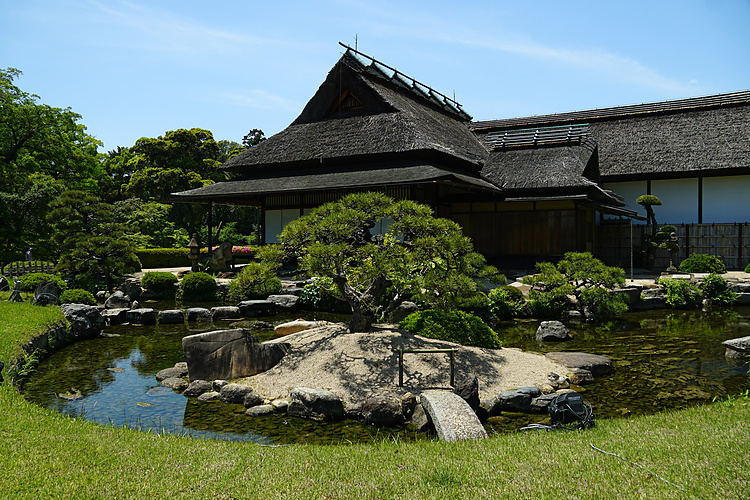 Image: 663highland / Wikimedia Commons (CC BY-SA 4.0, resized and sharpened)En’yōtei was used as the living quarters of successive feudal lords and is the central building of Korakuen Garden, offering views across the garden and toward Okayama Castle. Historic buildings such as a nō stage can also be found nearby.
Yūshinzān and Sawa-no-ike Pond
The man-made Yuishinzan hill overlooks the entire garden, adding dimension to what was once a flat landscape. Sawa Pond stretches across the center of the garden, where you can enjoy views of the islands and surrounding trees reflected on the water.
Mount Yūishin is an artificial hill about 6 m high, built during the time of Tsugumasa, son of Ikeda Tsunamasa. From the summit, you can look out over Enyōtei, the lawns, Sawa-no-ike Pond, and Ida, making the difference from the ground-level view easy to appreciate. Also worth seeing are Yūshindō on the hillside and the tsutsuji and satsuki azaleas planted along the stone arrangements.
Seasonal Flowers

These are Cornelian cherry blossoms. Different flowers and autumn foliage adorn the garden depending on when you visit, including plum blossoms, cherry blossoms, azaleas, and lotus flowers. Red and white plum blossoms bloom in the plum grove, followed by the cherry grove in spring, the azaleas on Yuishinzan Hill in early summer, and the lotus flowers in the Kayo-no-ike Pond in summer. In autumn, the maples in Chishio-no-mori Grove turn vibrant colors, offering distinct seasonal views against a backdrop of lawns and waterscapes.
Basic Information about Okayama Korakuen Garden
The information below was checked against official sources on September 19, 2026. Please also check the latest information on the official website when planning your trip.
- 🔗 Official website
- You can check the opening hours, closure days, admission fees, combination tickets, and changes to visiting hours due to events.
 入園案内|後楽園※オンラインチケットの購入はできません。okayama-korakuen.jp
- 📍 Address
- Korakuen, Kita Ward, Okayama City, Okayama Prefecture1-5
- 🕒 Opening hours
-
- 3 20–9 30 7:30–18:00 (last admission 17:45)
- 10 1–3 19 8:00–17:00 (last admission 16:45)
⚠️ Opening and closing times may change due to events.
- 🚫 Closure days
- Open year-round⚠️ The interior of Enyōtei is normally not open to the public. When special openings or nō performances take place, check the event information to see which areas are accessible.
- 💶 Admission fees
-
- Adults (15–64 years old, excluding high school students) 500 yen
- Age 65 and over 200 yen
- High school students and younger free (through 2027 3 31)
⚠️ Group rates are available for groups of 20 or more, along with combination tickets with places such as Okayama Castle and various exemption programs. Online tickets are not sold.
- ⏱️ Recommended time
- Around 60–90 minutes is a good estimate for walking around the garden’s main scenic areas. The time varies depending on whether you visit the main scenery or also stop at tea houses and seasonal highlights. If visiting together with Okayama Castle, allow additional time for travel and touring the castle. ⚠️ Allow extra time during events or if you plan to enjoy taking photographs.
Getting to Okayama Korakuen
Bus
From JR Okayama Station, take a local bus toward Korakuen and get off at Korakuen-mae; it is just a short walk from there.
Tram and on foot
Take the streetcar bound for Higashiyama from in front of JR Okayama Station, get off at Jōka, and walk for about 10 minutes. Walking from Okayama Station takes about 25 minutes.
For attractions, transport and suggested itineraries, see “Okayama: A guide to tourist attractions, food, transportation, and suggested itineraries”.