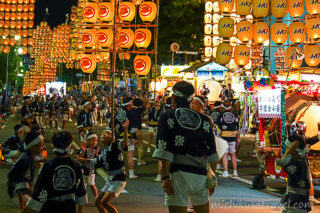
Highlights of Kubota Castle / Senshu Park
Senshū Park is a park developed on the site of Kubota Castle in Akita City, Akita Prefecture.
After the Battle of Sekigahara, Satake Yoshinobu was transferred to Akita, where he built a new castle in Kubota and established a castle town.
After the Meiji Restoration, the castle lost its function, and the ruins were developed into a park. Remains of the castle fortifications, including moats and earthen ramparts, can still be seen in the park.
Kubota Castle was selected as one of 100 Japan’s famous castles, while Senshu Park was selected as one of 100 Japan’s selected city parks.
Main Castle Gate
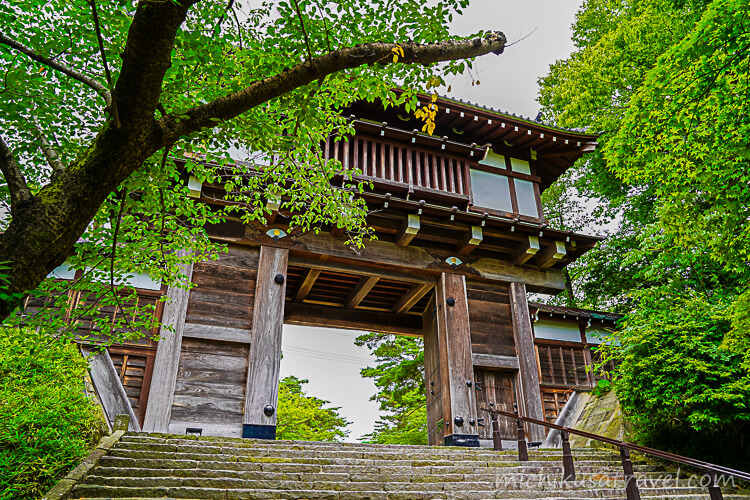 This is the main gate to the inner compound of Kubota Castle. In 2001 (13 in the Heisei era), it was rebuilt as a wooden tower gate with 2 stories and a tiled roof, based on documentary materials such as plans and the results of archaeological excavations.
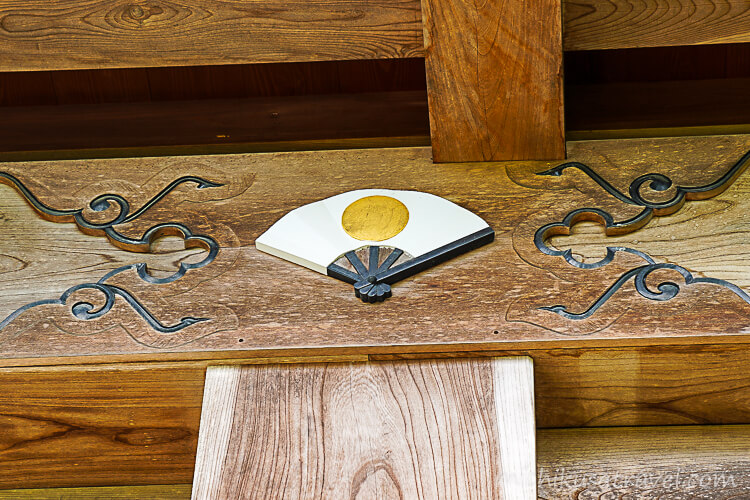
“Fan with a moon” is the Satake clan crest.
Kubota Castle
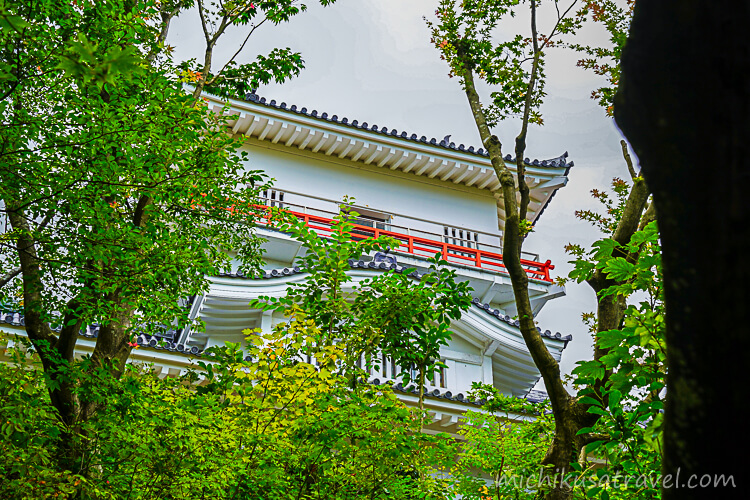
1989 (the first year of the Heisei era), it was reconstructed to commemorate 100 years since the establishment of Akita City. Built of reinforced concrete, it contains an observation room and a museum. From the observation room on the top floor, visitors can look out over the trees of Senshū Park and central Akita, making it possible to understand the differences in elevation across the castle ruins and their relationship to the city.
Kogetsu Pond
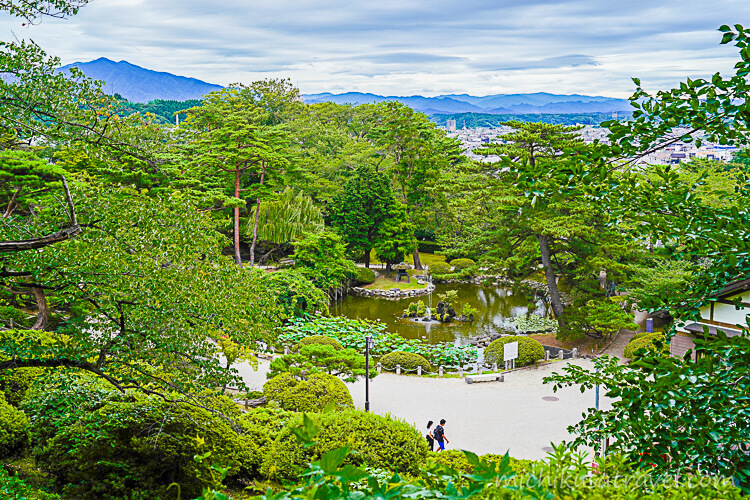
A fountain has been installed in Kogetsu Pond, delighting visitors to the park. Senshu Park was designed by the landscape architect Yasuhei Nagaoka, who was active from the Meiji to Taishō periods. Another of his representative works is Ōdōri Park in Sapporo.
Yahiko Shrine
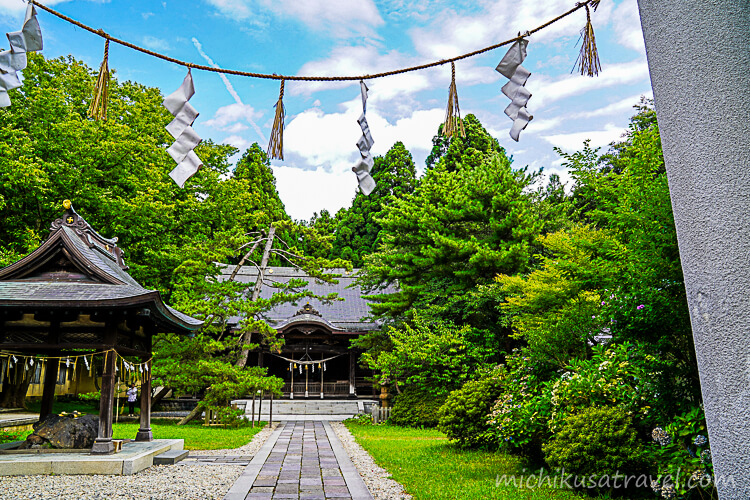 Iyataka Shrine is located in Senshu Park and was founded to enshrine Hirata Atsutane, a kokugaku scholar from the Kubota Domain. Hirata Atsutane advocated reverence for the emperor, an idea that greatly influenced the Sonnō jōi movement at the end of the Edo period.
Otemon Gate Moat
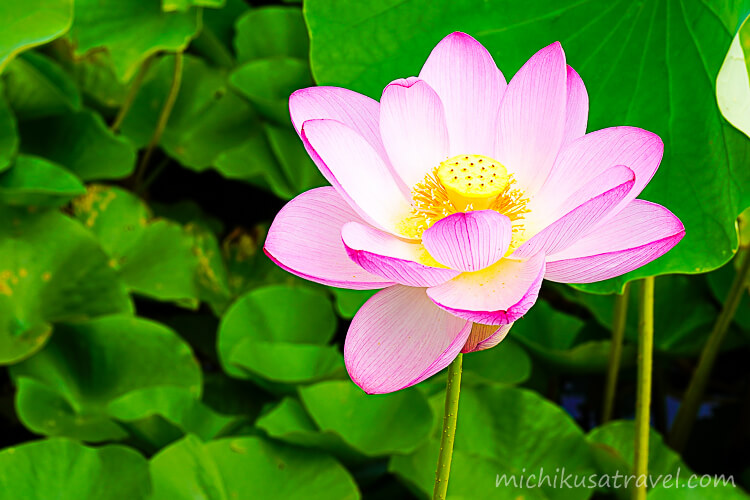
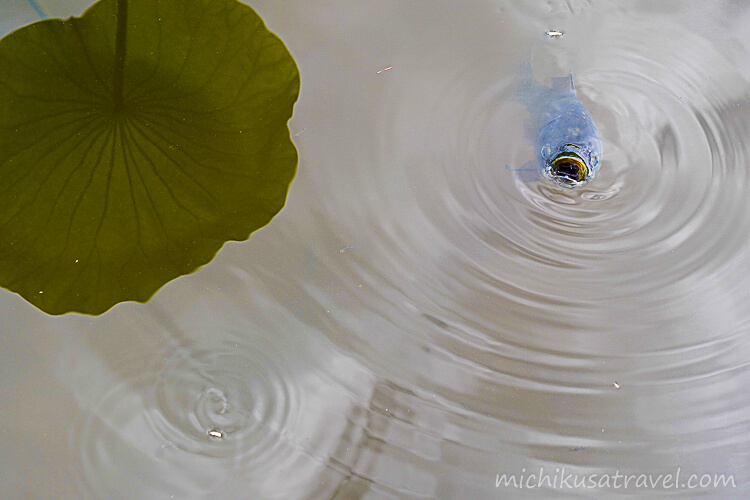
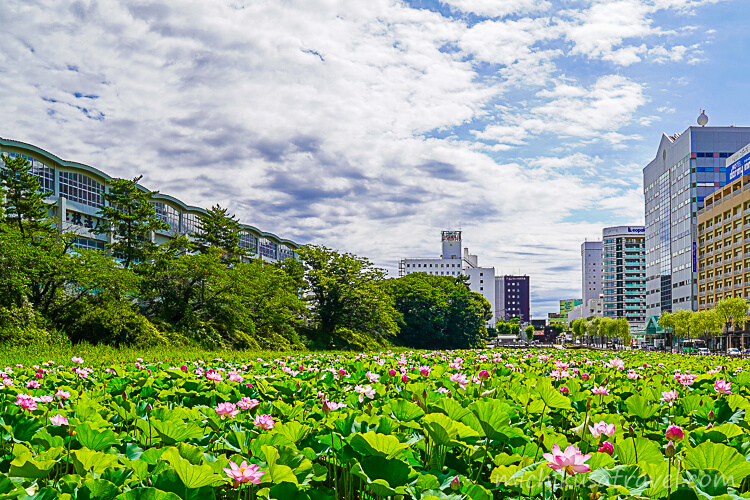 From late 7 to early 9, lotus flowers bloom across the entire moat of the Otemon Gate. The leaves and flowers covering the water offer a view of the remains of Kubota Castle together with the seasonal scenery. It is also easy to stop by the park when approaching from the Hirokoji side, and during the flowering season you can walk while looking out across the water.
Baba Hera Ice
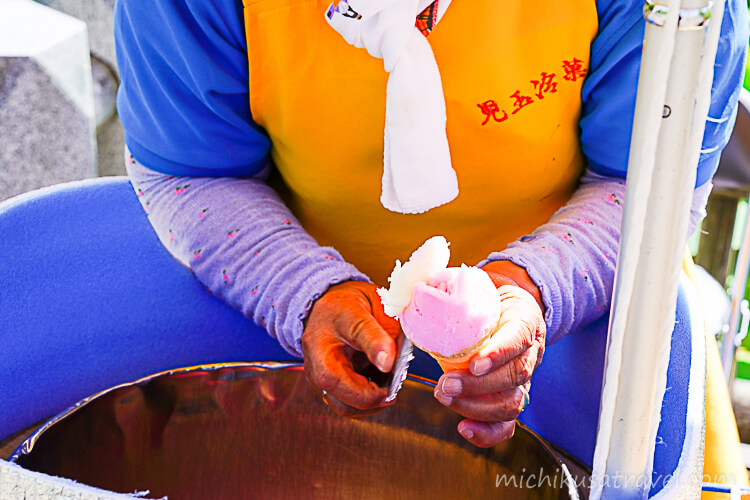
Because it is sold from street stalls, it is not necessarily available every time, but this is Akita’s specialty ice cream known as “Baba Hera Ice.” The name is said to come from the older women who sell it (“baba” in the local dialect) using a “hera” spatula to serve it.
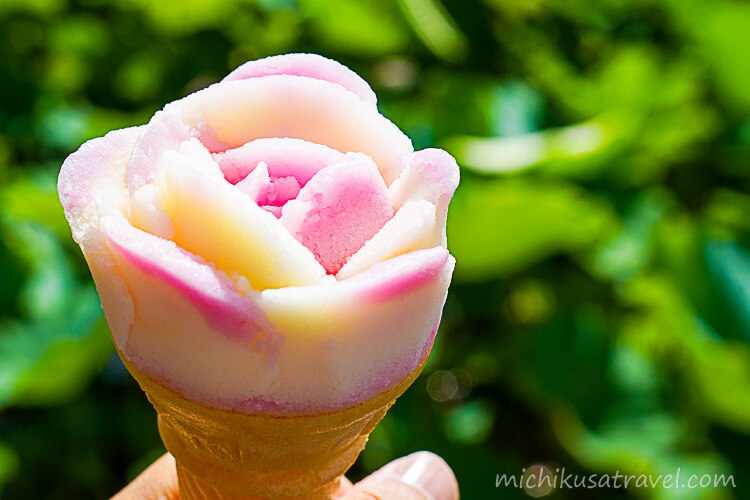
It is neatly trimmed into a shape resembling a rose. Its colors also resemble those of a lotus flower.
Basic Information on Kubota Castle and Senshu Park
The information below was checked against official sources on September 16, 2026. Please also check the latest information on the official website when planning your trip.
- 🔗 Official website
- Information about Senshū Park, including the visiting hours, admission fees, and closure days for the Kubota Castle Osumi Yagura tower in the park, is available on the official website of Akita City.
 千秋公園の概要秋田市公式サイトwww.city.akita.lg.jp
- 📍 Location
- Senshū Park: Senshū-kōen, Akita City, Akita Prefecture. Kubota Castle Osumi Yagura: Senshū-kōen, Akita City 1 39.
- 🕒 Park opening hours and Osumi Yagura visiting hours
-
- Senshū Park: The park area can be explored freely
- Osumi Yagura: 9:00–16:30
- Summer vacation for Akita City elementary and junior high schools: 9:00–19:00
- 🚫 Osumi Yagura closure days
- From 12 month 1 day to 3 month 31 day of the following year.
- 💶 Osumi Yagura admission fee
-
- Adults: 150 yen
- High school students and younger: Free
- Groups of 20 people or more: Adults 120 yen
Because usage conditions differ among the facilities in Senshū Park, please check them individually when visiting places other than Osumi Yagura as well.
- ⏱️ Time required
- Allow approximately 1–1 hours and 30 minutes to visit the main highlights, including the honmaru main gate, Osumi Yagura, Kozuki Pond, and the moat by the main gate. ⚠️ If you enter Osumi Yagura or walk slowly around the park during the flower season, it is best to allow about 2 hours.
Getting to Kubota Castle and Senshū Park
From the west exit of Akita Station, walk straight west along Hirokōji for about 11 minutes to reach the remains of the Nakadobashi Gate of Kubota Castle and Senshū Park. The Akita Museum of Art is on the opposite side of Hirokōji.
Local bus and car
To shorten the walking distance, get off at “Miruhasu-mae” on the central-city loop bus “Gururu” or at “Senshū-kōen-iriguchi” served by Akita Chūō Kōtsū; the Ninomaru ruins are about 5 minutes away on foot. Since the paid parking lot inside the park has limited capacity, consider nearby parking areas as well if you are driving.
Train operations and parking conditions may change, so please check them again before setting out.
The related guide “【秋田】観光スポット・グルメ・交通・モデルコースを解説” is currently available only in Japanese.