Highlights of Himeji Castle
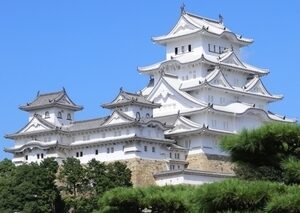
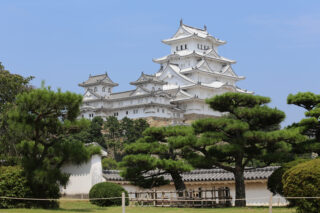
Himeji Castle, located in Himeji City, Hyogo Prefecture, is one of Japan’s most iconic castles. It is also known as the White Heron Castle.
The origin is said to be Himeyama Castle, built by Akamatsu Norimura on Mount Himeyama in the 14 century during the Nanboku-chō period. Later, after the Warring States period, Hashiba Hideyoshi, later known as Toyotomi Hideyoshi, built a three-story keep in 1580 during the Azuchi–Momoyama period and made it his base. It was then that he renamed it Himeji Castle.
In 1600, Tokugawa Ieyasu, victorious in the Battle of Sekigahara, granted Himeji Castle to his son-in-law, Ikeda Terumasa. Over the course of 8 years, Terumasa completed the castle complex centered on the five-tiered, six-story main keep that can be seen today.
Himeji Castle is one of the 12 surviving main keeps built before the Edo period. It is also one of the 5 castles whose main keep is designated a National Treasure.
In 1993, it was registered together with Horyu-ji Temple as one of Japan’s first UNESCO World Cultural Heritage sites.
Interconnected castle towers

This is a linked keep complex, a structure in which the main keep and 3 smaller keeps—the East Small Keep, West Small Keep, and Northwest Small Keep—are connected by roofed corridors. The 3 castles of Himeji, Matsuyama, and Wakayama are known as the Three Great Linked Keep Complexes of Japan, or the Three Great Linked Keep Complexes on Hilltop Plains in Japan.

Viewed from outside, the main keep appears to have 5 stories. Inside, it consists of 6 above-ground floors and 1 basement floor, a structure described as 5 tiers, 6 above-ground floors, and 1 basement floor.
Hishi Gate

This is the largest gate at Himeji Castle. It features elaborate details such as hanetō windows, combining strength with elegance. As the main entrance to the second bailey, the gate offers a simultaneous view of the castle’s defensive circulation route and its formal design.
Sanokuni-bori Moat

The moat in Ninomaru is said to have been named after the three provinces in Terumasa’s domain: Harima, Awaji, and Bizen.

On the ridge of the karahafu roof west of the Ninomaru gate turret stands a ridge-end tile bearing a cross crest. It is also called a “Christian tile” and is sometimes discussed in connection with Christian beliefs, but the historical facts are unclear.
Oil Wall

This earthen wall was built using a technique known as hanchiku. It is the only structure of its kind at Himeji Castle, located between the Hono and Mizu-no-Ichimon gates.

The technique of removing knots and damaged sections of wood and filling them with another piece of wood is called wood patching. The beams on the 6 floor of Himeji Castle’s main keep feature an elegant star-shaped wood patch. You can also see wood patches in various shapes, including gourd shapes.

The view through the loopholes is the very picture of peace.


Himeji Castle: Essential Information
The information below was checked against official sources on September 21, 2026. Please also check the latest information on the official website when planning your trip.
- 🔗 Official website
- Information about Himeji Castle’s opening hours, admission fees, digital tickets, and touring the castle is available on the official Himeji Castle website.
 姫路城ご利用案内 | 姫路城公式サイト姫路城の入城料金や開城時間、アクセスや駐車場のご案内です。www.city.himeji.lg.jp
- 📍 Address
- Honmachi 68, Himeji, Hyogo Prefecture
- 🕒 Opening hours
- Regular hours: 9:00–17:00 (last admission at 16:00). ⚠️ Hours may vary by season. The Main Keep, Nishi-no-Maru, Hyakken Corridor, and other areas begin closing in sequence from 16:30.
- 🚫 Closed
- 12 29 and 30: The castle is closed.
- 💶 Admission fee
- General admission for visitors aged 18 and over is 2,500 yen. Details on ticket categories, prices, and purchasing methods are provided in the following “Himeji Castle Tickets” section.
- ⏱️ Suggested visit duration
- Allow approximately 1 hours 30 minutes to 2 hours to visit the Main Keep, Nishi-no-Maru, and Hyakken Corridor. ⚠️ There are steep stairs inside the castle, and during busy periods you may have to wait at the entrance to the Main Keep. Windows and other parts of the buildings are closed in sequence from 16:30, so enter well before the last admission time.
Himeji Castle Tickets
- 💶 Admission
-
- General admission (ages 18 and over):2,500 yen
- Under 18:Free
- Himeji residents (ages 18 and over):1,000 yen
- Himeji Castle and Koko-en Garden combination ticket:2,600 yen
Visitors under 18 entering free of charge must present an official document, student ID, or other proof of age.
- 🎫 Digital tickets
- The Shirasagi Ticket can be purchased in advance for a specified date and time. It is designed to make admission smoother on the day of your visit but does not guarantee priority entry during busy periods.⚠️ Admission to the Main Keep is limited to 1,000 people per 1-hour period. During busy periods, you may need to wait at the entrance to the Main Keep.
Access to Himeji Castle
From Himeji Station, walk straight north along Otemae-dori for about 20 minutes to Sakuramonbashi Bridge at Himeji Castle.
Local bus and car
To shorten the walk, take the Shinki Bus from the north exit of Himeji Station to the Ōtemon-mae stop, then walk about 5 minutes to the castle entrance. If you come by car, use the paid parking lots in the surrounding area. If you arrive by bicycle, use the bicycle parking areas south of the Himeji City Museum of Art or on the east side of the path at San-no-maru Square.
The related guide “【姫路】観光スポット・グルメ・交通・モデルコースを解説” is currently available only in Japanese.
