Highlights of Edinburgh Castle
Edinburgh Castle is a castle in Edinburgh, the capital of Scotland, and is a landmark of Edinburgh and Scotland.
It stands atop a steep cliff known as Castle Rock. The fortress's history dates back to around 600 BC. From around the 12th century, it served as the residence of the Scottish kings.

From the 13th to the 14th century, Edinburgh Castle was controlled by the English army. Following the historic victory at Stirling, where William Wallace and Robert the Bruce played prominent roles, the Scottish army recaptured Edinburgh Castle.
The Stuart dynasty was founded by Robert 2, son of Robert the Bruce (Robert 1). In 1566, James 6, King of Scotland (James 1, King of England), who would become king of both countries, was born at Edinburgh Castle.
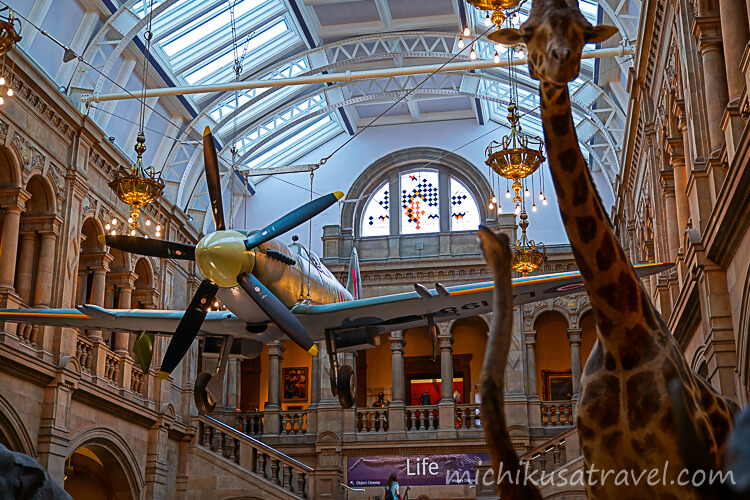
Edinburgh Castle is Scotland's 2nd most visited attraction, after Glasgow's Kelvingrove Art Gallery and Museum. If only paid attractions are considered, it isScotland's most visited attraction and the 2nd most visited attraction in the United Kingdom.
For information about the exhibits and visiting Kelvingrove Art Gallery and Museum, please see the article below.
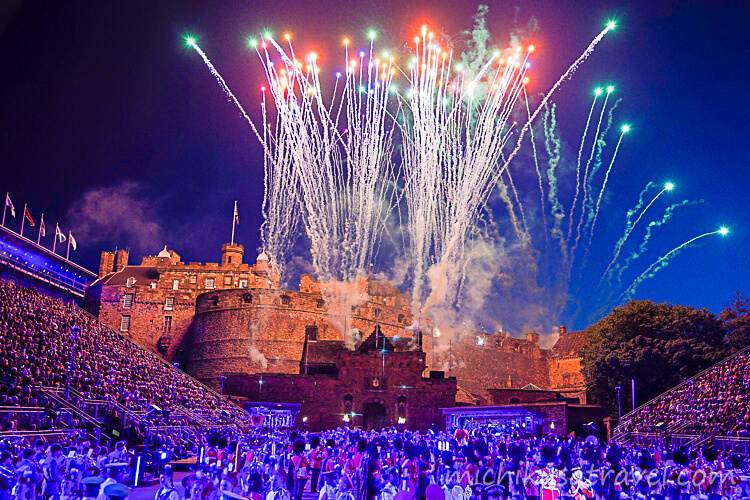
The Esplanade at Edinburgh Castle is the venue for the international marching festivalMilitary Tattoo.
For details about the Military Tattoo programme and tickets, please see the article below.
Gatehouse

The Gatehouse was added in the 19th century for decorative purposes. The 2 bronze statues depict the heroes of the Scottish Wars of Independence, William Wallace and Robert the Bruce.

This is the portcullis gate. Unlike the Gatehouse, its purpose was to prevent enemies from entering. A ticket checkpoint is still located here today.

Royal Palace

Queen Mary's Room

This was Mary, Queen of Scots’ room and the room where James 6, King of Scotland (James 1, King of England), was born.
James VI was born on June 19, 1566. “IVNII” is the same as the Latin “iunii” and means June. In other words, “19:IVNII” means June 19. Another wall also bears the inscription “1566”.
The “MR” on the ceiling is an abbreviation of “Maria Regina” and refers to Mary, Queen of Scots. “IR” is an abbreviation of “Jacobus Rex” and refers to James VI. In Latin, “J” is written as “I”.

This is a bust of Mary Stuart, Queen of Scots (Mary Stuart). The room’s entire wall explains the unbroken royal lineage (Royal Line) that continues from her.

James 6, King of Scotland and son of Mary, Queen of Scots, ascends the English throne as James 1 at the behest of Elizabeth 1, Queen of England, who died unmarried.personal union of Scotland and EnglandThis is how it comes into being. The unicorn represents the Scottish royal house, and the lion represents the English royal house.
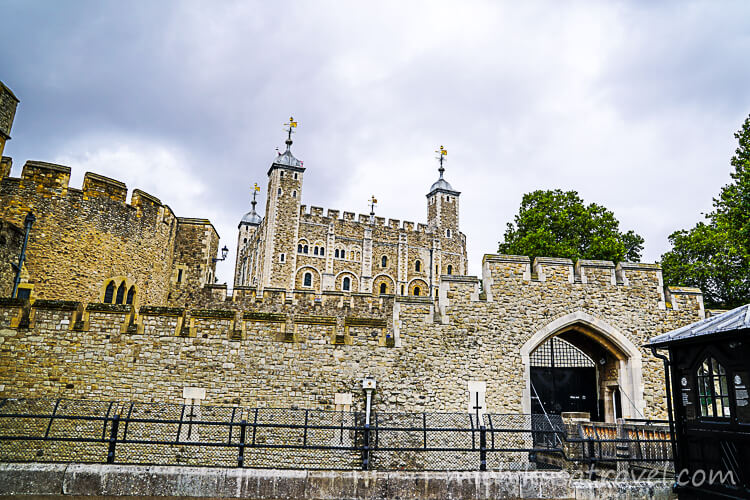
Incidentally, Elizabeth 1 was the daughter of Henry 8, known as a tyrant, and his 2nd wife, Anne Boleyn. Anne Boleyn was executed by Henry 8 at the Tower of London when Elizabeth 1 was 2 years old. Even today, Anne Boleyn's ghost is said to appear at the Tower of London.
The history of the Tower of London and visitor information are introduced in detail in the article below.
Great Hall

The Great Hall was built in 1511 for James IV. The Hammerbeam roof survives in its original medieval form and is exceptionally valuable.
Stirling Castle also has a hall of the same name, built for him during the same period.
The architecture and visitor information for Stirling Castle are covered in detail in the article below.

National War Museum of Scotland

The Scottish National War Memorial commemorates Scottish soldiers who lost their lives in the two World Wars and more recent conflicts.

The site of the medieval St. Mary's Church.
PRISONS OF WAR

After Edinburgh Castle took on an increasingly military character rather than serving as a royal residence, its vaults were used in the 18th and 19th centuries to hold prisoners of war, including those from the Seven Years’ War and the American Revolutionary War. The stone-built prison quarters reveal the castle’s military history beyond the royal palace.

St Margaret’s Chapel

St. Margaret's Chapel is the oldest building in Edinburgh Castle. Although the historical facts are unclear, it is said to have been built by the 11th-century Scottish queen Margaret or her sixth son, David 1, king of Scotland.
One O’Clock Gun
 As its name suggests, the One O'Clock Gun fires a blank every day at 1 p.m., except on Sundays and in some exceptional cases. It began operating in 1861 as a time signal for ships sailing on the Firth of Forth.

You can look out over Edinburgh city, the Firth of Forth and Fife on the opposite shore.
Basic information about Edinburgh Castle
The information below was checked against official sources on October 11, 2026. Please also check the latest information on the official website when planning your trip.
- 🔗 Official website
- You can check information about the castle, visiting and tickets here.
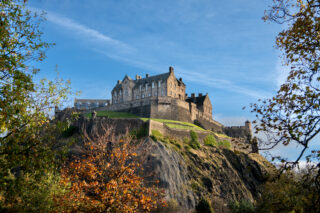 Edinburgh CastleDiscover a world-famous icon. Perched on a volcanic plug, Edinburgh Castle has dominated the skyline of Scotland’s ...www.historicenvironment.scot
- 📍 Location
- Castlehill, Edinburgh Castle, Edinburgh, EH1 2NG
- 🕒 Opening hours
-
- 1 April–30 September daily 9:30–18:00
- 1 October–31 March daily 9:30–17:00. Except for the special dates listed below.
- 24 December 9:30~16:00
- 1 January opens from 11:00
- Last admission 1 hour before closing
- 🚫 Closed days
- 25 and 26 December
- 💶 Admission
- Online admission for adults costs £23.50. Prices by ticket type and purchase methods are explained in detail in the following section, “Edinburgh Castle tickets”.
- ⏱️ Recommended time
- Allow about 2–3 hours to visit the Royal Palace, Crown Jewels, major museums and the views from the castle walls.⚠️ As there are cobblestones, steep slopes and stairs, it is reassuring to allow plenty of time for getting around.
Edinburgh Castle tickets
You can choose from standard timed-entry tickets, flexi tickets allowing 1 admission within a 7-day validity period, tickets combining an officially guided walking tour with admission, and more.
A standard admission ticket costs £23.50 online and £26 on site for adults (16–64 years), £19 online and £21 on site for people aged 65 and over, and £11.50 online and £13 on site for children aged 7–15.
- 🎫 Purchase and reservations
- Buying dated and timed admission tickets online in advance secures entry at the lowest price. Tickets can sell out, especially in summer, and if they sell out online, there will be none available for purchase on site either.
- 🎟️ Main ticket types
-
- Standard admission ticket Purchase it by specifying your visit date and time.
- Flexible ticket It allows 1 admission on any day and during any time slot within the 7-day validity period.
- Ticket with an official guided tour It combines admission with a walking tour led by an official guide.
- Other ticket types There are ticket types for Historic Scotland members, Explorer Pass holders, Scottish Young Person Card holders, and members of partner organizations.
- ♿ Carers
- A carer accompanying a visitor with a disability can enter free of charge, up to a maximum of 2 carers per purchase. No proof of disability is required. The applicable standard admission fee applies to the visitor.
Getting to Edinburgh Castle
Edinburgh Castle is in the city centre.Edinburgh Waverley StationWalking west from Edinburgh Waverley Station to Edinburgh Castle takes about 15 minutes.
The official guidance recommends getting off the bus at The Mound or George IV Bridge. The castle is 0.4 miles from Waverley Station. There is no public parking at the castle; the nearest option is Castle Terrace NCP. As the route includes cobblestones and slopes, comfortable walking shoes are recommended.
A side trip from Edinburgh Castle

Royal Mail is a British postal services company that was privatized in 2013. The vehicle is a 2nd-generation Peugeot Partner, but its lion emblem seems almost to represent the English royal family.

For attractions, transport and suggested itineraries, see “Edinburgh: A Guide to Attractions, Food, Transport and Suggested Itineraries”.