Highlights of the Nice Carnival
Along with the carnivals of Venice and Viareggio, it is one of thethree largest carnivals in Europe.
Carnival is the period of several days or weeks before Lent, the fasting season in the Catholic Church, which people seek to spend with celebrations as grand as possible.
The history of the Venice Carnival and the highlights of the festival are introduced in the article below.
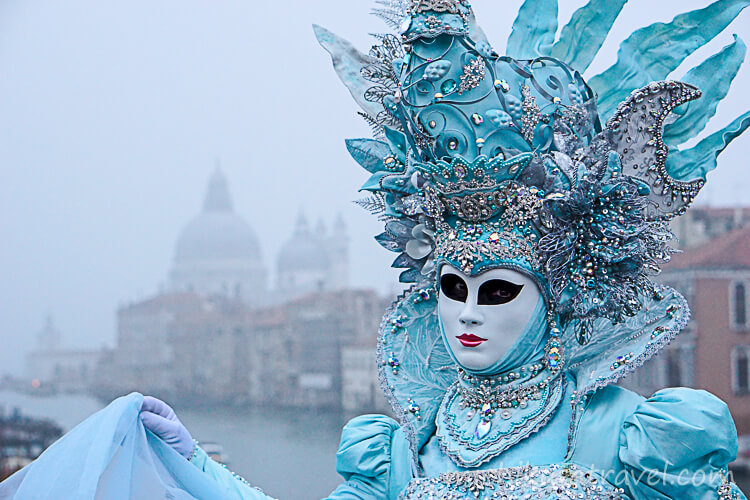
The earliest surviving written record of the Nice Carnival is said to describe its being watched in 1294 by King Charles 2 of Naples (Charles of Anjou 2). Charles 2 belonged to the House of Anjou-Sicily, a branch of France’s distinguished Capetian dynasty, and his son Charles Martel and grandson Károly 1 went on to establish the Hungarian Angevin dynasty in Hungary.
In 1873, the festival’s organizing committee was formed, and the carnival held that year is officially regarded as the 1st edition. Despite two interruptions caused by the world wars, it has continued to the present day.
Types of Parades
Nice Carnival can be broadly divided into a “day parade” and a “night parade.”
The “daytime parades” are further divided into 2 types: “Flower Parade” and “Carnival Parade.” All “night parades” are “Carnival Parade.”

“Flower Parade” is also translated as “parade of flowers.” Based on the French "Bataille de Fleurs", it is also called the “Battle of Flowers” or the “Battle of Flowers Parade.”
The main difference between the daytime and nighttime Carnival Parades is whether they are illuminated. (The composition of the parades may not be exactly the same either.)
In English, the nighttime Carnival Parade is distinguished as "Carnival Parade of Lights". It is also sometimes translated as “Parade of Lights” or “Illumination Parade”.
While the “Flower Parade” portrays a simply happy and peaceful, utopian world, the “Carnival Parade” also includes critical messages and political gestures reflecting contemporary society.The “Carnival Parade” is, in a sense, a three-dimensional satirical cartoon.

These are the preparations before the parade begins. Literally, is it really okay to show this kind of behind-the-scenes view?

The giant snake is eyeing the apple. Or perhaps the queen.

It really has the look of a low-level side character.

Come on, you lot, do your best!

Once I count to 3, the parade will begin!
3
2
1


A float carrying the Carnival Queen has just entered. The Carnival Queen is chosen every year through an online vote.

The types of flowers and decorations also vary from float to float.

What all the carnival queens hold in their hands is mimosa, a flower that represents southern France at this time of year.

How about an apple to enjoy while watching the parade?

Alongside the floats, the performers also liven up the parade.

The spectators look so happy.

Place Masséna reaches its most spectacular moment 1 time each year.

I’m not quite sure I understand the concept, but there are also giant monster-shaped balloons.

When people talk about carnival in South America, they mean samba. But here we are in southern France.


 It is a shame that photographs cannot convey this lively dance with its hip-shaking movements.

I feel like I’ve seen this face somewhere before. Or am I imagining it?

As the parade draws to a close, the crews deftly remove the flowers from the floats. They make bouquets and hand them out to the spectators. Because this depicts people fighting over the bouquets, it came to be called the “Battle of Flowers.”

A lady receiving a bouquet. Mimosa and lilies.

There are also theme-park-style performances.

Even while the floats are being dismantled, the procession never stops.

A madame with a Cubist face catches the eye, but when you look behind her, you can see that many people are receiving bouquets of flowers.
 Perhaps a traffic sign saying “Beware of giant snakes crossing” is needed instead of “Beware of trams crossing”.
Basic Information about Nice Carnival
The information below was checked against official sources on October 11, 2026. Please also check the latest information on the official website when planning your trip.
- 🔗 Official website
- You can check the latest information on dates, performances, the venue map, and tickets.
 Carnaval de Nice - Site officielSite officiel du Carnaval de Nice. Toutes les informations pratiques pour votre séjour, programme et tarifs des Cor...www.nicecarnaval.com
- 📍 Venue and location
- The main venue is in central Nice. Zone A is around Place Masséna, while Zone B extends from Avenue de Verdun to the Promenade des Anglais. Check the entrance for each performance on the official venue map and your ticket.
- 📅 Event period
- The official website lists February 11 to March 1 as the 2026 event period. Check the official website after the announcement for the next event dates, theme, and times of each parade.
- 💶 Admission
- Prices vary by performance, viewing area, and seat. Visitors in full costume may enter the pedestrian area of the Illuminated Parade free of charge when space is available. The Flower Battle requires paid admission even for visitors in full costume.
- 🎫 Tickets
- On the official website, choose the performance date and time, Zone A or Zone B, and either a seat or the pedestrian area. Tickets are for a specific date and time and also list the entrance, so check the performance and area before purchasing.
- ⏱ Duration
- Allow about 2–3 hours to watch the parade, including entry and exit.⚠️ Total time varies depending on the type of performance, security checks, and congestion when leaving.
How to Get to the Nice Carnival
Nice Carnival takes place across a wide area in central Nice. The parade viewing area is divided into Zone A around Place Masséna and Zone B, which extends along Rue de Verdun, the Promenade des Anglais, and toward Jardin Albert 1er. Each seated or standing section has a different entrance, so enter the venue through the entrance with the number shown on your ticket.
The related guide “【ニース】観光スポット・グルメ・交通・モデルコースを解説” is currently available only in Japanese.
