Highlights of Aquamarine Fukushima

Aquamarine Fukushima, one of the largest aquariums in the Tohoku region, is officially called the Fukushima Marine Science Museum. Its theme is the “meeting of ocean currents,” where the warm Kuroshio Current and cold Oyashio Current meet off the coast of Fukushima Prefecture. In the naturally lit building, visitors can trace environments ranging from Fukushima’s seas and rivers to tropical Asia.

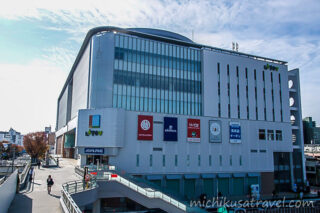
The futuristic building, with its extensive use of glass, makes a strong impression.

Niigata City Aquarium Marinepia Nihonkai has a friendship-aquarium partnership with Aquamarine Fukushima. When Aquamarine Fukushima was affected by the Great East Japan Earthquake, Marinepia Nihonkai took in the surviving animals and also became a base for sharing updates on the recovery.
For information on attractions, food and transportation in Niigata, see the article below.

The Sea and the Evolution of Life

The “Sea and the Evolution of Life” exhibition introduces fossils of prehistoric organisms and “living fossils” that retain ancient features in their appearance. The facility has long conducted research on coelacanths, and specimens of coelacanths from Africa and Indonesia, representing 2 species, are also a highlight.
Animals in the facility
The site operator visited before the earthquake, and the animals on display have changed significantly. Please check the official website for the latest information on the animals currently on display.

This is a Polypterus endlicheri. It lives in tropical Africa and is a fish that can also be caught in Animal Crossing: New Horizons.

This is a takeginpo. It is widely distributed from Hokkaido to Kyushu.

The spotted gar. It lives in the Americas, and because of its high reproductive capacity, there is a risk that it could become established in the wild as an invasive species.

A loggerhead sea turtle was swimming leisurely through a school of sardines.

It is a school of squid.

It is a Yagishiri sculpin. It almost looks as though countless hands are supporting its body.
Sea Mammals and Seabirds of the Northern Sea
This area introduces the ecosystems of the Bering Sea and the Sea of Okhotsk, the source regions of the Oyashio Current. In addition to harbor seals and Steller sea lions, you can observe tufted puffins and common murres catching food underwater.

Pacific walruses were also kept here when I visited, and seeing their powerful forms up close was impressive.


This individual was moved to Ocean Park Hong Kong in 2012 for breeding purposes.
The Jabujabu Meguri Sea and Hands-on Experiences
The outdoor “Jabujabu Meguri no Umi” area covers approximately 4,500 square meters and recreates a rocky shore, tidal flats, and a beach. You can enter the water and observe starfish, sea cucumbers, and other creatures up close.
At the children’s experience center “Aqua Marine Egg,” visitors can also try fishing and have the fish they catch deep-fried karaage-style on the spot to eat.
Basic information about Aquamarine Fukushima
The information below was checked against official sources on September 19, 2026. Please also check the latest information on the official website when planning your trip.
- 🔗 Official Website
- Opening hours, admission fees, and visitor information are available on Aquamarine Fukushima's official website.
入館料・開館案内|アクアマリンふくしま福島県いわき市の環境水族館「アクアマリンふくしま」の入館料、開館時間についてのご案内です。www.aquamarine.or.jp
- 📍 Address
- 971-8101 Tatsumicho, Onahama, Iwaki, Fukushima 50
- 🕒 Opening Hours
-
- Regular season (3/21–11/30) 9:00–17:30 (last admission 16:30)
- Winter season (12/1–3/20) 9:00–17:00 (last admission 16:00)
⚠️ Extended hours may apply during major holiday periods and on event days.
- 🕒 Experiences and Programs
-
- Northern Marine Mammal and Seabird Feeding Time 10:30, 15:30
- Jabujabu and Meguri-no-Umi The water-entry period in 2026 is from 4/29 to 11/3. Bring a towel, a change of clothes, and flip-flops.
- Fishing Experience Same-day reservations are required. Reception hours may be shortened or the activity may be canceled depending on fish availability, congestion, severe weather, and other conditions.
⚠️ The animals on display and program details are subject to change.
- 🚫 Closed Days
- Open year-round⚠️ Some exhibits, outdoor areas, or experience programs may be unavailable due to weather, inspections, construction, or other circumstances.
- 💶 Admission Fees
-
- Adults 1,850 yen
- Elementary through high school students 900 yen
- Preschool children Free
- Groups of 20 or more Adults 1,550 yen; elementary through high school students 750 yen
⚠️ High school students must present a student ID. Some experiences, including fishing, require an additional fee.
- 🎫 Tickets
-
- Same-day tickets Purchase at the admission counter
- Online tickets Follow the link in the official information to the ticketing website to purchase
- Convenience-store advance tickets Valid for 1 year from the date of purchase
- Advance tickets sold at the counter No expiration date
⚠️ Convenience-store advance tickets cannot be canceled or refunded after purchase.
- ⏱️ Suggested Visit Duration
-
- For viewing mainly the exhibits Approximately 1 hour 30 minutes to 3 hours
- If also participating in the experience areas Approximately 2 hours to half a day
⚠️ The duration varies depending on congestion and participation in feeding times, outdoor areas, the fishing experience, and other activities.

Getting to Aquamarine Fukushima
Railways and local buses
From Izumi Station on the Jōban Line, it takes about 15 minutes by local bus toward Onahama and Ena to Aeon Mall Iwaki Onahama, followed by about 5 minutes on foot. Buses that do not stop at the same stop require you to get off at Shisho-iriguchi and walk for about 10 minutes. From Iwaki Station, it takes more than 1 hours to reach the nearest stop, so the official guidance recommends using Izumi Station.
By car
It is approximately 20 minutes from the Iwaki-Yumoto Interchange on the Jōban Expressway and approximately 30 minutes from the Iwaki-Nakoso Interchange. If you travel via the Onahama Road from the Iwaki-Onahama Interchange, it is approximately 10 minutes from the Iwaki-Izumi Interchange. Free parking for approximately 1,600 vehicles is shared with the surrounding commercial facilities, but it may be crowded during extended holiday periods and in summer.
Travel routes, parking, and the latest local bus information are available on the official access page.

The related guide “【いわき】観光スポット・グルメ・交通・モデルコースを解説” is currently available only in Japanese.