Highlights of the Former Kaneko Family Residence
The History of the Main House and Merchant Family
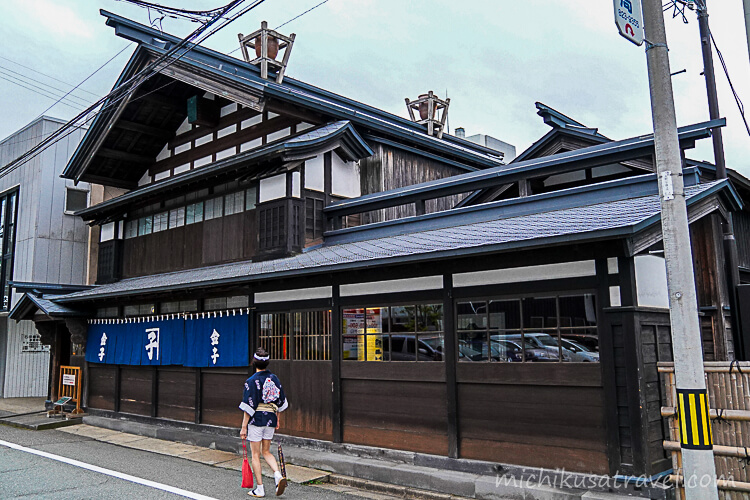
This is the former home of the Kaneko family, who ran a pawnshop and dealt in used clothing during the late Edo period before becoming wholesalers of kimono fabrics and other textiles in the early Meiji period. Visitors can explore the building that once served as their merchant house.
The Kaneko family continued doing business in this building until Shōwa 57. The main building contains a recreation of the storefront from the early Shōwa period, when the shop sold futomono, a term for cotton and hemp textiles. It shows how a merchant household displayed its wares and welcomed customers. At the rear is a Japanese-style room added in Meiji 33. The building thus preserves the layout of a machiya townhouse, with commercial and residential spaces under one roof.
The property consists of 1 main house and 1 earthen storehouse, preserving the traditional machiya architecture of the late Edo period. In Heisei 8, the Kaneko family donated it to the City of Akita, and the following year it was designated a Tangible Cultural Property of the city.
Black-Plastered Storehouse
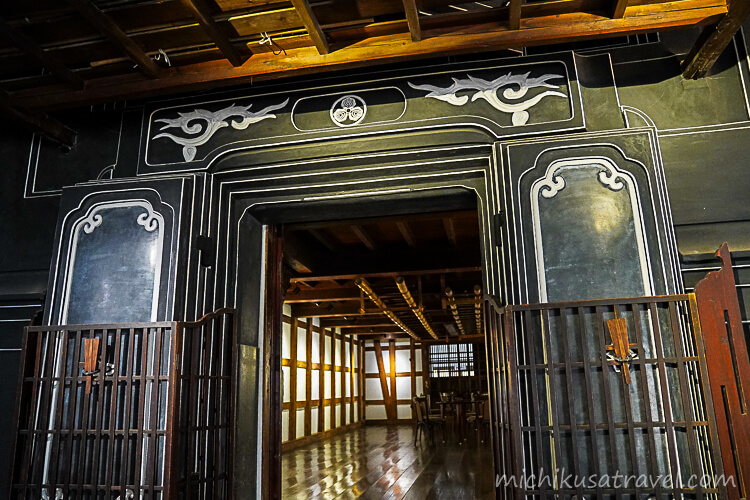
The storehouse is finished in black plaster and decorated with kote-e plaster reliefs depicting the Kaneko family crest and arabesque patterns.
Visitors can also explore the interior of the earthen-walled storehouse built near the end of the Edo period. Moving from the storefront in the main building toward the rear reveals how the merchant household’s work and living spaces connected to the storehouse where goods were kept. White plaster reliefs stand out against the black walls, providing striking decoration for this practical storage building.
Essential Information on the Former Kaneko Family House
The information below was checked against official sources on November 5, 2026. Please also check the latest information on the official website when planning your trip.
- 🔗 Official Information
- The City of Akita's facility information page provides the address, entry instructions, transportation details, and parking information.
 旧金子家住宅秋田市公式サイトwww.city.akita.lg.jp
- 📍 Address
- 〒010-0921 Akita-ken, Akita-shi, Ōmachi Itchōme 3-31
- Entrance: Enter through the adjacent Folk Performing Arts Heritage Center.
- 🅿️ Parking
- The Folk Performing Arts Heritage Center's parking lot has spaces for 7 standard-sized cars. Advance reservations are not available.
- 🕒 Visiting Hours
-
- Regular hours: 9:30–16:30
- During the Kantō Festival (August 3–August 6): 9:30–19:00
⚠️ During regular hours, last admission is at 16:15.
- 🚫 Closed
- December 29–January 3.
- 💶 Admission
-
- Standard ticket, adults: 130 yen
- Standard ticket, groups of 20 or more: 100 yen per 1 person
- Combination ticket, adults: 370 yen
- Combination ticket, groups of 20 or more: 290 yen per 1 person
- High school students and younger: Free
The standard ticket covers admission to both the Folk Performing Arts Heritage Center and the Former Kaneko Family House.
- 🎫 Tickets
-
- Standard ticket: Provides admission to 2 facilities: the Folk Performing Arts Heritage Center and the Former Kaneko Family House.
- Combination ticket: Provides admission to the 2 facilities above plus the Akita City Red Brick Folk Museum.
- ⏱️ Suggested Visit Duration
- Allow approximately 40–60 minutes to visit the Folk Performing Arts Heritage Center and the Former Kaneko Family House together. ⚠️ The time required varies depending on whether you visit only the Former Kaneko Family House or view the exhibitions at both facilities in sequence.
Access to the Former Kaneko Family Residence
Akita Station is about a 15-minute walk from the Former Kaneko Family Residence. When walking from the station, head for the Folk Performing Arts Heritage Center in Omachi 1-chome and enter through the center's entrance.
Take an Akita Chuo Kotsu bus and get off at “Neburi Nagashikan-mae” or “Tori-machi”. It is about a 1-minute walk from either stop. After getting off, head to the Folk Performing Arts Heritage Center and proceed through the center to the Former Kaneko Family Residence.
The related guide “【秋田】観光スポット・グルメ・交通・モデルコースを解説” is currently available only in Japanese.