Highlights of Tōshōdai-ji Temple
Head Temple of the Ritsu School Founded by Great Master Ganjin

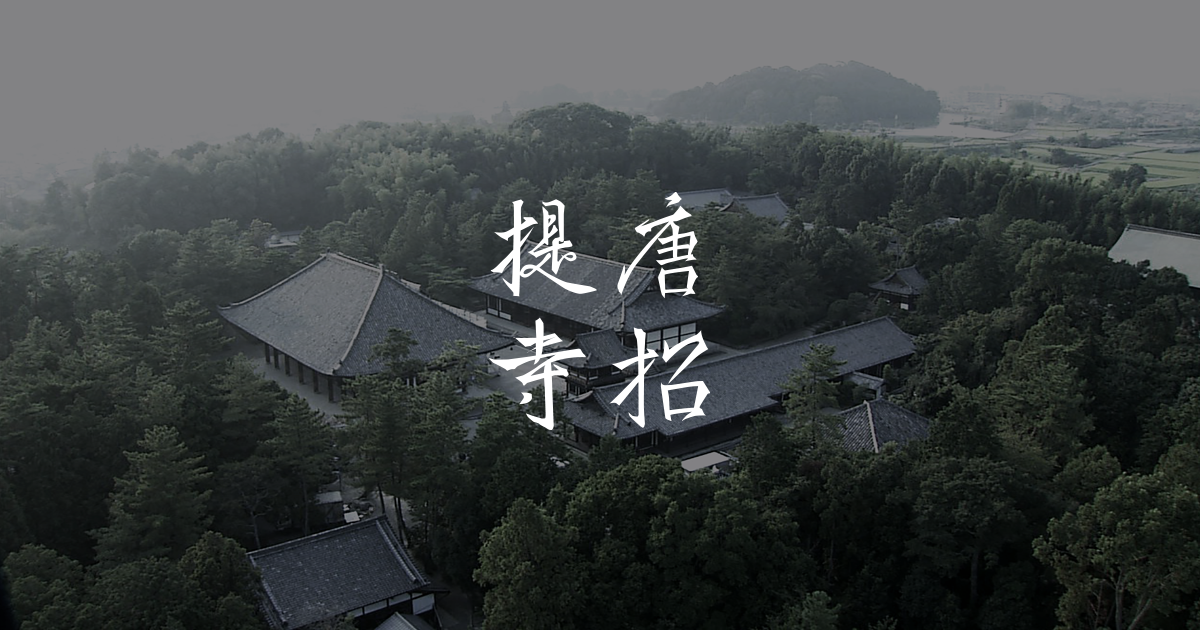
Tōshōdai-ji Temple was founded in 759 by the monk Ganjin and is the head temple of the Ritsu school of Buddhism. It is one of the 8 properties that make up the Historic Monuments of Ancient Nara, a UNESCO World Heritage Site.
Ganjin was a monk who traveled from Tang China to Japan after several failed attempts at making the voyage and introduced the Buddhist precepts. After spending 5 years at Todaiji Temple, he was given the former residence of Prince Niitabe, where he established a training center for people studying the precepts. Buildings from the Nara period still stand within the temple grounds today, preserving the atmosphere of the temple at the time of its founding.
The Golden Hall and its triad of Buddhist statues
The Kondō, designated a National Treasure, is the only surviving temple main hall built during the Nara period. It is said to have been built in the latter half of the 8th century, after the death of the monk Ganjin. A row of thick pillars across the front supports the expansive roof, giving the building an imposing appearance.
Inside the Main Hall, or Kondō, the principal object of worship—a seated statue of Rushana Buddha—is enshrined in the center, with a standing statue of Yakushi Nyorai to the viewer's right and a standing statue of the Thousand-Armed Kannon to the left. All three are designated National Treasures. The Rushana Buddha is about 3 meters tall, while the Thousand-Armed Kannon stands over 5 meters tall. One of the main highlights of Tōshōdaiji Temple's Kondō is the opportunity to admire Nara-period architecture alongside Buddhist statues with a long history.
Essential Information About Tōshōdai-ji
The information below was checked against official sources on November 6, 2026. Please also check the latest information on the official website when planning your trip.
- 🔗 Official website
- Visit the official website of Tōshōdai-ji, the head temple of the Risshū school, for information about the temple's history, buildings, visiting hours, and admission fees.
 唐招提寺南都六宗の一つである律宗の総本山唐招提寺は、多くの苦難の末、来日をはたされた鑑真大和上により、天平宝字3年(759)に戒律を学ぶ人たちのための修行の道場を開かれました。奈良時代建立の金堂、講堂が天平の息吹を伝える、貴重な伽藍となっ...www.toshodaiji.jp
- 📍 Address
- 〒630-8032 13-46 Gojō-chō, Nara, Nara Prefecture
- 🕒 Visiting hours
- 8:30–17:00 (last admission at 16:30)
- 💶 Admission
-
- Individuals: Adults and university students: 1,000 yen; high school students: 400 yen; junior high school students: 400 yen; elementary school students: 200 yen
- Groups (30 or more): Adults and university students: 800 yen; high school students: 320 yen; junior high school students: 320 yen; elementary school students: 160 yen
⚠️ Special exhibitions require an additional fee.
- ⏱️ Suggested visit length
- Allow approximately 45–60 minutes to tour the temple grounds, focusing on the Golden Hall. ⚠️ The time required varies depending on how much of the grounds you explore and how long you spend in each hall.
Getting to Tōshōdai-ji Temple
If traveling by train, get off at Kintetsu Nishinokyō Station and walk from there to Tōshōdaiji Temple, entering through the entrance to the temple grounds. If taking a Nara Kotsu bus, get off at “Tōshōdaiji” or “Tōshōdaiji Higashiguchi” and walk from the bus stop to the temple entrance.
By car, the temple is about 3 kilometers from the Hōrai Ramp on the Daini Hanna Toll Road and about 8 kilometers from the Kōriyama IC on the Nishi-Meihan Expressway. Paid parking is available for 150 passenger cars from 8:00 to 18:00. The fee is 550 yen for 60 minutes, followed by 110 yen for each additional 30 minutes.
The related guide “【奈良】観光スポット・グルメ・交通・モデルコースを解説” is currently available only in Japanese.
