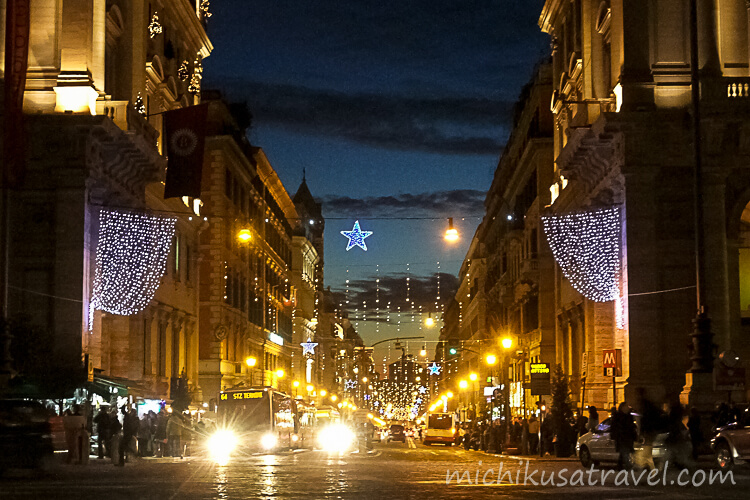
Highlights of the Pantheon
Architecture dating back to ancient Rome

The Pantheon was built as a temple dedicated to the gods of ancient Rome. The present building was reconstructed during the reign of Emperor Hadrian, but the first Pantheon was built by Marcus Vipsanius Agrippa. His name, Agrippa (AGRIPPA), also remains in the inscription on the façade. Agrippa was a close associate of Augustus, the first emperor of Rome, and also his son-in-law. He was also involved in the construction of the Baths of Agrippa, considered the first public baths in ancient Rome, and the French aqueduct Pont du Gard.
Corinthian columns line the façade, and a circular building continues behind a colonnade reminiscent of an ancient temple. The combination of the straight façade and large dome is a defining architectural feature of the Pantheon.
The Dome and Oculus
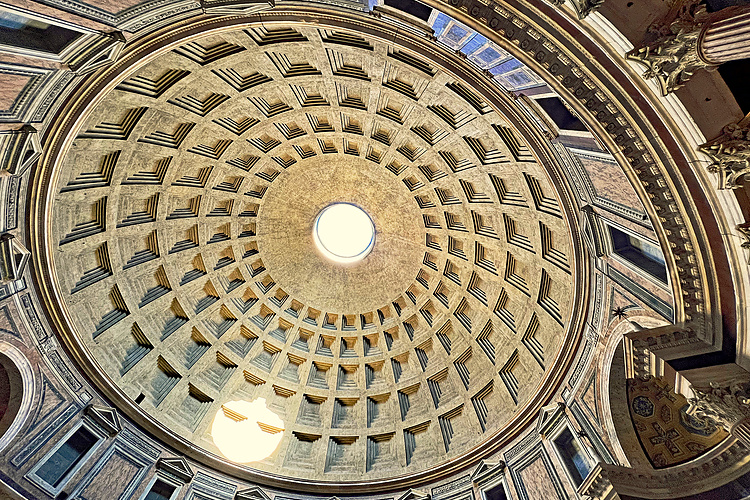 Image: Mariordo / Wikimedia Commons (CC BY-SA 4.0, cropped, resized, and sharpened)The most striking features inside the Pantheon are its enormous dome and the oculus at the top, measuring approximately 9 m in diameter. Natural light enters the windowless circular space, changing the brightness of the floor and walls depending on the time of day. The curve of the dome and the circular patterns on the floor come together, creating a place where you can experience the scale of ancient Roman architecture.
The Pantheon as a burial site
The Pantheon is now used as the basilica “Pantheon e Basilica di Santa Maria ad Martyres.” Inside are the tombs of Victor Emmanuel 2, a hero of Italian unification, and the Renaissance painter Raphael. While viewing ancient Roman architecture, you can also encounter the memory of the later religious institution and figures connected with Italian history.
Basic information about the Pantheon
The information below was checked against official sources on October 13, 2026. Please also check the latest information on the official website when planning your trip.
- 🔗 Official website
- You can check the opening hours of the Pantheon supervised by the Ministry of Culture, entry conditions, and guidance during worship services.
Pantheon - Pantheon e Castel Sant'Angelo - Direzione Musei nazionali della città di RomaPantheon e Basilica di Santa Maria ad Martyres Tra gli edifici dell’antichità classica, il Pantheon è certamente qu...direzionemuseiroma.cultura.gov.it
- 📍 Address
- Piazza della Rotonda, 00186 Roma RM
- 🕒 Visiting hours
- Every day 09:00–19:00. Last admission for individuals is 18:30; last admission for groups and schools, and ticket-office closing, are at 18:00.⚠️ Visiting hours or entry procedures may change because of worship services or religious ceremonies.
- 🚫 Closed days
- 1 month, 1 day, 12 month, 25 day. Except when specially opened by the Ministry of Culture.
- 💶 Admission fees
- Regular admission is 7 euros. EU citizens from age 18 until the day before their 25 birthday pay 2 euros. People under 18, residents of Rome, and the 1 Sunday of each month are among the main groups eligible for free admission. Online reservations are unavailable on free-admission days; collect a free ticket at the entrance.
- 🎫 Tickets
- Tickets can be purchased through the official Musei Italiani portal or app, at the on-site ticket office, or from ticket machines. Reservations are optional, but you must observe the time slot selected at purchase and bring a named ticket and an identity document or copy. Admission is in order of arrival, with no priority-entry system.⚠️ During ceremonies, free admission is available for prayer. Cover your shoulders and avoid very short trousers or skirts, low-cut clothing, and transparent clothing.
- ⏱️ Visit duration
- Allow approximately 30 minutes to 1 hours to see the interior dome, oculus, tombs, and façade.⚠️ The duration varies with crowds, entry queues, the area open during worship services or ceremonies, and waiting time to purchase tickets.

How to Get to the Pantheon
From central Rome, take a bus to Largo di Torre Argentina, then walk about 400 m to the Pantheon. Routes 30, 40, 62, 64, 81, 87 and 492 are listed in the visitor information. From the square, continue through the city streets to the main entrance on Piazza della Rotonda, which faces the Pantheon. If you want to avoid steps, you can use the outdoor ramp on the Via della Minerva side.
For attractions, transport and suggested itineraries, see “Rome: A Guide to Attractions, Food, Transportation, and Suggested Itineraries”.