Things to See in Old Québec
Quebec City is one of Canada’s oldest European settlements andis known as the only walled city in North America.
Founded in 1608 by the French explorer Samuel de Champlain, the city flourished as the administrative and religious center of New France (French Canada). Located at a strategic point on the St. Lawrence River, it became an important military and commercial base and later the setting for the conflict between France and Britain.
In 1759, Québec City was occupied by British forces after the Battle of the Plains of Abraham and later officially became British territory under the Treaty of Paris in 1763. Yet the Old Town still preserves strong traces of the French period, including stone houses, churches, and fortifications, creating an atmosphere that feels as though you have wandered into Europe.
In 1985a UNESCO World Heritage SiteOld Quebec was inscribed and is preserved as a valuable place that continues to convey Canada's history, where the eras of French colonial rule and British governance overlap.
The City Walls and Saint-Louis Gate

Saint-Louis Gate (Porte Saint-Louis) is part of the fortifications surrounding Old Québec. Turn left before the gate to reach the Québec Fortress (Citadelle). As an entrance to Upper Town, it offers a close-up view of the surviving walls and their connection to the gate.
For the history of the Québec Fortress, which is connected to the city walls, and visitor information, please see the article below.
Notre-Dame Cathedral

Notre-Dame de Québec Basilica-Cathedral is the seat of the Archdiocese of Québec. The Archdiocese of Québec is the oldest diocese in North America, and Notre-Dame Basilica is said to bethe oldest cathedral in North America.

Notre-Dame Cathedral in Quebec City is home to the only Holy Door in North America. The Holy Door is opened only during a Catholic Jubilee Year.
Parliament Building of Québec

The Parliament Building of Quebec (Hôtel du Parlement du Québec) was designed by French architect Eugène-Étienne Taché in the Second Empire style.

Québec’s motto, “Je me souviens” (“I remember”), was devised by Taché. The ceiling paintings in the chamber are based on the motif of “Je me souviens.”

Ursuline Monastery and Rue du Trésor

The Monastère des Ursulines de Québec was founded by Ursuline nuns who came from France in 1639.It is said to be the oldest educational institution for girls in North America.

On Rue du Trésor, local artists display and sell works such as watercolors, oil paintings, prints, and lithographs.
Petit-Champlain Street

These are the stairs known as Escalier Casse-Cou, leading to Rue du Petit-Champlain.

A mural depicting the lives of the working class during the era of New France.
Funicular and Rue du Fort

The funicular (Funiculaire du Vieux-Québec) is an inclined elevator connecting Upper Town (Haute-Ville) and Lower Town (Basse-Ville) in Old Québec.

 The street stretching beyond the funicular is Rue Sous-le-Fort. At the end of the street, you can see the roof and towers of Château Frontenac, perched on the hillside.

A man dressed as a jester swept stylishly past on Rue Sous-le-Fort.

The fuse is lit.


The white-bearded man with round glasses staring intently at the woman catches my attention.
Château Frontenac

Château Frontenac, perched on high ground in Upper Town, is a landmark that repeatedly comes into view as you walk through Old Québec. From Dufferin Terrace or the Lower Town side, you can clearly see the walled city's varied elevations and how the buildings are positioned in relation to one another.
The history of Château Frontenac, its interior highlights, and the places you can enjoy without staying overnight are introduced in detail in our article about Château Frontenac. Be sure to take a look.

Essential Information about Old Québec
The information below was checked against official sources on October 11, 2026. Please also check the latest information on the official website when planning your trip.
- 🔗 Official website
- UNESCO’s World Heritage information and Québec City’s official tourism guide provide details on the walls of Old Québec, Upper Town, Lower Town, and the main highlights.
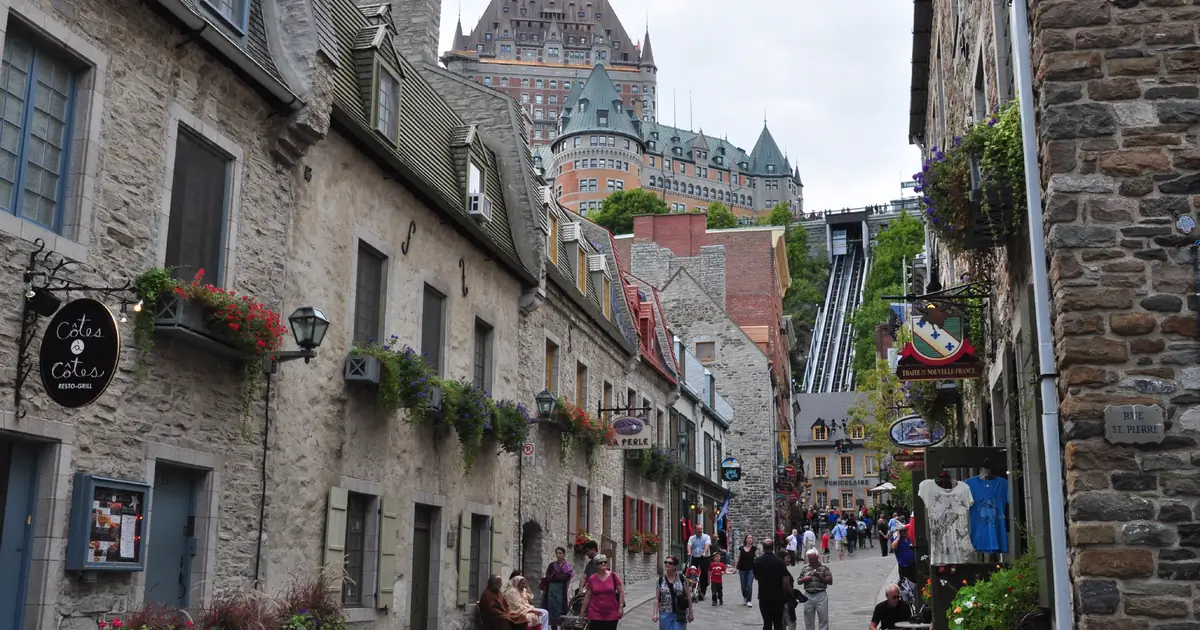 Arrondissement historique du Vieux-QuébecFondée par l'explorateur français Champlain au début du XVIIe siècle, Québec demeure la seule ville d'Amérique du N...whc.unesco.org
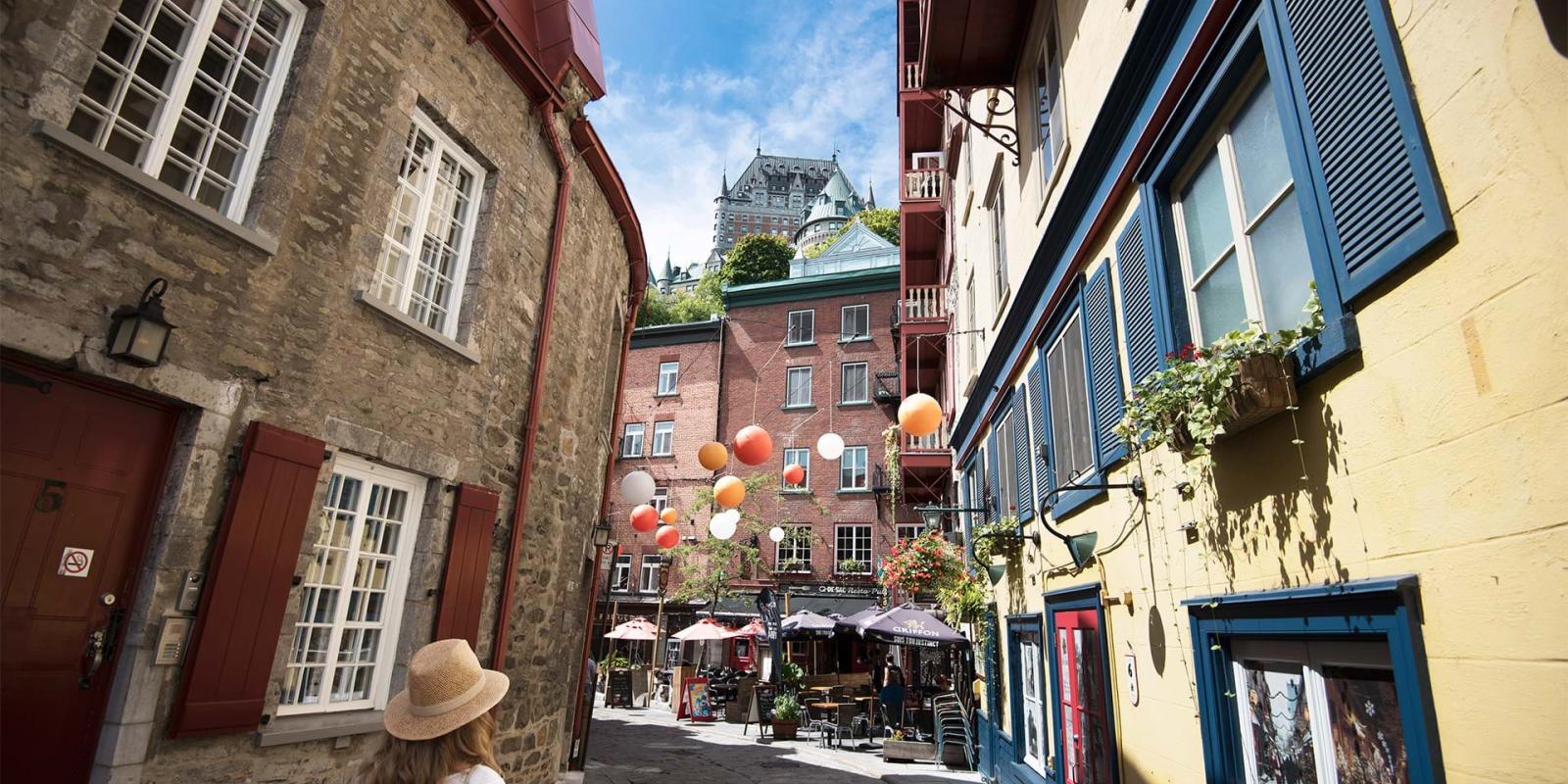 Le Vieux-QuébecLe Vieux-Québec est un incontournable lors d'un séjour à Québec. Découvrez les différents lieux et attraits à ne pa...www.quebec-cite.com
- 📍 Location
- Vieux-Québec, Québec, Québec, Canada
- 💶 Prices
-
- Notre-Dame de Québec Basilica: Admission is free during opening hours.
- Parliament Building, Québec Citadelle, and Funicular: Check the hours, visiting conditions, and prices for each attraction.
- ⏱️ Time required
- Allow about 3–5 hours. This is the time needed to walk through Upper Town within the walls, Lower Town including Petit-Champlain Street, and as far as the Old Port.⚠️ There are many stairs and slopes, and the time required varies depending on building visits, meals, and funicular operating conditions.
Getting to Old Québec
Gare du Palais is located in the Lower Town of Old Québec. From the station to the Notre-Dame de Québec Basilica-Cathedral (Basilique-cathédrale Notre-Dame de Québec) is about a 14-minute walk southeast. If you walk to the Upper Town, expect hills and stairs.
The related guide “【ケベック・シティー】観光スポット・グルメ・交通・モデルコースを解説” is currently available only in Japanese.
